Sandstorm
Meet Sandstorm (#ECD540), a distinctive shade that balances the warmth of gold with an earthy, muted undertone. Its unique character comes from this blend, offering a rich yet understated hue that catches the eye without overwhelming the senses, making it a compelling choice for any palette.
What color is Sandstorm?
Sandstorm is a vibrant, warm yellow with a noticeable golden character, sitting somewhere between a rich gold and a bright mustard.
Its composition gives it a distinctly warm temperature, with subtle green undertones that prevent it from becoming a simple primary yellow.
What is the meaning of the color Sandstorm?
The color Sandstorm (#ECD540) suggests warmth, comfort, and a grounded optimism. Its earthy quality grounds it in the natural world, representing stability and reliability.
Symbolically, Sandstorm evokes the timelessness of desert expanses. For designers, it can signify authenticity, endurance, and a quiet, organic strength.
How can I use Sandstorm in my UI design?
In UI design, Sandstorm works beautifully as an accent color to punctuate interfaces with warmth and energy. For high contrast and readability, pair #ECD540 with deep charcoals, navy blues, or forest greens. For a more subdued, earthy palette, consider a monochromatic approach by combining it with lighter creams and rich, dark browns.
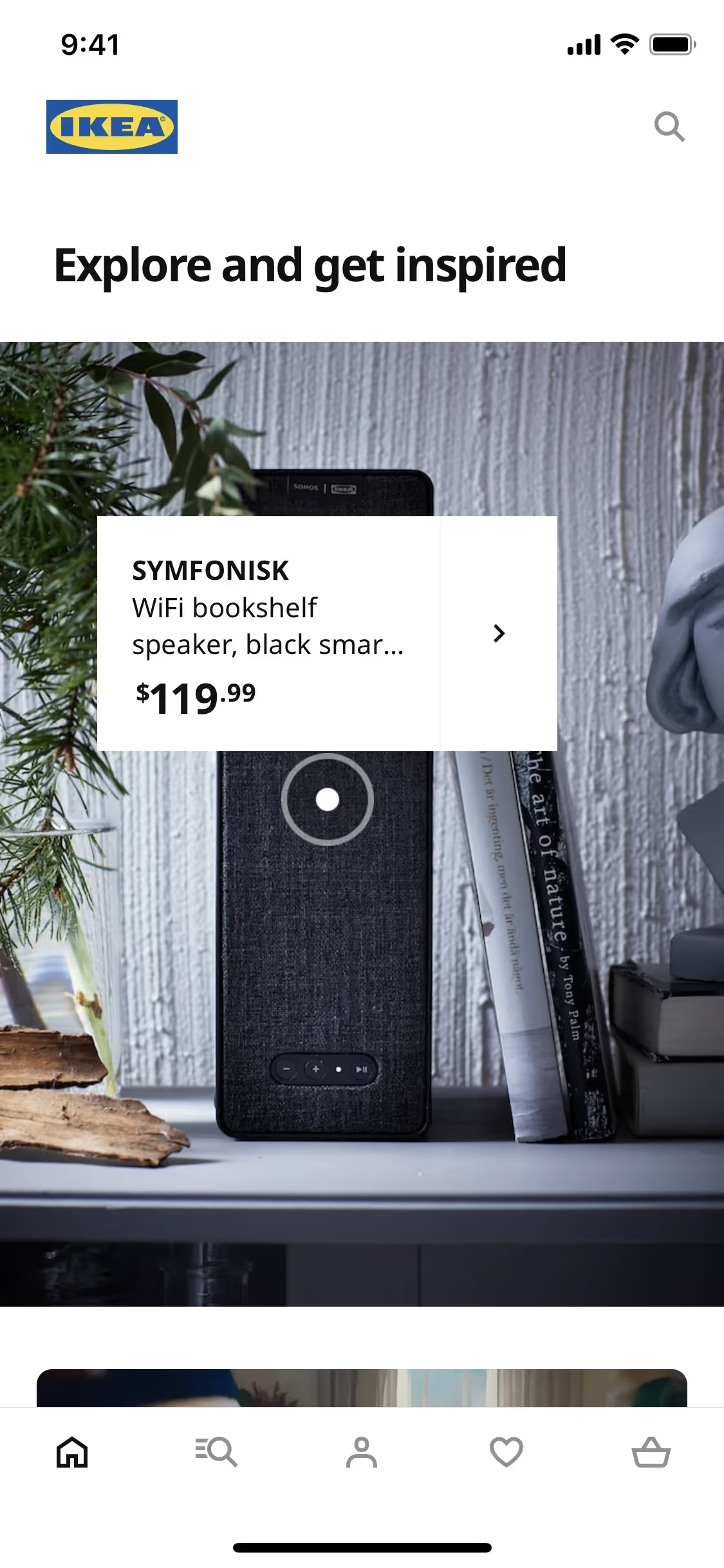
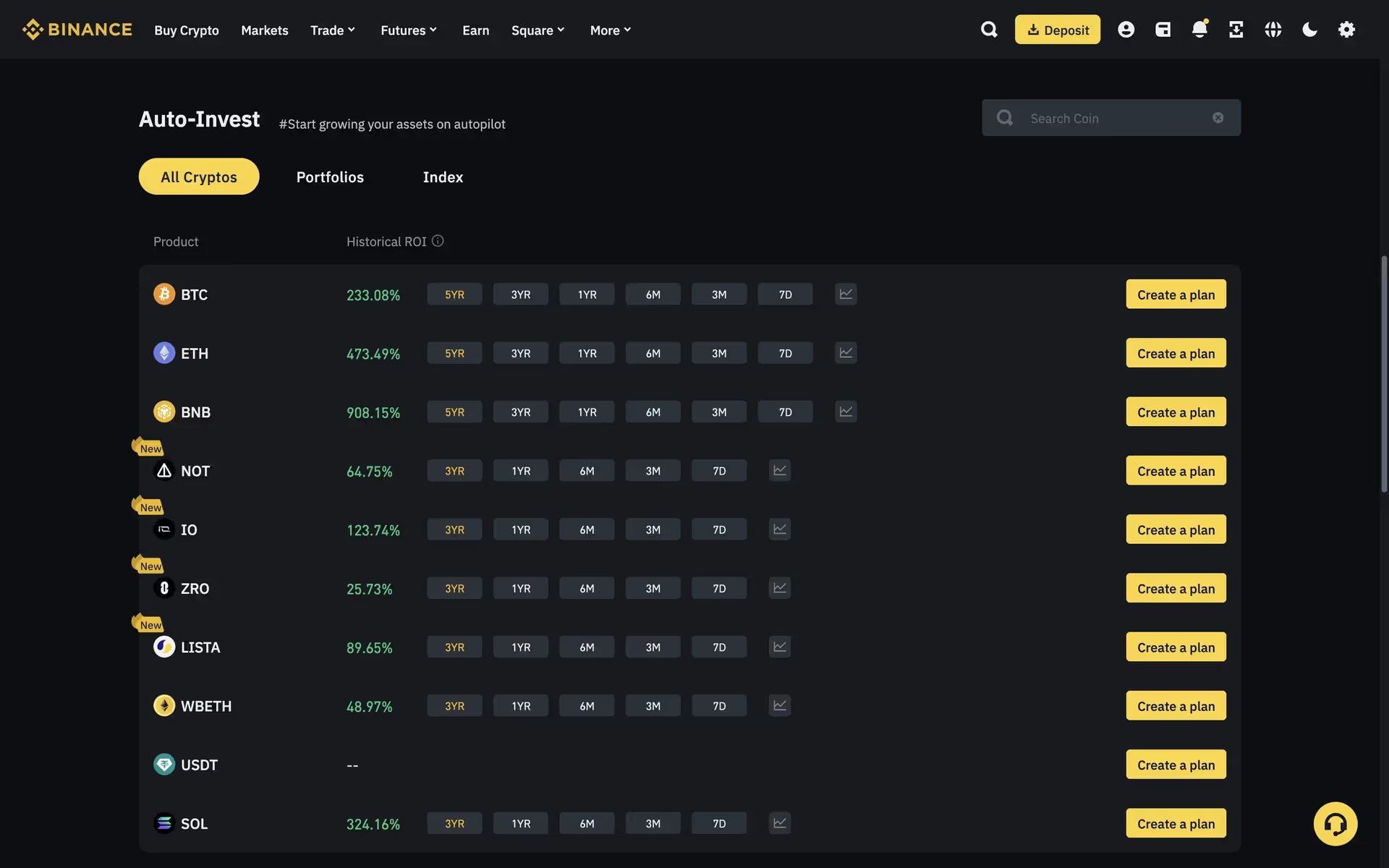
While not a dominant color across the board, variations of this warm yellow appear in brands aiming for different effects. Companies like IKEA and Binance use a bold yellow to project energy and optimism, while retailers like Anthropologie lean into its earthier side for a natural, crafted feel. Its selective use by brands like Discord and Clubhouse shows its potential to stand out.
To see how Sandstorm can fit into your own work, use the tools below. You can explore curated palettes, test color contrast for accessibility, and even preview #ECD540 in real UI components from top applications.
Using Sandstorm color codes
Using the Sandstorm color, with its hex code #ECD540, is straightforward for web-based projects. However, translating this specific shade for different media—from digital screens to print materials—requires converting the code into various formats.
Each color model serves a distinct purpose. RGB (Red, Green, Blue) is the standard for digital displays, mixing light to create color. For print, CMYK (Cyan, Magenta, Yellow, Key/Black) is used, which subtracts brightness from a white background. Other models like HSL (Hue, Saturation, Lightness) offer a more intuitive way to adjust color properties for design work.
To help you apply Sandstorm across your projects, we have converted #ECD540 into a range of popular color formats. You can find and copy these codes directly below.
Analogous
Analogous schemes use colors found next to Sandstorm on the color wheel. This grouping results in a visually unified and calming effect.
Complementary
Complementary colors sit directly opposite each other on the color wheel. Paired with Sandstorm, these hues produce a striking, high-contrast look.
Split Complementary
A split complementary scheme for Sandstorm pairs it with the two colors adjacent to its direct complement, offering a vibrant yet balanced palette.
Triadic
A triadic palette offers a vibrant, high-contrast look by using three colors equidistant on the color wheel, with Sandstorm (#ECD540) as the base.
Tetradic
A tetradic scheme uses two pairs of complementary colors, forming a rectangle on the color wheel and creating a rich palette with Sandstorm.
Square
A square color scheme pairs Sandstorm with three other colors, all equidistant on the color wheel, creating a lively and balanced palette.
Text Color
Background Color
Your Catchy Large Text Goes Here
Shades
By adding black to Sandstorm, you create darker shades that give your design more weight.
Tints
Tints are lighter variations of Sandstorm, created by adding white to produce a softer feel.
Tones
Tones are created by adding gray to Sandstorm, resulting in softer, desaturated variations.
Hues
Hues are variations of Sandstorm that alter its intensity or temperature, creating different moods.
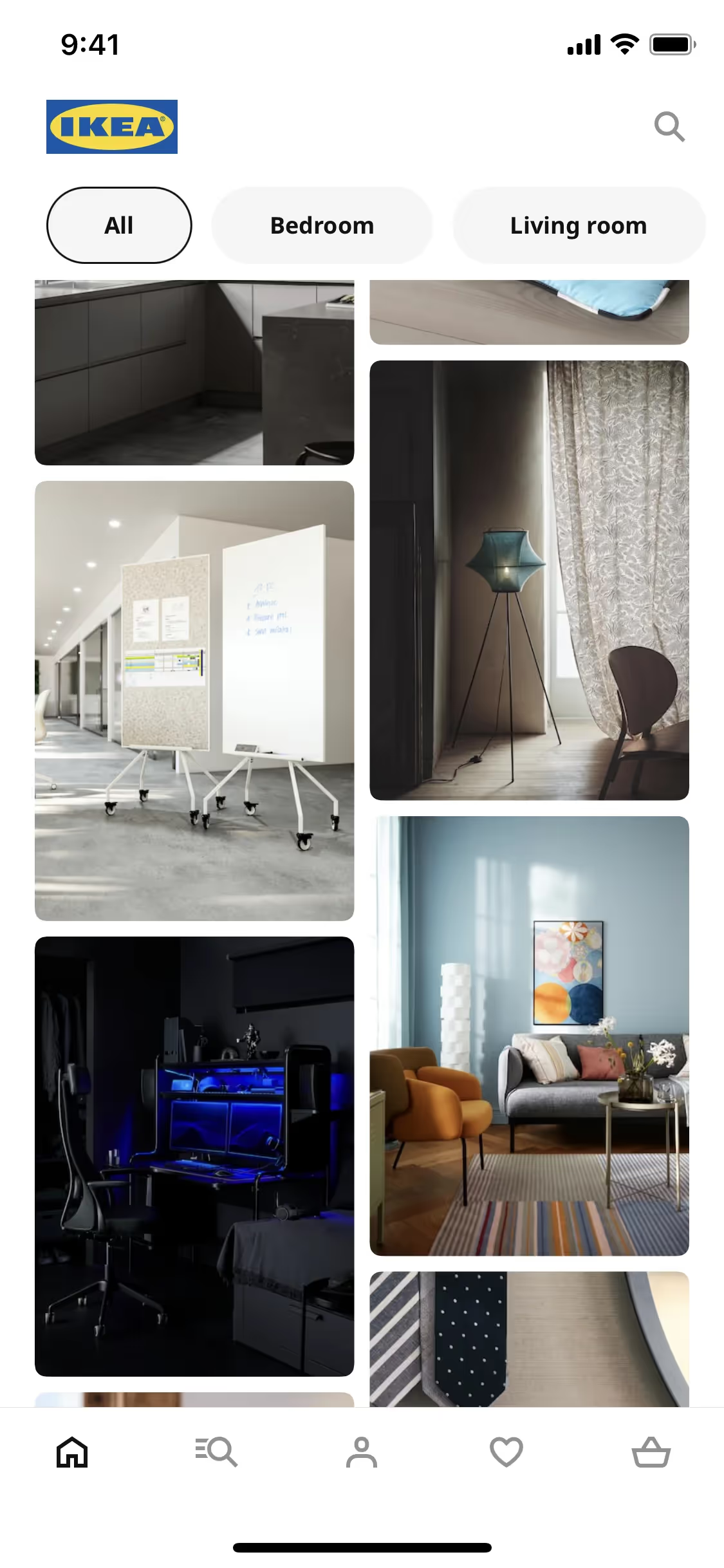







Never run out of inspiration again.
Use Mobbin for free as long as you like or get full access with any of our paid plans.