Vermilion
Meet Vermilion (#E34234), a brilliant reddish-orange that commands immediate attention. Its intensity bridges the gap between classic red and vibrant orange, creating a hue with undeniable presence and a modern, energetic feel perfect for making a statement in any design palette.
What color is Vermilion?
Vermilion is a brilliant, fiery red-orange hue, leaning more towards red but with a distinct warmth from its orange undertones.
It's a saturated and high-energy color, sitting squarely in the warm spectrum, often appearing as a vivid scarlet with a touch of sun-kissed orange.
What is the meaning of the color Vermilion (#E34234) in design?
Historically derived from the mineral cinnabar, Vermilion carries a legacy of luxury and prestige, once prized as highly as gold in ancient art and culture.
This vibrant shade of red-orange communicates energy, passion, and confidence, making a bold statement of vitality and celebration.
How can I effectively use Vermilion (#E34234) in UI design?
In UI design, Vermilion (#E34234) is most effective as a potent accent. Apply it to elements that demand attention, such as primary buttons, active states, or notification icons. To prevent visual strain, balance its energy by pairing it with a foundation of neutral colors like charcoal, off-white, or deep navy blues. This approach fits well within a 60-30-10 color rule, where Vermilion can serve as the impactful 10% highlight.
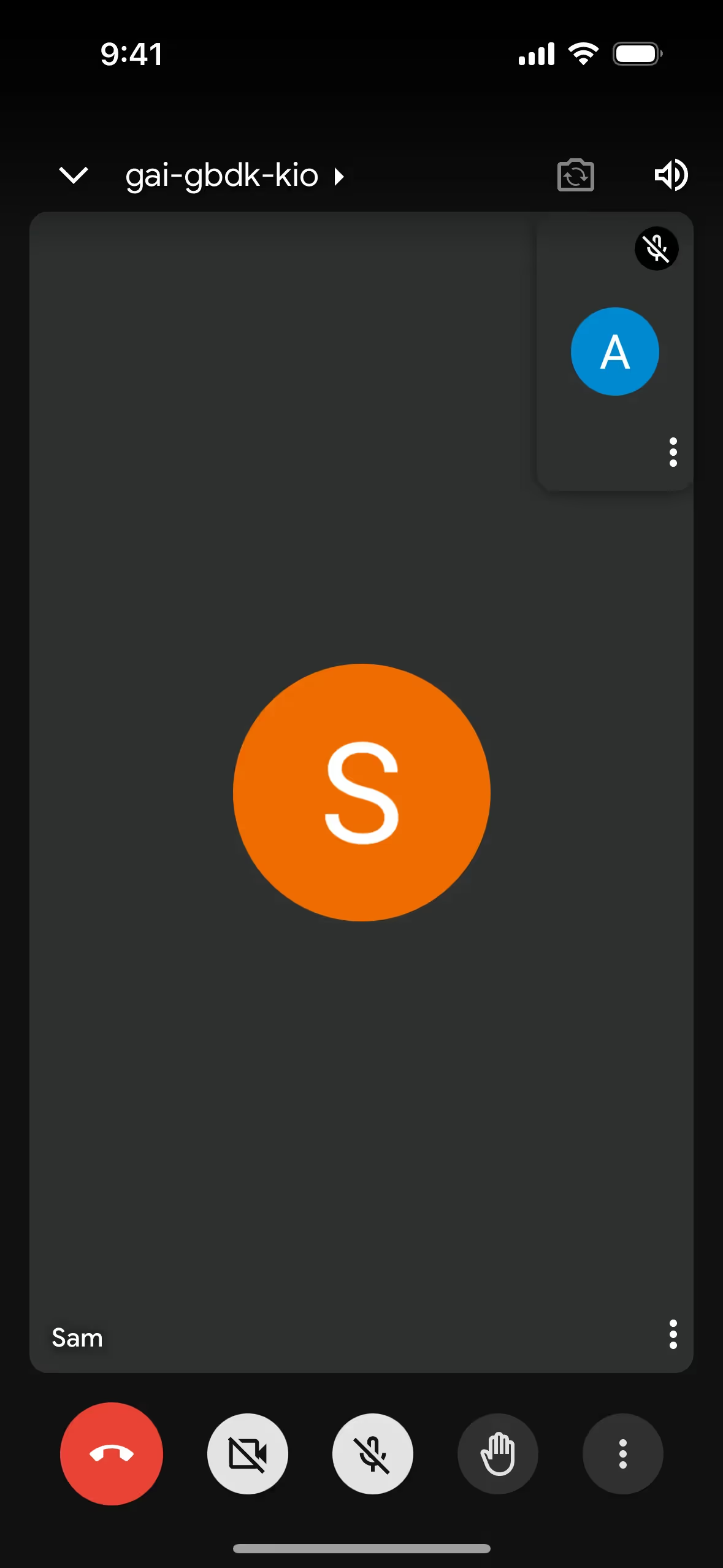
Prominent technology companies often use a similar shade to guide users and establish a strong brand presence. You can see it in the logos for Google Chrome and Artsy, the iconic pin in Google Maps, and notification elements across Google's suite of products. Its use in these contexts shows its power in drawing the eye to important actions and information.
To see how Vermilion works in practice, use the tools on this page. You can explore curated palettes, test color contrast for accessibility, and preview #E34234 in real UI components from top brands.
Using Vermilion color codes
When applying Vermilion in your designs, the hex code #E34234 is your digital key. This code directly tells browsers and design software the exact shade to display, making it a fundamental asset for web and app development.
Beyond HEX, color codes translate across different mediums. For on-screen applications, you'll work with RGB values, which specify the intensity of red, green, and blue light. For print materials, the CMYK values are essential, defining the proportions of cyan, magenta, yellow, and black ink. Other systems like HSL (Hue, Saturation, Lightness) provide a more intuitive way to adjust and create color variations.
To make your workflow easier, we've converted Vermilion's #E34234 hex code into a range of popular formats. You can find and copy the exact values you need for your project below.
Analogous
Analogous colors sit next to Vermilion on the color wheel, creating a harmonious and cohesive palette that feels both rich and balanced.
Complementary
Complementary colors sit directly opposite each other on the color wheel. Paired with Vermilion, its complement creates a striking, high-contrast visual effect.
Split Complementary
A split complementary scheme for Vermilion uses the two colors adjacent to its direct complement, offering a vibrant yet balanced high-contrast palette.
Triadic
A triadic scheme pairs Vermilion with two other colors equally spaced on the color wheel, resulting in a vibrant, high-contrast, and harmonious palette.
Tetradic
A tetradic palette for Vermilion is built from two sets of complementary colors, offering a vibrant and balanced combination with maximum design flexibility.
Square
Using four colors spaced evenly on the color wheel, a square scheme with Vermilion offers a rich palette with strong, balanced visual tension.
Text Color
Background Color
Your Catchy Large Text Goes Here
Shades
Shades are darker versions of Vermilion, created by adding black to give depth and weight.
Tints
Tints are lighter variations of Vermilion, made by mixing in white to soften the hue.
Tones
Tones are subtle variations of Vermilion, made by mixing in gray to lower saturation.
Hues
Hues are Vermilion variations with different intensities and temperatures, creating distinct visual moods.






Never run out of inspiration again.
Use Mobbin for free as long as you like or get full access with any of our paid plans.