United Nations Blue
Meet United Nations Blue (#5B92E5), a color defined by its remarkable clarity and balanced saturation. This striking mid-tone blue offers a clean, confident presence, making it a compelling choice for modern digital interfaces without feeling overwhelming. Its inherent brightness commands attention.
What color is United Nations Blue?
United Nations Blue is a distinct medium blue, sitting comfortably between a classic sky blue and a deeper cerulean.
With its cool temperature and minimal undertones, the color presents a calm and balanced character, avoiding the intensity of more saturated blues.
What is the meaning of the United Nations Blue color?
United Nations Blue was chosen for the UN flag to represent peace and unity, deliberately contrasting with the traditional colors of war.
Psychologically, the color #5B92E5 evokes feelings of calm, trust, and open communication, making it a symbol of hope and cooperation.
How can I use United Nations Blue (#5B92E5) in my UI design?
When working with United Nations Blue, consider its versatility. The #5B92E5 shade serves effectively as a primary color for branding or as a vibrant accent for calls-to-action and interactive states. For a classic, high-contrast interface, pair it with clean whites and dark grays. To create a more dynamic composition, consider an analogous palette with teals and softer blues, or introduce a pop of a complementary soft orange for key highlights.
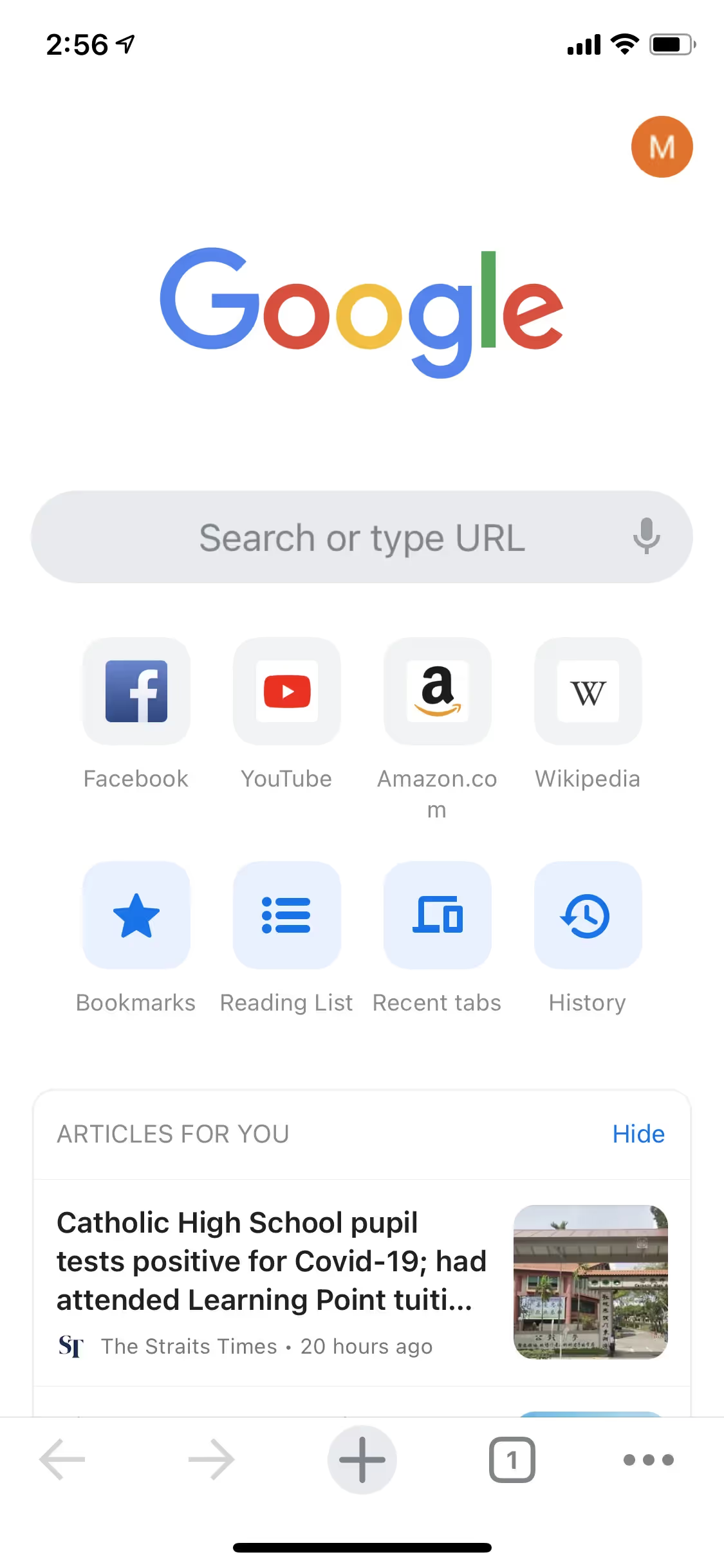
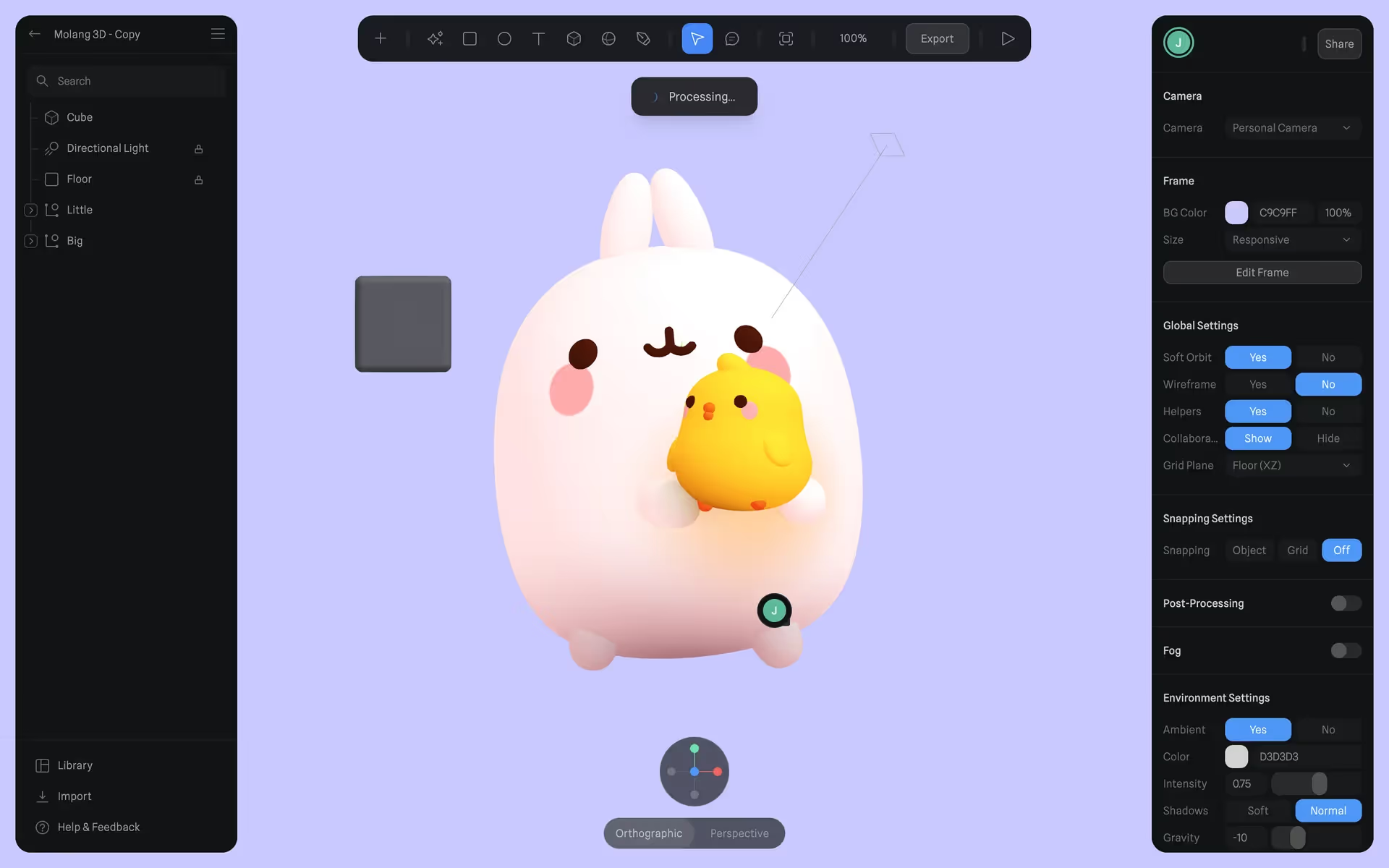
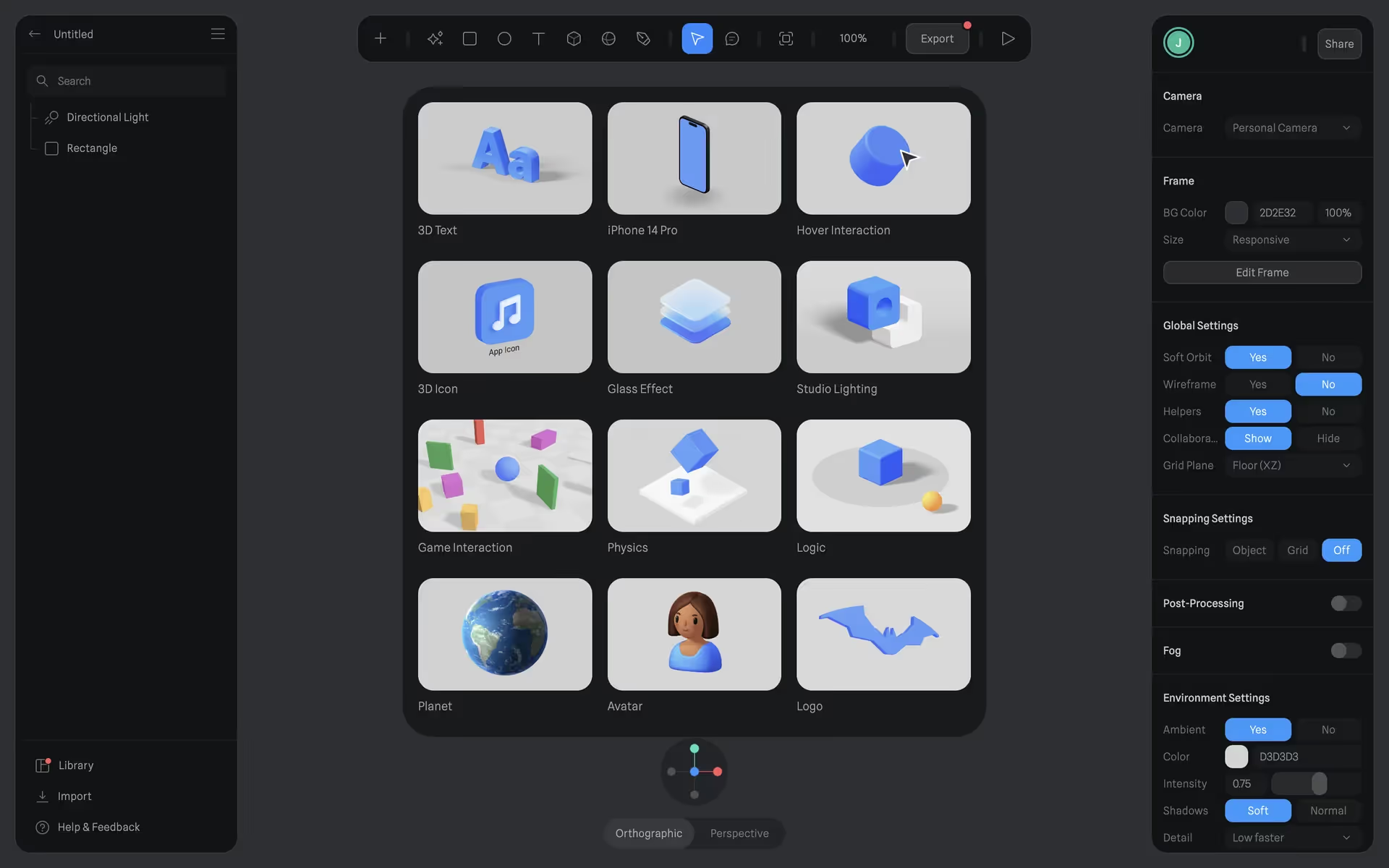
While not ubiquitous, shades similar to United Nations Blue are favored by several prominent technology companies. Brands like Google—across Chrome, Gmail, and Maps—as well as creative tools like Runway and Spline, use comparable blues to establish a sense of dependability and clarity in their interfaces. This demonstrates the color's strength in building a trustworthy digital presence.
To see how #5B92E5 performs in practice, use the tools below. You can explore curated palettes, check contrast ratios for accessibility compliance, and preview United Nations Blue applied to real UI components from leading applications.
Using United Nations Blue color codes?
Using United Nations Blue in your projects starts with its digital identifier, #5B92E5. While this hex code is perfect for web and screen-based design, you'll need to convert it for other applications, like print materials or specific digital adjustments.
Each color model serves a distinct purpose. RGB (Red, Green, Blue) and its hexadecimal shorthand are standard for digital displays. For physical media, CMYK (Cyan, Magenta, Yellow, Key/Black) values are required to ensure accurate color reproduction in print. Other models like HSL (Hue, Saturation, Lightness) offer a more intuitive way to modify color properties during the design process.
To make things simple, we've translated United Nations Blue’s #5B92E5 into a variety of common formats. You can find and copy the exact codes you need for your work right below.
Analogous
Analogous colors sit next to each other on the color wheel. Paired with United Nations Blue, they produce a cohesive and serene palette.
Complementary
Complementary colors sit opposite each other on the color wheel. For United Nations Blue, its complement creates a striking, high-contrast visual pairing.
Split Complementary
The split complementary palette for United Nations Blue offers high contrast with less tension by using the two colors next to its direct complement.
Triadic
A triadic combination for United Nations Blue involves two other colors, all equidistant on the color wheel, resulting in a bold and balanced look.
Tetradic
A tetradic scheme for United Nations Blue uses two pairs of complementary colors, forming a rich, four-color palette with built-in contrast.
Square
A square color scheme pairs United Nations Blue with three other colors, all equidistant on the color wheel, creating a vibrant, high-contrast palette.
Text Color
Background Color
Your Catchy Large Text Goes Here
Shades
Adding black to United Nations Blue creates darker shades, which introduce a sense of depth and weight.
Tints
Adding white to United Nations Blue creates tints, which produce softer and airier tones.
Tones
Tones of United Nations Blue are created by adding gray, resulting in softer, muted variations.
Hues
Hues are variations of United Nations Blue that alter its intensity and temperature.




Never run out of inspiration again.
Use Mobbin for free as long as you like or get full access with any of our paid plans.