Bluebonnet
Bluebonnet (#341CFF) is a blue with serious punch. What makes this hue so arresting is its high saturation and pure, almost luminous quality. It’s a color that feels born from the screen, offering designers a shade of blue with distinct clarity and energy.
What color is Bluebonnet?
Bluebonnet is a striking, electric blue that commands attention. It sits at the intersection of vibrancy and depth, presenting a pure, highly saturated hue.
Visually, it's a cool color, yet it carries a faint violet undertone that gives it a unique character, preventing it from feeling icy or distant.
What is the meaning of the color Bluebonnet (#341CFF)?
The color Bluebonnet, #341CFF, radiates digital optimism and authority. It’s a shade that suggests confidence and forward-thinking, moving beyond the traditional calmness associated with lighter blues.
While its electric tone feels thoroughly modern, the name itself connects to the Texan wildflower, a symbol of resilience and admiration.
How can I use Bluebonnet (#341CFF) in UI design?
In UI design, Bluebonnet (#341CFF) shines as a vibrant accent for calls-to-action, icons, and interactive states. Pair it with a generous amount of white space and neutral grays to let its intensity pop, or create a more complex palette by matching it with complementary oranges and yellows for high-energy combinations. For a balanced application, try the 60-30-10 rule, using Bluebonnet for the smallest 10% portion to guide the user's eye without causing fatigue.
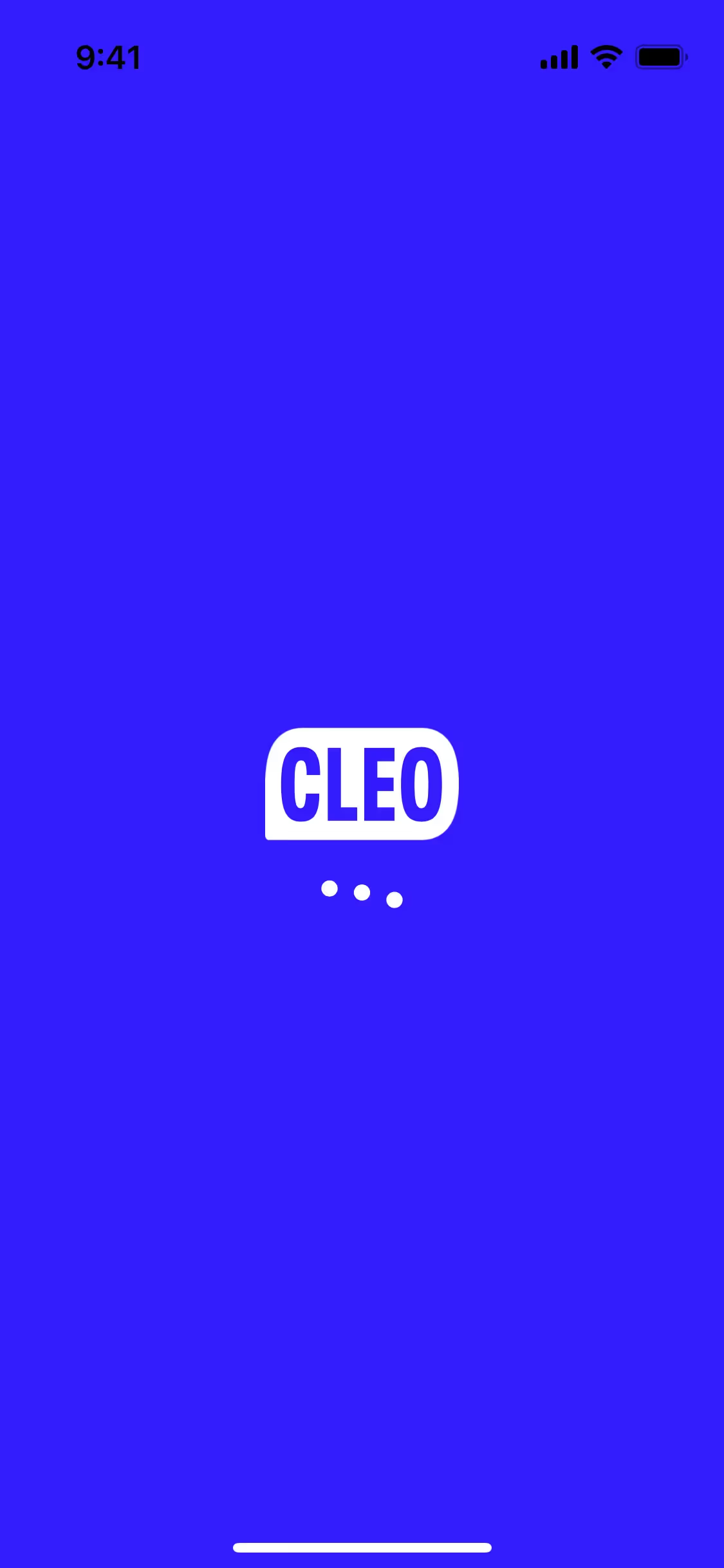
Several modern brands, including Aboard, Partiful, SuperHi, Quicken, Cleo, and Picsart, use a similar electric blue to appear energetic and forward-thinking. Its adoption by these companies shows it’s a strong choice for a digital-first identity that aims to stand out.
Explore curated palettes, test color contrast for accessibility, and preview Bluebonnet in real UI components from top brands using the tools below.
How do I use the Bluebonnet color codes?
Using the Bluebonnet color begins with its hex code, #341CFF. This is the most direct way to specify the color in CSS or drop it into a design tool's color picker. From there, you can translate it into other formats depending on your project's needs.
Different projects require different color models. For digital displays, you'll work with its RGB values. If you're preparing assets for print, you'll need the CMYK equivalent. Other codes like HSL (Hue, Saturation, Lightness) are useful for programmatically generating tints and shades of Bluebonnet.
To make things easier, we've converted Bluebonnet's #341CFF hex code into a range of popular formats. You can find and copy the exact values you need for your project below.
Analogous
Built from colors adjacent on the color wheel, Bluebonnet's analogous palette offers a balanced and tranquil visual experience perfect for unified designs.
Complementary
Complementary colors sit directly opposite each other on the color wheel. Pairing Bluebonnet with its complement creates a high-contrast, visually striking combination.
Split Complementary
Split complementary schemes for Bluebonnet (#341CFF) use the two colors adjacent to its direct complement, offering a vibrant yet balanced high-contrast palette.
Triadic
Triadic palettes are built from three colors situated at equal distances on the color wheel, producing a vibrant and balanced combination with strong contrast.
Tetradic
A tetradic scheme uses four colors that form a rectangle on the color wheel, giving Bluebonnet two pairs of complementary, dynamic partners.
Square
Square color schemes pair four colors evenly spaced on the color wheel. Starting with Bluebonnet, this method yields a palette with strong, balanced contrast.
Text Color
Background Color
Your Catchy Large Text Goes Here
Shades
Shades are darker versions of Bluebonnet, created by adding black for more depth and weight.
Tints
Tints are lighter versions of Bluebonnet, achieved by adding white to soften the hue.
Tones
Tones are muted versions of Bluebonnet, created by adding gray to soften the color’s saturation.
Hues
Hues are variations of Bluebonnet (#341CFF) that differ in intensity, creating distinct visual effects.








Never run out of inspiration again.
Use Mobbin for free as long as you like or get full access with any of our paid plans.