Yale Blue
Discover Yale Blue, #0F4D92, a color defined by its profound depth and clarity. This specific shade of blue stands out for its authoritative yet approachable presence, making it a compelling choice for designers seeking a strong, reliable anchor in their visual systems.
What color is Yale Blue?
Yale Blue is a deep, saturated azure with distinct gray undertones, giving it a sophisticated and muted character.
This cool-toned blue avoids the starkness of navy and the vibrancy of royal blue, presenting a stable and authoritative hue.
What is the meaning behind the color Yale Blue (#0F4D92)?
Yale Blue, with its hex code #0F4D92, embodies trust, stability, and intelligence. It's a color that communicates authority and seriousness, making it a popular choice for institutions aiming to project confidence and integrity.
Its name originates from Yale University, tying the color to a long history of academic excellence and tradition, which adds a layer of prestige and wisdom to its meaning.
How can I effectively use Yale Blue in UI design?
In UI design, Yale Blue (#0F4D92) works well as a primary color to create a sense of stability and trust. Pair it with crisp whites and light grays for a clean, corporate aesthetic, or introduce accents of warm ochre for a more striking combination. Applying the 60-30-10 rule can help balance these palettes, using Yale Blue as the dominant or secondary color to guide the user's eye without overwhelming the interface.
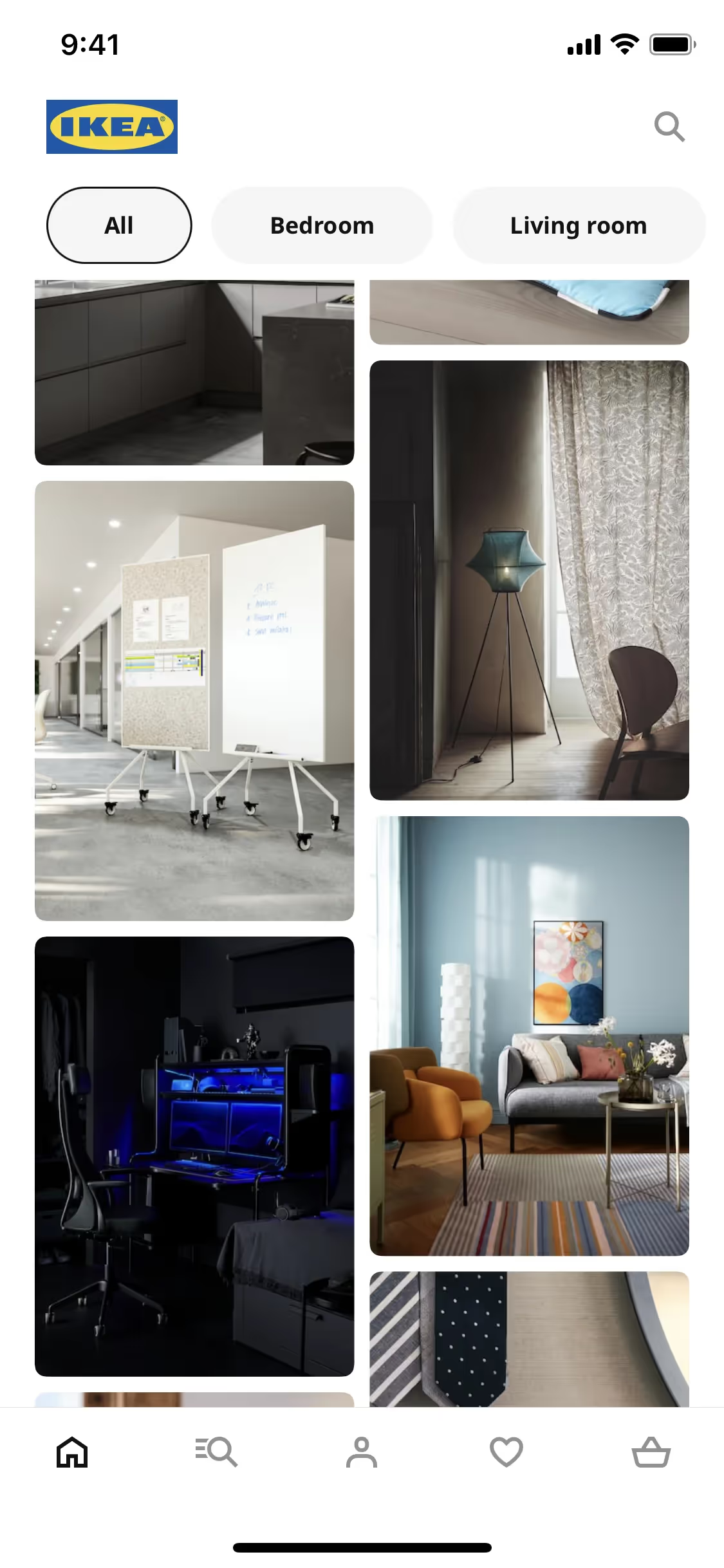
While not ubiquitous, this shade of deep blue is favored by several major brands. Companies like PayPal, Singapore Airlines, Calendly, and Sprout Social use similar blues to project reliability and professionalism. Others, including IKEA and Afterpay, incorporate it into their branding to build customer confidence.
To see how Yale Blue performs in practice, use the tools below. You can explore curated palettes, check color contrast ratios for accessibility, and preview #0F4D92 in real UI components from well-known applications.
How do I use the Yale Blue color codes?
When working with Yale Blue, its hex code #0F4D92 is your primary reference for digital projects. This code precisely instructs design software and browsers on the exact shade to render, forming a reliable base for any digital palette.
To maintain color consistency across different media, you'll need to convert #0F4D92 into other color models. Each system has a specific function: RGB (Red, Green, Blue) is the standard for digital screens that mix light, while CMYK (Cyan, Magenta, Yellow, Key/Black) is essential for physical printing processes that use ink. Other formats like HSL (Hue, Saturation, Lightness) can offer more intuitive ways to modify the color.
To simplify your workflow, we have converted Yale Blue's #0F4D92 hex code into a range of popular formats below, all ready for you to copy and paste directly into your project.
Analogous
Sitting beside Yale Blue on the color wheel, analogous colors produce a cohesive and serene look, perfect for creating a sense of visual unity.
Complementary
Complementary colors sit directly opposite each other on the color wheel. Paired with Yale Blue, its complement creates a striking, high-contrast visual effect.
Split Complementary
A split complementary scheme for Yale Blue uses the two colors adjacent to its direct complement, offering a vibrant yet balanced palette.
Triadic
Triadic color schemes use three hues equally spaced on the color wheel. With Yale Blue, this creates a vibrant, high-contrast, and balanced palette.
Tetradic
A tetradic palette for Yale Blue is built from two pairs of complementary colors, forming a rectangle on the color wheel for a versatile combination.
Square
A square color scheme pairs Yale Blue with three other colors, all equidistant on the color wheel, creating a vibrant and high-contrast palette.
Text Color
Background Color
Your Catchy Large Text Goes Here
Shades
Adding black to Yale Blue creates darker shades, which give designs more depth and weight.
Tints
Tints are lighter versions of Yale Blue, created by adding white for a softer effect.
Tones
Tones of Yale Blue are created by adding gray, resulting in softer, desaturated variations.
Hues
Hues are Yale Blue variations differing in intensity or temperature, subtly altering a design’s mood.











Never run out of inspiration again.
Use Mobbin for free as long as you like or get full access with any of our paid plans.