Seashell
Explore Seashell (#FFF5EE), a near-white shade with a distinct character. Its defining feature is a barely-there peach undertone, lending it a gentle warmth and depth that stark whites lack. This subtle complexity is the source of its unique visual appeal.
What color is Seashell?
Seashell is a delicate, warm off-white, sitting just off pure white with a soft, luminous quality.
Its distinct warmth comes from subtle peachy-pink undertones, distinguishing it from cooler, starker whites.
What meaning does the color Seashell (#FFF5EE) convey to users?
The color Seashell, or #FFF5EE, brings to mind the tranquility and warmth of a sun-bleached shore. It symbolizes purity, peace, and the gentle start of something new.
Psychologically, its soft presence communicates comfort and sophistication. For designers, Seashell offers a serene and approachable foundation, helping to build experiences that feel both organic and timeless.
How can I use Seashell in my UI design?
Seashell, with its hex code #FFF5EE, works beautifully as a warm, neutral background that feels softer and more inviting than stark white. For effective contrast, pair it with deep, saturated colors like navy blue, forest green, or burnt sienna to create a balanced and visually appealing interface. Using the 60-30-10 rule, Seashell can act as the dominant color, providing a clean canvas for more vibrant accents on interactive elements.
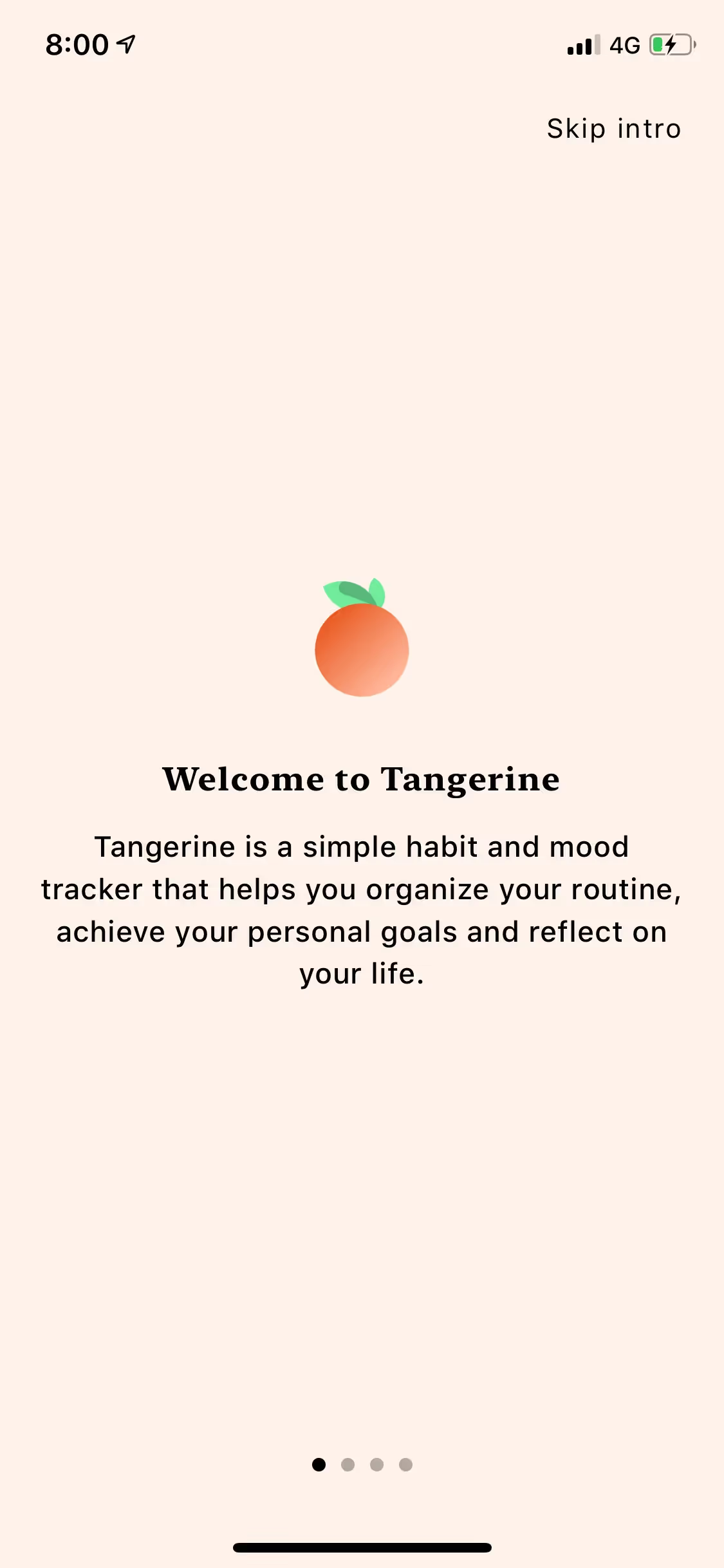
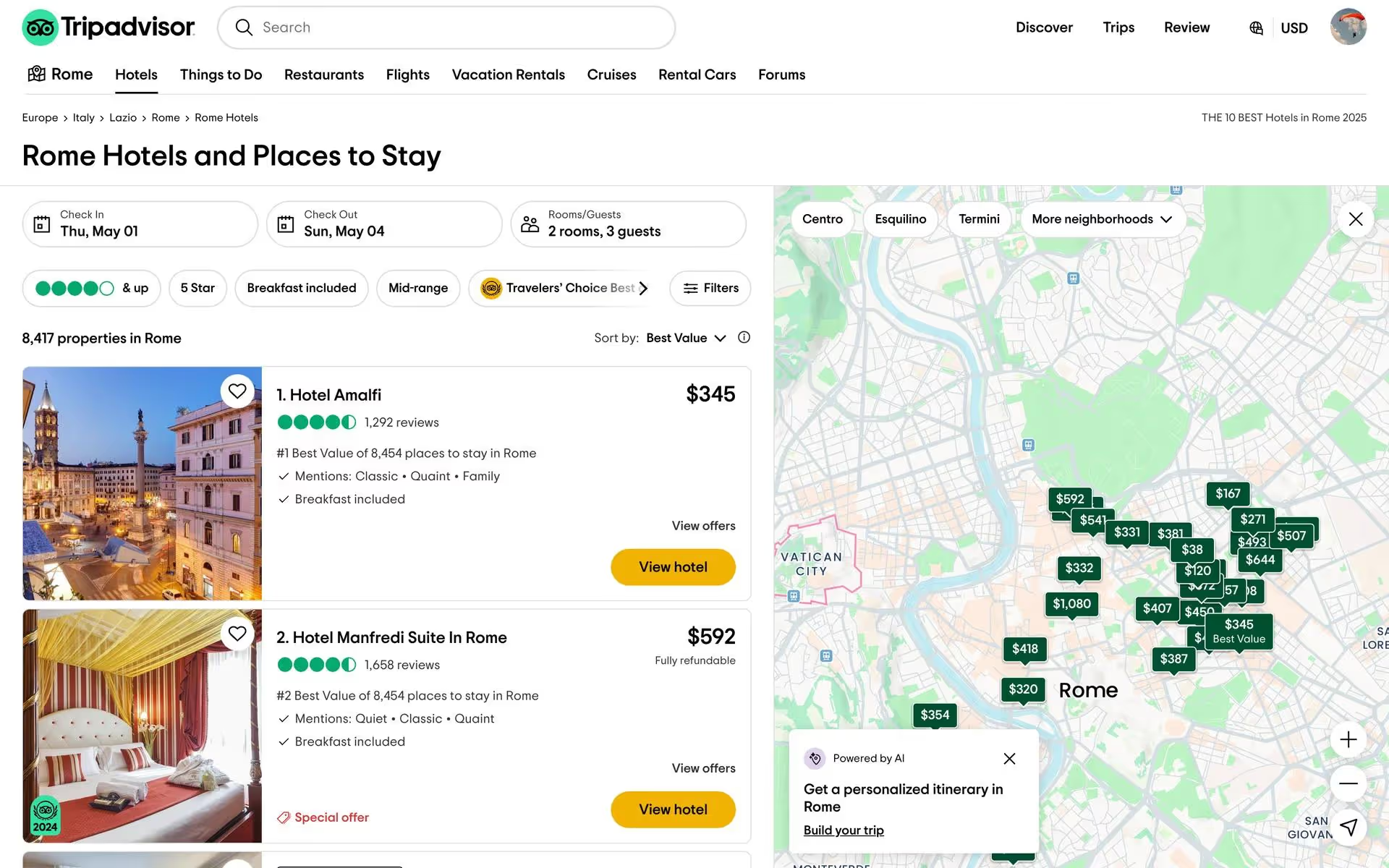
While not a widely used primary brand color, its subtlety offers a unique opportunity for differentiation. Tints similar to Seashell can be found in the palettes of companies like Tripadvisor and Coda, where it adds a touch of warmth. Choosing an uncommon neutral like this can help a product feel more organic and less corporate.
To see how Seashell performs in practice, use the tools on this page. You can explore curated palettes, test color contrast for accessibility, and preview #FFF5EE applied to real UI components from top brands.
Using Seashell color codes
When working with the color Seashell, using its hex code—#FFF5EE—is the most direct way to maintain consistency across your digital designs, from CSS stylesheets to Figma files.
This hex value can be translated into other color models depending on your needs. For instance, the RGB model is standard for digital screens, defining colors by the intensity of red, green, and blue light. For print work, you'll need the CMYK equivalent, which is based on ink colors. Other systems like HSL, LAB, LCH, and XYZ offer different ways to define and manipulate color for more specific applications.
To simplify your workflow, we've converted #FFF5EE into a range of common formats. You can find and copy these codes below for direct use in your projects.
Analogous
By selecting colors adjacent to Seashell on the color wheel, you can build an analogous scheme that feels cohesive and exceptionally tranquil.
Complementary
Complementary colors sit on opposite ends of the color wheel. Paired with Seashell (#FFF5EE), these hues produce a dynamic and vivid palette.
Split Complementary
A split complementary scheme pairs Seashell with the two colors adjacent to its direct complement, creating a vibrant yet balanced palette with more design flexibility.
Triadic
Triadic color schemes use three hues equally spaced on the color wheel. With Seashell as a base, this creates a vibrant, high-contrast palette.
Tetradic
A tetradic scheme pairs Seashell with three other hues, forming two complementary pairs. These four colors create a rectangular shape on the color wheel.
Square
A square color scheme takes four colors evenly spaced on the color wheel. This arrangement produces a rich, high-contrast palette with Seashell as its foundation.
Text Color
Background Color
Your Catchy Large Text Goes Here
Shades
Shades of Seashell are created by mixing in black, resulting in darker, weightier tones.
Tints
Adding white to Seashell creates tints, which are lighter variations that produce a softer effect.
Tones
Tones are muted versions of Seashell, created by adding gray to soften the saturation.
Hues
Seashell's hues are variations in temperature and intensity, affecting the overall feel of a design.








Never run out of inspiration again.
Use Mobbin for free as long as you like or get full access with any of our paid plans.