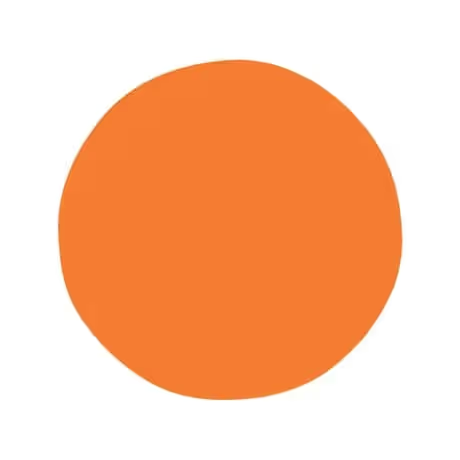
Saffron
Meet Saffron (#F4C430), a radiant golden-yellow that commands attention. Its striking intensity comes from a unique spot between the energy of orange and the brightness of yellow, creating a hue that is both warm and brilliantly luminous for any design palette.
What color is Saffron?
Saffron (#F4C430) is a radiant, golden-yellow, reminiscent of the precious spice it's named after. It's a warm color, sitting comfortably between true yellow and a soft orange, giving it a rich and inviting quality.
Visually, Saffron possesses distinct earthy undertones that ground its brilliance, preventing it from becoming too sharp. This gives the hue a complex character that feels both vibrant and organic.
What is the meaning of the color Saffron?
Historically, Saffron is a color of great significance, often associated with spirituality and nobility. In many Eastern cultures, it represents purity, strength, and the quest for enlightenment, worn by monks and revered by royalty.
Psychologically, the color Saffron radiates warmth, happiness, and a sense of creative energy. Its bright, golden quality can create an atmosphere of optimism and welcome, making it a powerful choice for designs intended to feel positive and inspiring.
How can I best apply Saffron (#F4C430) in my UI design?
In UI design, Saffron (#F4C430) shines as an accent. Use it for key interactive elements like buttons and links to guide user attention. It pairs sharply with deep charcoals and navy blues for high-contrast interfaces, or with warm off-whites for a softer, more organic feel. Applying the 60-30-10 principle, Saffron is an ideal candidate for the '10' portion, adding a pop of energy without overwhelming the design.
While not a dominant color across the web, this rarity is its strength. Brands like Bumble and Sprig use similar golden-yellows to build a memorable and approachable identity. Choosing Saffron can help a product stand out in a crowded market, signaling confidence and optimism.
Use the tools below to explore curated palettes, test the accessibility of your color combinations, and preview how Saffron (#F4C430) looks within the actual components of well-known applications.
How do I use the Saffron color codes?
The most direct way to apply Saffron in your digital work is with its hex code: #F4C430. This is the standard for specifying color in CSS, HTML, and most design applications.
Different projects require different color models. You can translate #F4C430 into RGB (Red, Green, Blue) for screen-based media, where light is added to create color. For print, you'll need the CMYK (Cyan, Magenta, Yellow, Key/Black) values, which work by subtracting light. Other models like HSL (Hue, Saturation, Lightness) offer a more intuitive way to make adjustments.
To simplify your workflow, we've converted Saffron's #F4C430 hex code into a variety of popular formats. You can copy the values you need from the list below.
Analogous
Analogous colors are neighbors on the color wheel. For Saffron, this creates a harmonious and serene palette, blending shades for a cohesive look.
Complementary
Complementary colors sit directly opposite each other on the color wheel. When paired with Saffron, they create a striking, high-contrast visual effect.
Split Complementary
A split complementary scheme for Saffron pairs it with the two colors adjacent to its direct complement, creating a vibrant yet balanced look.
Triadic
A triadic scheme uses three colors equidistant on the color wheel. For Saffron, this creates a vibrant, high-contrast palette with a balanced yet stimulating effect.
Tetradic
A tetradic color scheme for Saffron uses two pairs of complementary colors, creating a rich and balanced palette with plenty of creative flexibility.
Square
This scheme features four colors forming a square on the color wheel. When built around Saffron, the resulting palette is exceptionally vivid and balanced.
Text Color
Background Color
Your Catchy Large Text Goes Here
Shades
Shades are darker versions of Saffron, created by adding black to give the color more depth.
Tints
Tints are lighter versions of Saffron, created by adding white to soften the original hue.
Tones
Tones of Saffron are created by adding gray, which softens the color's saturation.
Hues
Hues are variations of Saffron, differing in warmth or intensity to set a tone.











Never run out of inspiration again.
Use Mobbin for free as long as you like or get full access with any of our paid plans.