Oxford Blue
Meet Oxford Blue (#002147), a color of profound depth and sophistication. Its nearly-black appearance holds a rich, inky blue character that reveals itself upon closer inspection, making it a compelling choice for designs that require a subtle yet powerful foundation.
What color is Oxford Blue?
Oxford Blue is a profound, dark shade of blue, sitting on the cusp of black. It's a cool-toned color characterized by its deep saturation and low brightness, giving it a formal and stately appearance.
Visually, it presents with subtle gray or black undertones, distinguishing it from a more vibrant navy. This gives the color its signature muted and sophisticated quality, making it appear almost solemn in certain lighting.
What is the meaning of the color Oxford Blue (#002147)?
Steeped in history, Oxford Blue is the official color of the University of Oxford, representing a legacy of prestige, knowledge, and intellectual authority.
Psychologically, this deep shade conveys seriousness, integrity, and sophistication, inspiring feelings of trust and confidence.
How can I effectively use Oxford Blue in my UI design?
In UI design, Oxford Blue (#002147) serves as a strong foundation. Use it as a primary color for backgrounds or key interface elements to create a sense of stability. For a classic, high-contrast pairing, set it against crisp whites or soft creams. To add a bit of spark, introduce accent colors like mustard yellow, burnt orange, or even a lively teal. This approach helps build a balanced and visually interesting hierarchy.
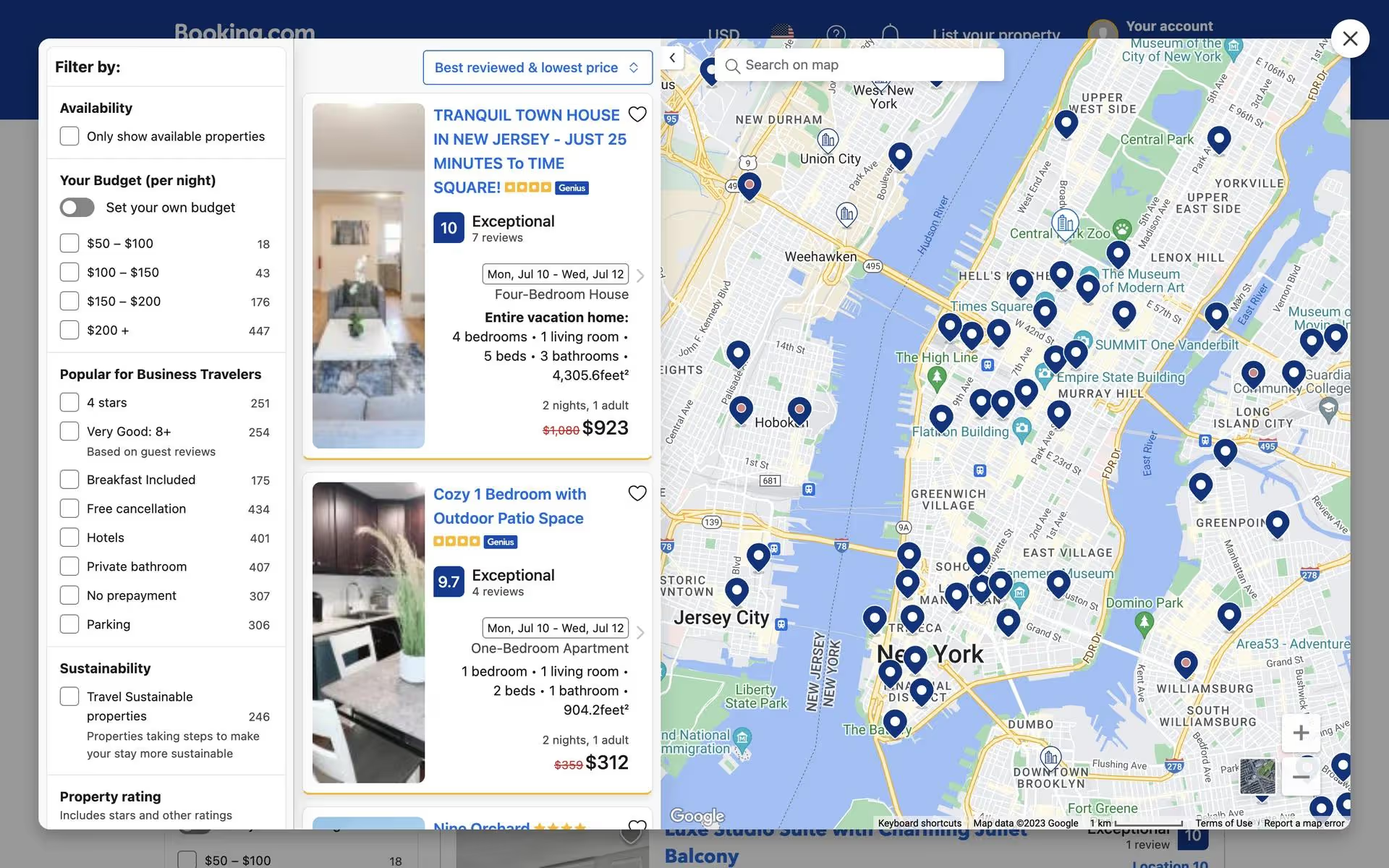
This deep blue is a favorite among many successful brands. Companies like Remote, Zocdoc, and Booking.com use similar shades to project reliability and professionalism. Its presence in the branding of tech and travel giants such as Vrbo and Amplitude points to its effectiveness in building user trust.
To see how Oxford Blue works in practice, use the tools below. You can explore curated palettes, check color contrast ratios for accessibility, and see the color applied to real UI components from top applications.
Using Oxford Blue color codes
When working with Oxford Blue, the hex code #002147 is your primary reference for any digital application. Maintaining this exact code across design files and development environments is key to achieving perfect color consistency from mockup to final product.
Different projects require different color models. While HEX is standard for the web, you will need to convert #002147 for other uses. RGB (Red, Green, Blue) values are fundamental for digital screens, defining the color through light. For print materials, CMYK (Cyan, Magenta, Yellow, Key/Black) values determine the precise ink formulation. Other formats like HSL (Hue, Saturation, Lightness) provide a more intuitive model for making color adjustments.
To simplify your workflow, we have converted Oxford Blue's #002147 code into a range of popular formats. You can find and copy the exact values you need for your project directly below.
Analogous
Analogous colors are found next to Oxford Blue on the color wheel. This combination creates a harmonious and serene palette, ideal for calm designs.
Complementary
Complementary colors sit opposite each other on the color wheel. When paired with Oxford Blue, they create a high-contrast, visually striking effect.
Split Complementary
A split complementary scheme pairs Oxford Blue with the two hues on either side of its opposite color, creating a sophisticated, high-contrast look.
Triadic
A triadic scheme pairs Oxford Blue with two other colors, all equidistant on the color wheel, for a high-contrast and harmonious visual effect.
Tetradic
A tetradic scheme for Oxford Blue uses two pairs of complementary colors, forming a rectangle on the color wheel for a rich, balanced palette.
Square
A square color scheme pairs Oxford Blue with three other colors, all equidistant on the color wheel, creating a vibrant, high-contrast palette.
Text Color
Background Color
Your Catchy Large Text Goes Here
Shades
Adding black to Oxford Blue creates darker shades, which introduce a sense of weight.
Tints
Tints of Oxford Blue are lighter variations created by adding white for a softer appearance.
Tones
Tones of Oxford Blue are created by adding gray, resulting in softer, more muted variations.
Hues
Hues are variations of Oxford Blue, differing in intensity and temperature to set specific moods.











Never run out of inspiration again.
Use Mobbin for free as long as you like or get full access with any of our paid plans.