Orange
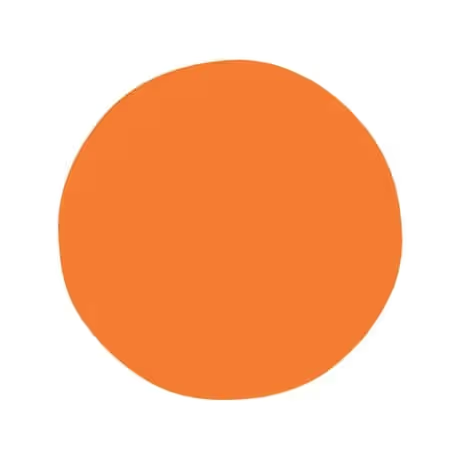
Introducing Orange, #FFA500. This color commands immediate attention with its pure, saturated intensity. Positioned squarely between red and yellow, its radiant quality gives it a distinct visual punch, making it a standout choice for designers looking to make a strong impression.
What color is Orange?
Orange is a secondary color positioned between red and yellow on the color wheel. This placement gives it an inherently warm temperature, with undertones that can lean towards either its fiery red or sunny yellow parent.
Its character shifts dramatically with adjustments in value and saturation. Adding white produces softer tints like peach, while adding black creates deeper shades such as burnt sienna, offering a broad spectrum of expressive possibilities.
What is the meaning of Orange (#FFA500) in UI design?
Orange is a color of enthusiasm and creativity, radiating a warmth that communicates excitement and encouragement.
It symbolizes change and adventure, but is also frequently used to signal warnings or draw immediate attention.
How can I use Orange in UI design?
Orange, with its hex code #FFA500, works exceptionally well as an accent color to draw attention to key elements like buttons and notifications. For a striking visual effect, pair it with its complementary color, blue, to create high contrast. Alternatively, create a warmer, more harmonious feel by combining it with analogous colors such as deep reds and bright yellows. Pairing Orange with dark charcoal or a clean off-white can also produce a modern and polished interface.
While not as ubiquitous as blue or black, Orange is the choice for bold brands aiming to make a statement. Companies like Mural, GitLab, Crunchbase, Udemy, Bloomberg, and Height use it to signal creativity and confidence. Its relative rarity in branding means it can give a product a unique and memorable identity.
To see these principles in action, use the tools below. You can explore curated palettes, check your color combinations for accessibility, and see how Orange looks within the actual interfaces of leading applications.
Using Orange color codes
The most direct way to specify Orange in digital design is with its hex code, #FFA500. This is a universal standard for web projects, ensuring consistent representation across browsers and devices.
Your project might require different color codes depending on the medium. For digital screens, you'll use RGB (Red, Green, Blue) values, which define the light emitted. For print materials, you'll need CMYK (Cyan, Magenta, Yellow, Key) values that dictate ink combinations. Other formats like HSL (Hue, Saturation, Lightness) offer a more intuitive way to make color adjustments.
To help you get started, we've converted #FFA500 into a range of popular formats below. Just find the code you need and copy it directly into your design tool.
Analogous
Analogous colors sit beside Orange on the color wheel. This combination produces a rich, cohesive look that is naturally calming and comfortable for the eye.
Complementary
To find Orange's complementary counterpart, look to the opposite side of the color wheel. This pairing offers the strongest possible visual contrast.
Split Complementary
A split complementary palette for Orange pairs it with the two colors adjacent to its direct opposite, offering a sophisticated, high-contrast combination.
Triadic
A triadic scheme for Orange involves two other colors, all equally spaced on the color wheel, resulting in a bold and balanced palette.
Tetradic
Tetradic color schemes for Orange use four hues in total, formed by two sets of complementary colors, creating a rich and balanced rectangular palette.
Square
A square color scheme uses four colors equidistant on the color wheel. Based on Orange, this combination offers a vibrant and balanced high-contrast palette.
Text Color
Background Color
Your Catchy Large Text Goes Here
Shades
Shades are darker versions of Orange made by adding black for a heavier, deeper feel.
Tints
Tints are created by mixing white into Orange, producing softer and less saturated variations.
Tones
Tones of Orange are created by adding gray, resulting in a less saturated, muted effect.
Hues
Hues are variations of Orange, differing in intensity or temperature to create specific moods.







Never run out of inspiration again.
Use Mobbin for free as long as you like or get full access with any of our paid plans.