Mantis
Meet Mantis (#1CE783), a green that commands attention. Its electric vibrancy and high saturation give it a distinctly digital feel, making it pop off the screen with an almost luminous quality.
What color is Mantis?
Mantis is a brilliant green with a cool temperature, positioned squarely between classic green and yellow-green. Its character comes from a subtle yellow undertone that gives it a zesty, energetic feel.
The color, #1CE783, is defined by its intense saturation and luminosity, lending it a crisp, almost digital vibrancy that immediately draws the eye.
What is the meaning of the color Mantis?
Mantis (#1CE783) merges the psychological association of green with growth and the electric feel of the digital world, symbolizing progress and fresh ideas.
The hue evokes a sense of vibrant energy and alertness, suggesting an optimistic and forward-thinking perspective.
How can I use the color Mantis in my UI design?
Given its intensity, Mantis works exceptionally well as an accent color. Apply it to interactive elements like CTAs, toggles, or notification badges to draw immediate attention, especially against a dark or neutral interface. For a balanced composition, consider the 60-30-10 principle, assigning Mantis to the smallest, 10% portion of your palette alongside charcoals and deep navies.
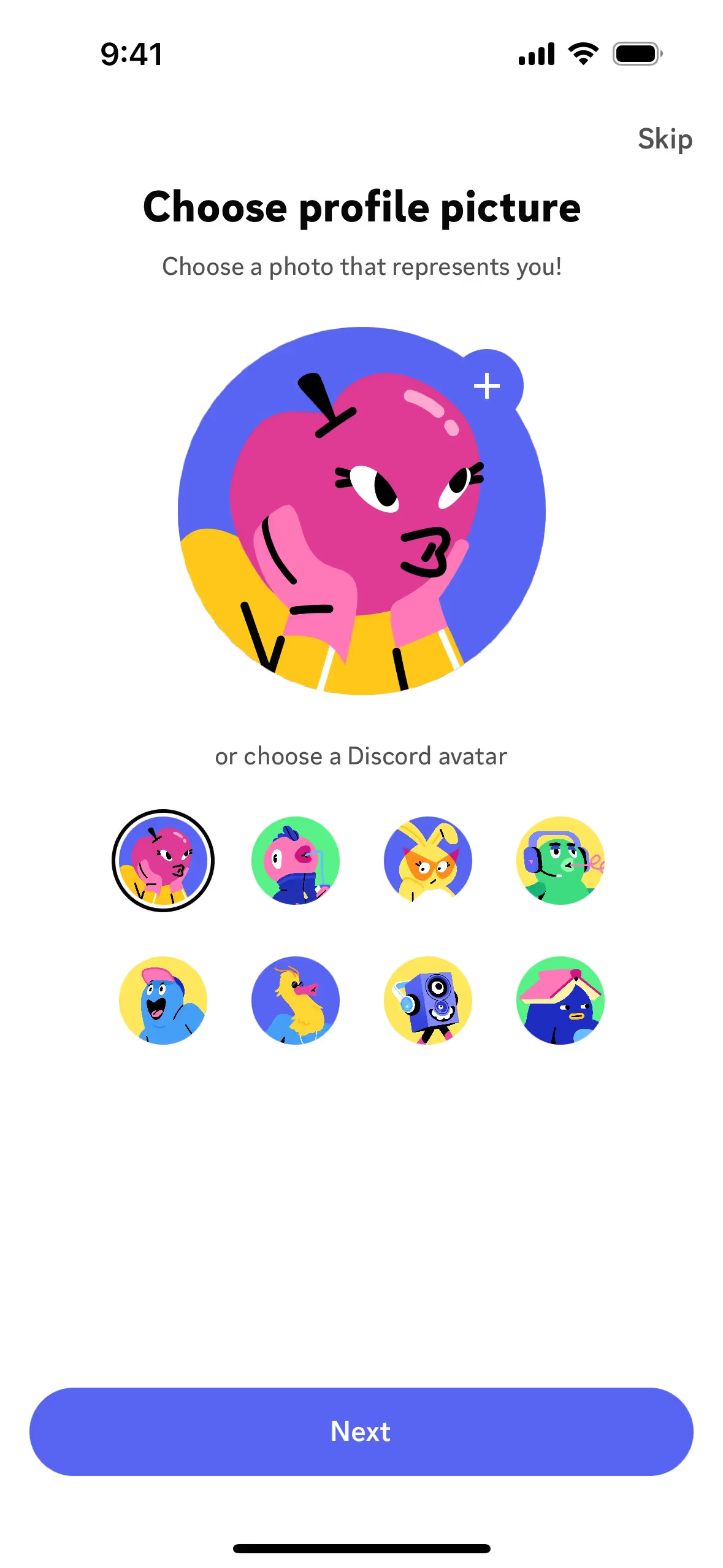
You'll find similar electric greens in the branding of companies like Hulu, Discord, and Blinkist. This choice often signals a fresh, energetic identity within the tech and media space, helping a product stand out from the crowd.
Explore curated palettes, test color contrast for accessibility, and preview Mantis in real UI components from top brands using the tools below.
Using Mantis color codes?
Working with the Mantis color code, #1CE783, is straightforward for web projects where HEX is standard. However, translating this vibrant green for print or other digital applications requires converting it into different color models.
Each color code serves a specific purpose. RGB is the standard for digital displays, defining colors by mixing light. For printed materials, CMYK is used, as it's based on ink absorption. Other models like HSL offer intuitive ways to adjust color properties for creating palettes.
To help you apply Mantis across your projects, we've converted #1CE783 into a range of popular formats. You can find and copy the exact codes you need below.
Analogous
Analogous colors are neighbors on the color wheel. When paired with Mantis, they create a harmonious and visually pleasing palette, often perceived as calm.
Complementary
A complementary scheme pairs Mantis with its direct opposite on the color wheel, creating a bold and energetic palette with maximum visual contrast.
Split Complementary
A split complementary palette pairs Mantis with the two colors adjacent to its complement, creating a combination with less tension.
Triadic
Triadic color schemes use three hues equally spaced on the color wheel. With Mantis as a base, this creates a vibrant, high-contrast palette.
Tetradic
A tetradic color scheme uses four colors arranged into two complementary pairs. The following palettes show how Mantis anchors this four-color harmony.
Square
Square color schemes pair Mantis with three other colors, all equidistant on the color wheel, for a balanced yet highly contrasting effect.
Text Color
Background Color
Your Catchy Large Text Goes Here
Shades
Shades are darker versions of Mantis, created by adding black for a heavier, deeper feel.
Tints
Tints of Mantis are created by mixing in white, resulting in lighter, softer variations.
Tones
Tones of Mantis are created by adding gray, which softens its original saturation.
Hues
Hues are variations of Mantis (#1CE783) that alter its intensity and temperature for different visual effects.





Never run out of inspiration again.
Use Mobbin for free as long as you like or get full access with any of our paid plans.