Ember
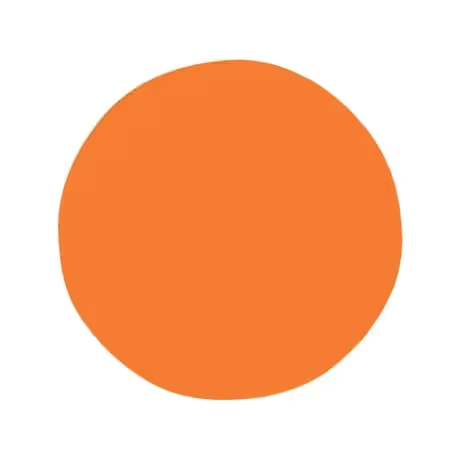
Meet Ember (#F05E1B), a vibrant orange that commands attention. Its high saturation and proximity to red give it a fiery intensity, making it a powerful choice for creating focal points and adding a burst of energy to any design palette.
What color is Ember?
Ember is a fiery, reddish-orange that radiates warmth.
It's a highly saturated hue with distinct red undertones, giving it a bold and energetic character without being overwhelmingly bright.
What is the meaning of the color Ember (#F05E1B)?
The color Ember, #F05E1B, channels a feeling of sustained warmth and creative energy. It suggests a steady passion that is both inviting and inspiring, moving beyond aggressive intensity.
Symbolically, Ember represents the core of an idea or the persistent spark of innovation. It speaks to a mature enthusiasm and a comforting confidence that can drive a design forward.
What are the best practices for using Ember in UI design?
In UI design, Ember’s intensity makes it a powerful accent color. Use #F05E1B for primary calls-to-action, notifications, or interactive elements to draw the user's attention. To create balance, pair its warmth with cooler, muted tones like deep blues, grays, or off-whites. This contrast not only establishes a clear visual hierarchy but also makes interfaces feel both energetic and composed.
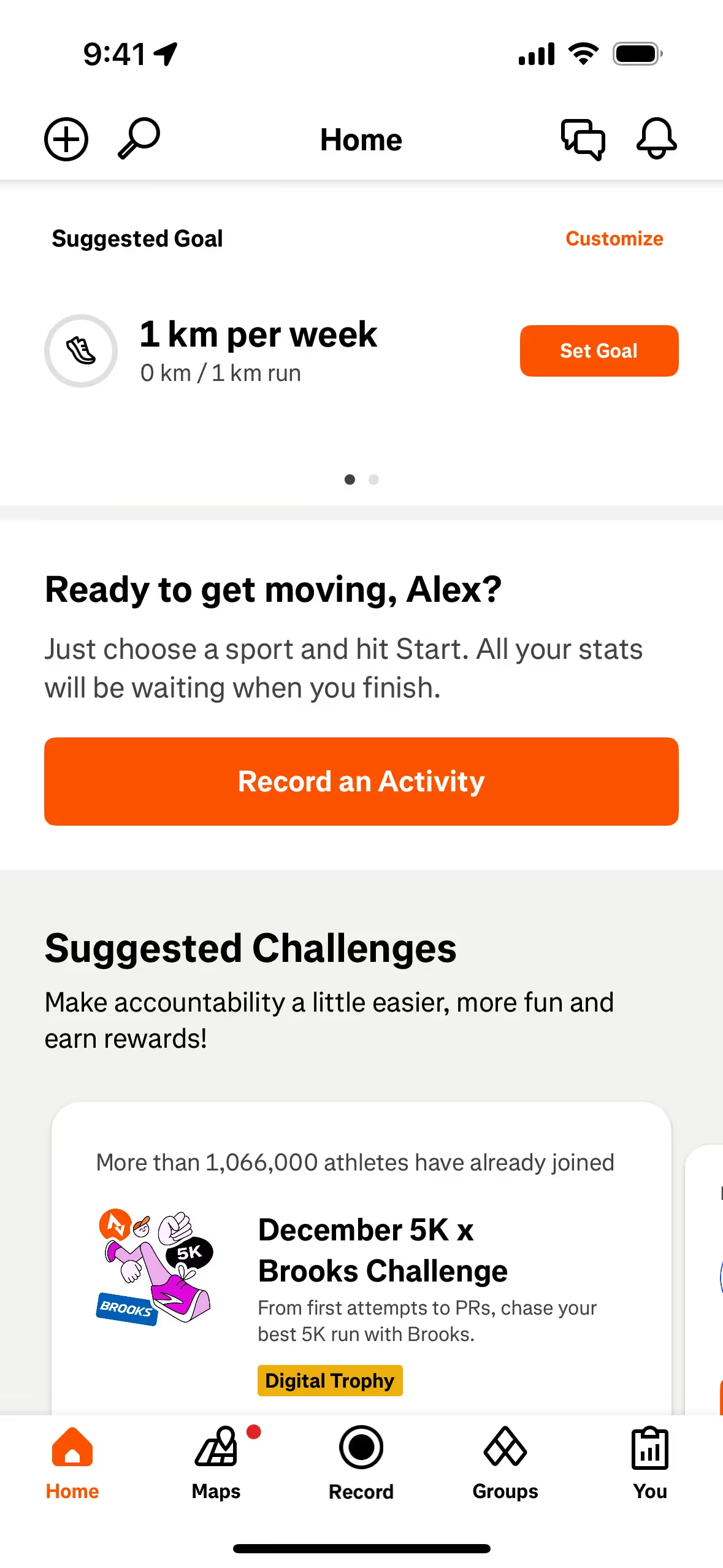
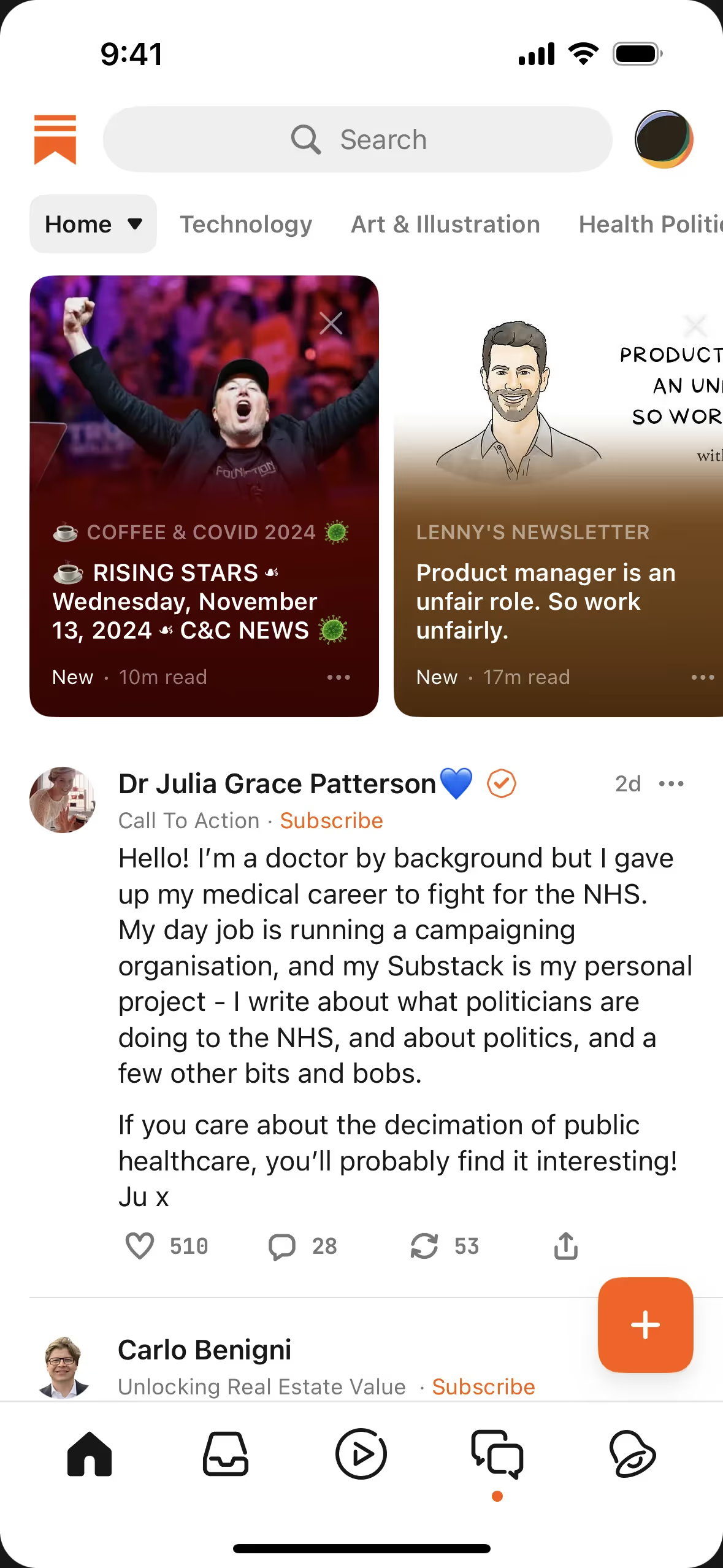
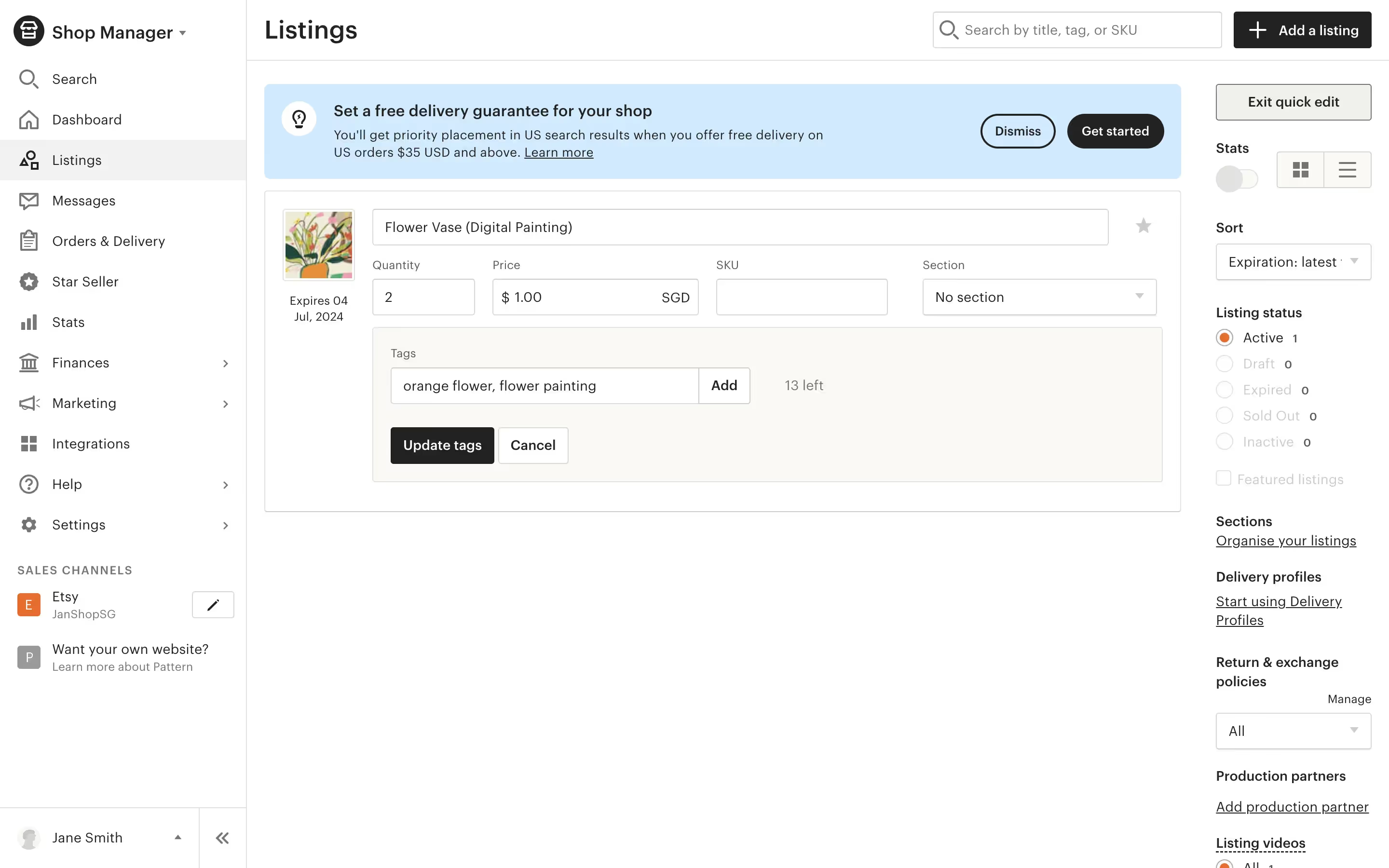
Several prominent brands incorporate colors similar to Ember. Companies like Harvest, Etsy, Substack, and Strava use these vibrant orange hues to guide users toward key actions and inject a sense of creativity and forward motion into their products. This shows its effectiveness in creating an engaging and memorable user experience.
You can use the tools below to explore curated palettes, test color contrast for accessibility, and preview Ember in real UI components from top brands.
Using Ember color codes?
Working with the color Ember starts with its hex code, #F05E1B. While this six-digit code is standard for web development, you'll often need to translate it for different applications, from print media to specific digital design tools.
Each color model serves a unique purpose. RGB (Red, Green, Blue) is fundamental for digital screens, defining colors by mixing light, while CMYK (Cyan, Magenta, Yellow, Key/Black) is the standard for print. Other models like HSL (Hue, Saturation, Lightness) offer more intuitive ways to adjust color properties directly in your design software.
To help you get started, we've converted the Ember hex code #F05E1B into a variety of popular formats. Simply copy the code you need from the list below and paste it directly into your project.
Analogous
Analogous schemes use colors adjacent to Ember on the color wheel. This combination produces a visually pleasing and unified look, often perceived as calm.
Complementary
Complementary colors are opposites on the color wheel. When paired with Ember, these hues create a high-contrast, vibrant visual effect.
Split Complementary
This scheme creates a vibrant, balanced look by pairing Ember with the two colors that sit on either side of its direct complement.
Triadic
Triadic color schemes use three colors equally spaced on the color wheel. With Ember as a base, this creates a vibrant, high-contrast palette.
Tetradic
Tetradic schemes pair Ember with three other colors, creating two complementary pairs for a rich and balanced combination.
Square
A square color scheme uses four colors equidistant on the color wheel. With Ember as a base, this combination offers vibrant, high-contrast palettes.
Text Color
Background Color
Your Catchy Large Text Goes Here
Shades
Shades are darker versions of Ember, made by adding black for more depth and weight.
Tints
Tints are lighter versions of Ember, made by adding white to create a softer, more delicate appearance.
Tones
Tones of Ember are created by adding gray, resulting in softer, less saturated variations.
Hues
Hues are variations of Ember, differing in intensity or temperature to create distinct moods.







Never run out of inspiration again.
Use Mobbin for free as long as you like or get full access with any of our paid plans.