Wheat
Meet Wheat (#F5DEB3), a soft, pale tint of yellow with a distinctively warm and earthy quality. Its gentle luminosity and subtle complexity make it a versatile foundation for palettes that require a touch of organic sophistication without overpowering the core design elements.
What color is Wheat?
Wheat is a pale shade of brown with a noticeable warmth, much like the color of ripened grain stalks. It occupies a space between a light tan and a soft yellow, giving it a gentle, earthy character.
From a technical standpoint, its warmth comes from strong yellow and subtle orange undertones. The color is characteristically muted and low in saturation, creating a soft, natural appearance.
What is the symbolic meaning of the color Wheat (#F5DEB3)?
The color Wheat, #F5DEB3, carries the symbolism of harvest, abundance, and the natural world. It evokes feelings of warmth and comfort, grounding designs with an earthy and approachable quality.
Historically tied to nourishment and sustenance, Wheat represents stability and a connection to simple, honest beginnings. It’s a color that suggests reliability and a sense of peace.
How can I use Wheat in my UI design?
In UI design, Wheat works best as a warm, inviting background that’s softer than stark white. For accessibility and visual punch, pair #F5DEB3 with high-contrast colors for text and interactive elements, like deep forest greens, charcoal grays, or rich burgundies. This creates a balanced and readable interface.
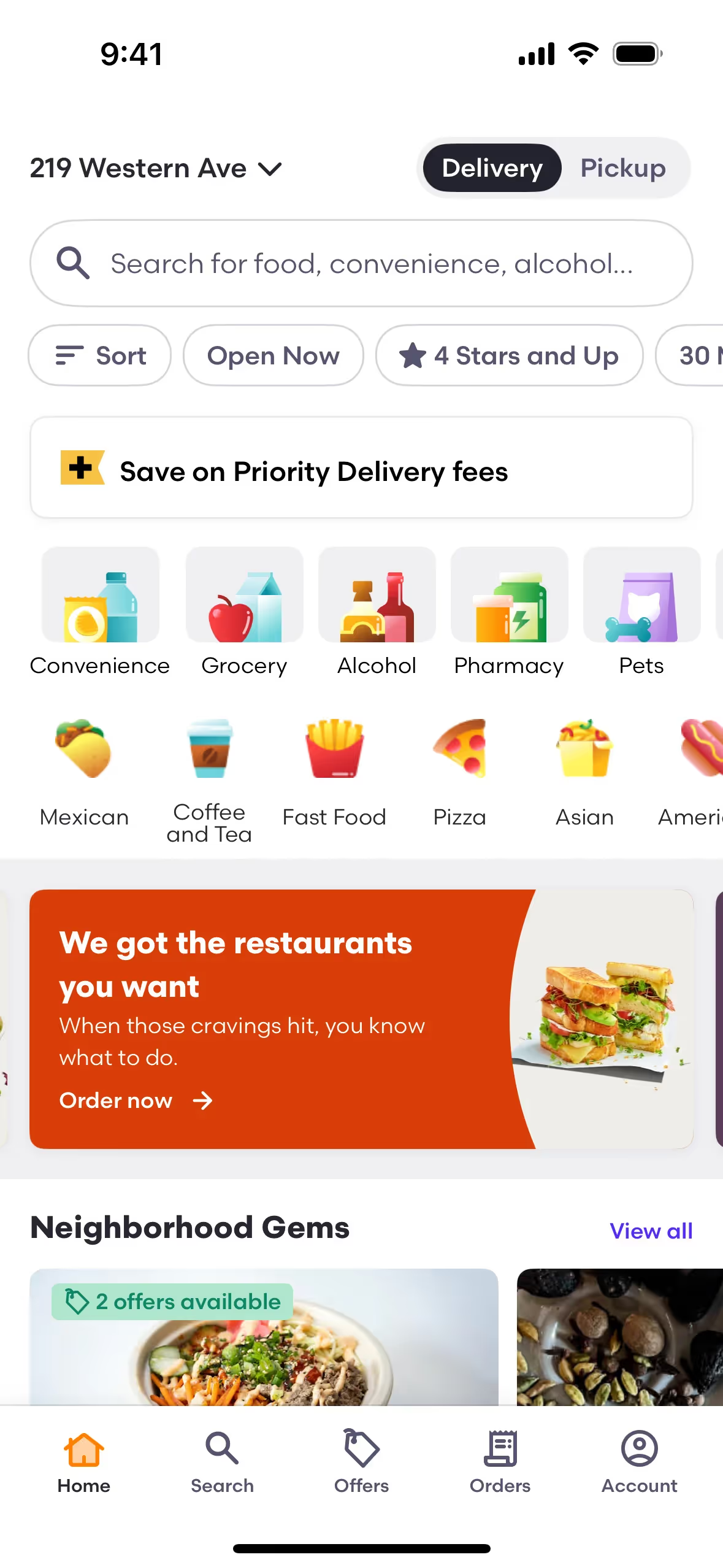
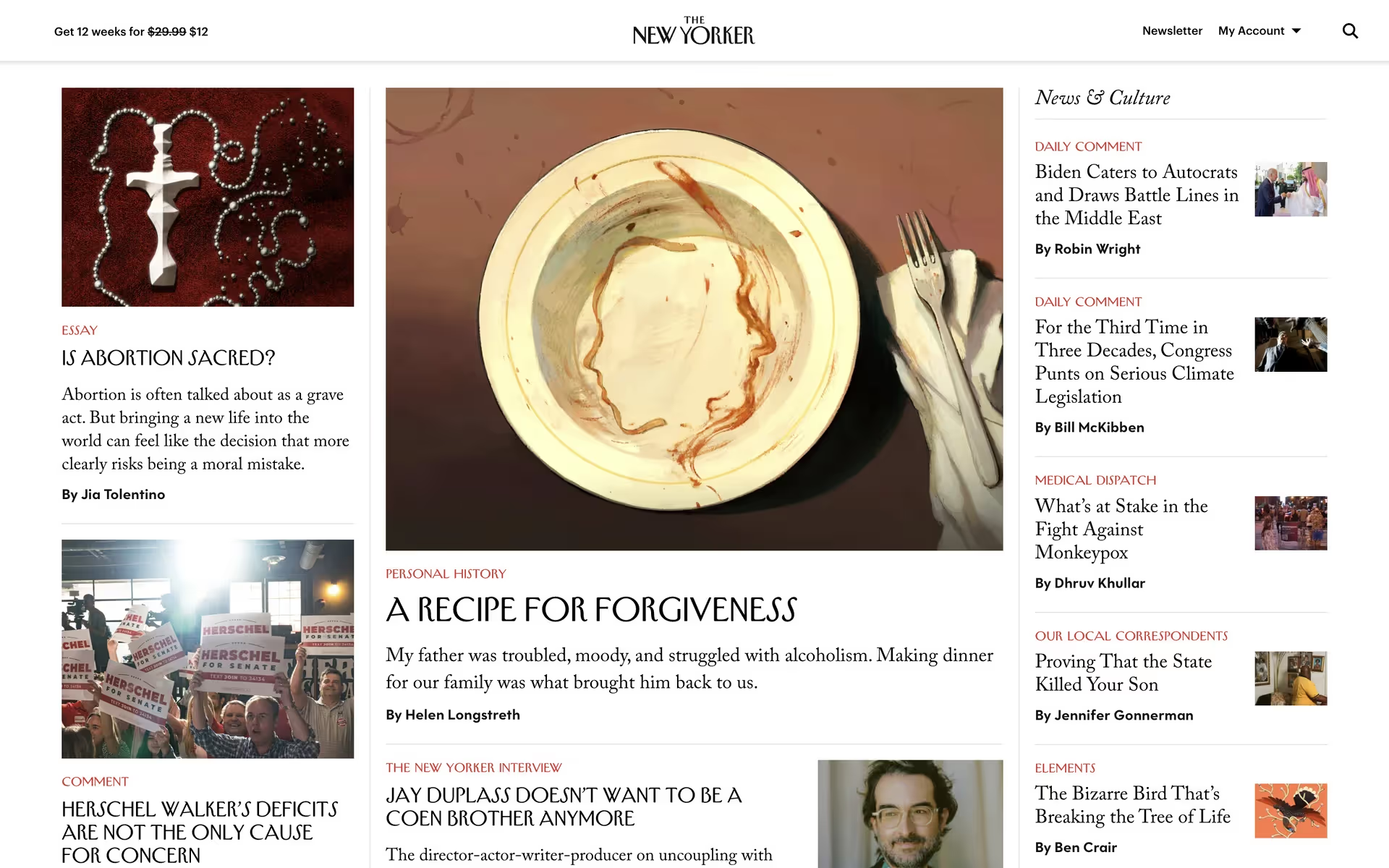
While not a dominant color in tech, established brands like Grubhub and The New Yorker use similar creamy hues to project warmth and a classic feel. Using Wheat can differentiate a design, giving it a more organic and less clinical appearance than standard neutral palettes.
You can use the tools below to explore curated palettes, test color contrast for accessibility, and preview Wheat in real UI components from top brands.
How do I use the Wheat color codes?
While #F5DEB3 is the go-to hex code for using Wheat in digital projects, different mediums call for different color models. Your design software can easily convert this hex value to fit your specific needs, whether you're working on a screen or for print.
For instance, the RGB value is essential for digital displays that mix red, green, and blue light, while the CMYK equivalent is necessary for printed materials that use a subtractive color process. Other models like HSL (Hue, Saturation, Lightness) offer a more intuitive way to make adjustments during the design process.
To help you get started, we've converted the Wheat hex code #F5DEB3 into a range of popular formats. Simply find the one you need and copy it for your project.
Analogous
Analogous colors sit side-by-side on the color wheel. Using them with Wheat results in a cohesive and soothing palette for any interface.
Complementary
Complementary colors are opposites on the color wheel. When paired with Wheat, its complement creates a high-contrast combination that is visually striking.
Split Complementary
A split complementary scheme for Wheat uses the two colors adjacent to its direct complement, offering a vibrant yet balanced palette.
Triadic
Triadic palettes pair Wheat with two additional hues from equidistant points on the color wheel, resulting in a balanced yet striking color combination.
Tetradic
Tetradic schemes use two complementary color pairs. For Wheat, this creates a rich, four-color palette by forming a rectangle on the color wheel.
Square
A square scheme combines two pairs of complementary colors. With Wheat as a base, this creates a rich, high-contrast palette with four evenly spaced hues.
Text Color
Background Color
Your Catchy Large Text Goes Here
Shades
Shades are darker versions of Wheat, made by adding black to create depth and weight.
Tints
Tints are lighter versions of Wheat, created by adding white for a softer, more delicate feel.
Tones
Tones are created by adding gray to Wheat, resulting in softer, less saturated versions.
Hues
Hues are variations of Wheat, sharing its base color but differing in intensity or temperature.

Never run out of inspiration again.
Use Mobbin for free as long as you like or get full access with any of our paid plans.