Ultra Pink
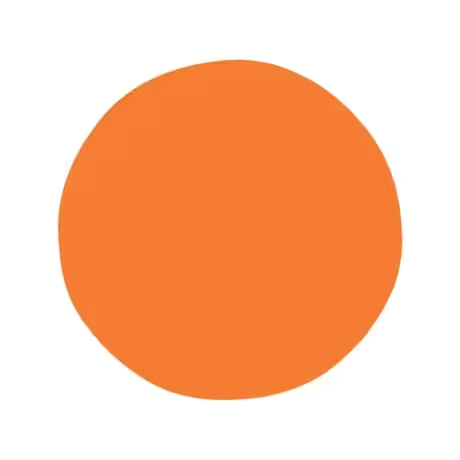
Meet Ultra Pink, #FF6FFF. This isn't your average pink; it's a high-saturation, near-neon hue that commands attention. Its electric quality gives it a distinct digital-first feel, sitting at the vibrant intersection of magenta and pure fuchsia, making it a powerful choice for any palette.
What color is Ultra Pink?
Ultra Pink is a vivid magenta hue, characterized by its high saturation and cool, blueish undertones.
The color's composition, close to #FF6FFF, gives it a cool temperature while maintaining a radiant, almost luminous quality.
What is the meaning of Ultra Pink (#FF6FFF) in design?
Ultra Pink is an audacious shade that takes the playful energy of pink and injects it with a rebellious, high-voltage confidence.
Symbolically, it represents a bold, modern femininity and digital-age vibrancy, stirring feelings of passion and non-conformity.
How can I use Ultra Pink in my UI design?
Ultra Pink’s high saturation makes it an excellent choice for accents, highlights, and calls-to-action that demand attention. To balance its vibrancy, set it against a backdrop of dark neutrals like charcoal gray or off-black. For a more dynamic composition, you can create compelling visual pairings by contrasting it with deep jewel tones like sapphire blue or emerald green.
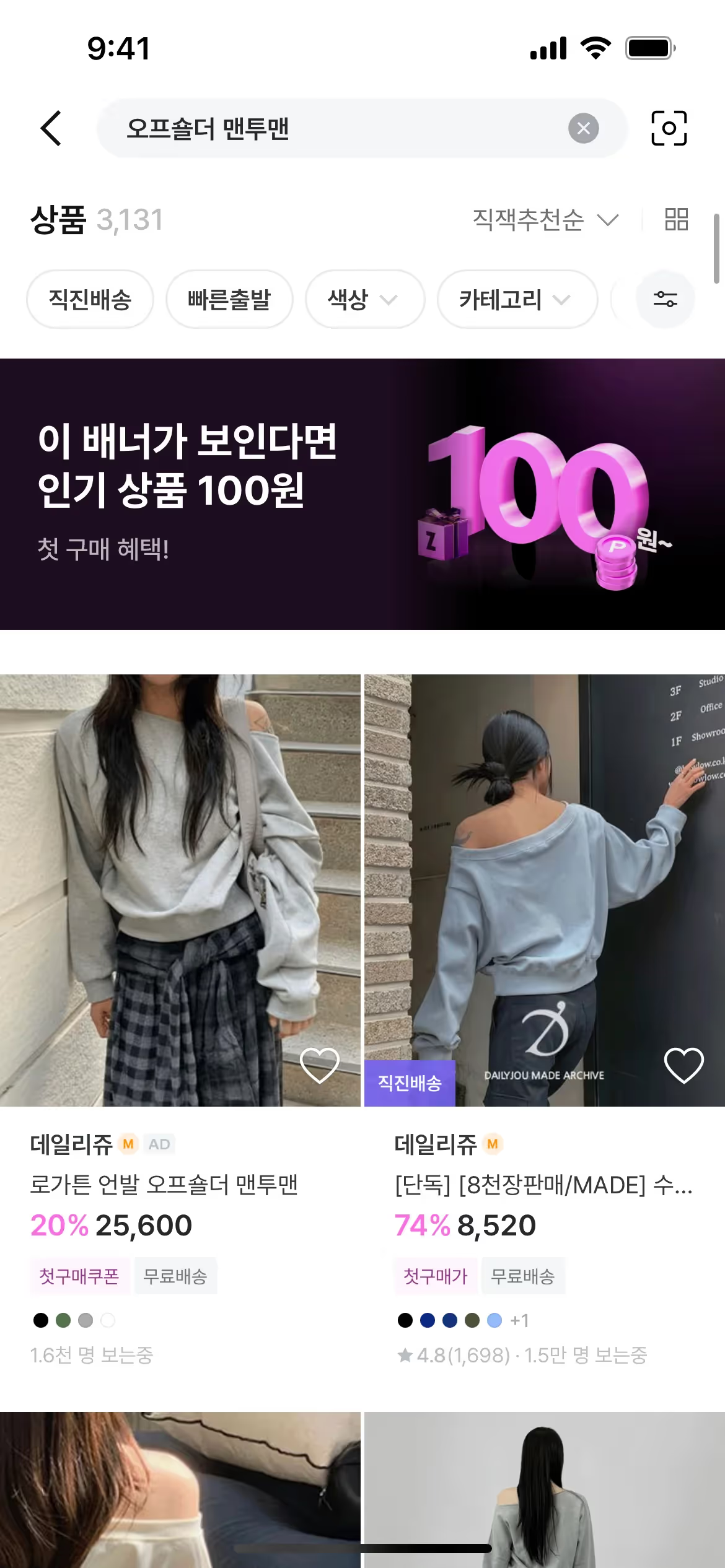
While not a frequent choice for a primary brand color, some companies like Mural and ZIGZAG use similar energetic pinks to project a bold and creative identity. Choosing a distinctive color like Ultra Pink can be a strategic move to differentiate a product and make it more memorable.
To see these ideas applied, use the tools below to explore curated palettes, check color contrast for accessibility, and preview Ultra Pink (#FF6FFF) in real UI components from top brands.
How do I use the Ultra Pink color codes?
When working with Ultra Pink, its high saturation makes it a powerful accent. The hex code #FF6FFF is your starting point for any digital application, but you'll need other formats for different media.
For example, RGB (Red, Green, Blue) values are required for anything displayed on a screen, while CMYK (Cyan, Magenta, Yellow, Black) values are necessary for printed materials. Converting the primary hex code to these other formats is key for maintaining color consistency across projects.
To help you get started, we’ve converted #FF6FFF to a range of popular color codes. You can find and copy the exact values you need for your work below.
Analogous
Analogous colors sit next to each other on the color wheel. Paired with Ultra Pink, they produce a balanced and serene palette.
Complementary
Complementary colors are opposites on the color wheel. When paired with Ultra Pink, they create a striking, high-contrast visual that immediately grabs attention.
Split Complementary
For a more nuanced harmony, a split complementary scheme pairs Ultra Pink with the two colors adjacent to its direct complement on the color wheel.
Triadic
Triadic color schemes use three hues evenly spaced on the color wheel. For Ultra Pink, this creates a vibrant, high-contrast, and balanced palette.
Tetradic
A tetradic color scheme for Ultra Pink uses two pairs of complementary colors, forming a rectangle on the color wheel for a vibrant palette.
Square
Square color schemes pair Ultra Pink with three other colors, all spaced evenly on the color wheel for a balanced yet striking effect.
Text Color
Background Color
Your Catchy Large Text Goes Here
Shades
Shades are darker versions of Ultra Pink, made by adding black for more depth and weight.
Tints
By adding white to Ultra Pink, you create tints—lighter variations with a softer appearance.
Tones
Tones are created by adding gray to Ultra Pink, producing softer, less saturated variations.
Hues
Hues are variations of Ultra Pink, differing in intensity or temperature to create distinct effects.


Never run out of inspiration again.
Use Mobbin for free as long as you like or get full access with any of our paid plans.