Sandy Tan
Meet Sandy Tan (#FDD9B5), a soft, sun-kissed neutral that brings a gentle warmth to any palette. Its subtle peachy undertones give it a luminous quality, making it a versatile yet distinctive choice for modern digital interfaces.
What color is Sandy Tan?
Sandy Tan is a light, warm shade with a soft orange-yellow undertone. Its muted quality gives it a gentle appearance, avoiding the intensity of a pure orange or yellow.
Think of it as a delicate balance between a pale apricot and a soft beige, creating a sun-kissed warmth that feels both comforting and sophisticated.
What is the meaning of the color Sandy Tan (#FDD9B5)?
Sandy Tan, with its hex code #FDD9B5, brings a sense of warmth and comfort. It's an approachable and grounded color that suggests the tranquility of a sun-drenched beach, creating a feeling of calm and relaxation.
Symbolically, this gentle neutral represents stability, simplicity, and a connection to the natural world. Its understated elegance makes it a timeless choice, conveying reliability without being overpowering.
How can I use Sandy Tan in my UI design?
In UI and web design, Sandy Tan works beautifully as a primary background color, lending a warm and organic feel to an interface. To ensure readability and meet accessibility guidelines, pair it with high-contrast text in dark shades like charcoal, deep navy, or rich espresso brown. For a harmonious layout, apply the 60-30-10 principle: use #FDD9B5 as the dominant neutral, a secondary color like slate gray or olive green for supporting elements, and a vibrant accent for key interactive components.
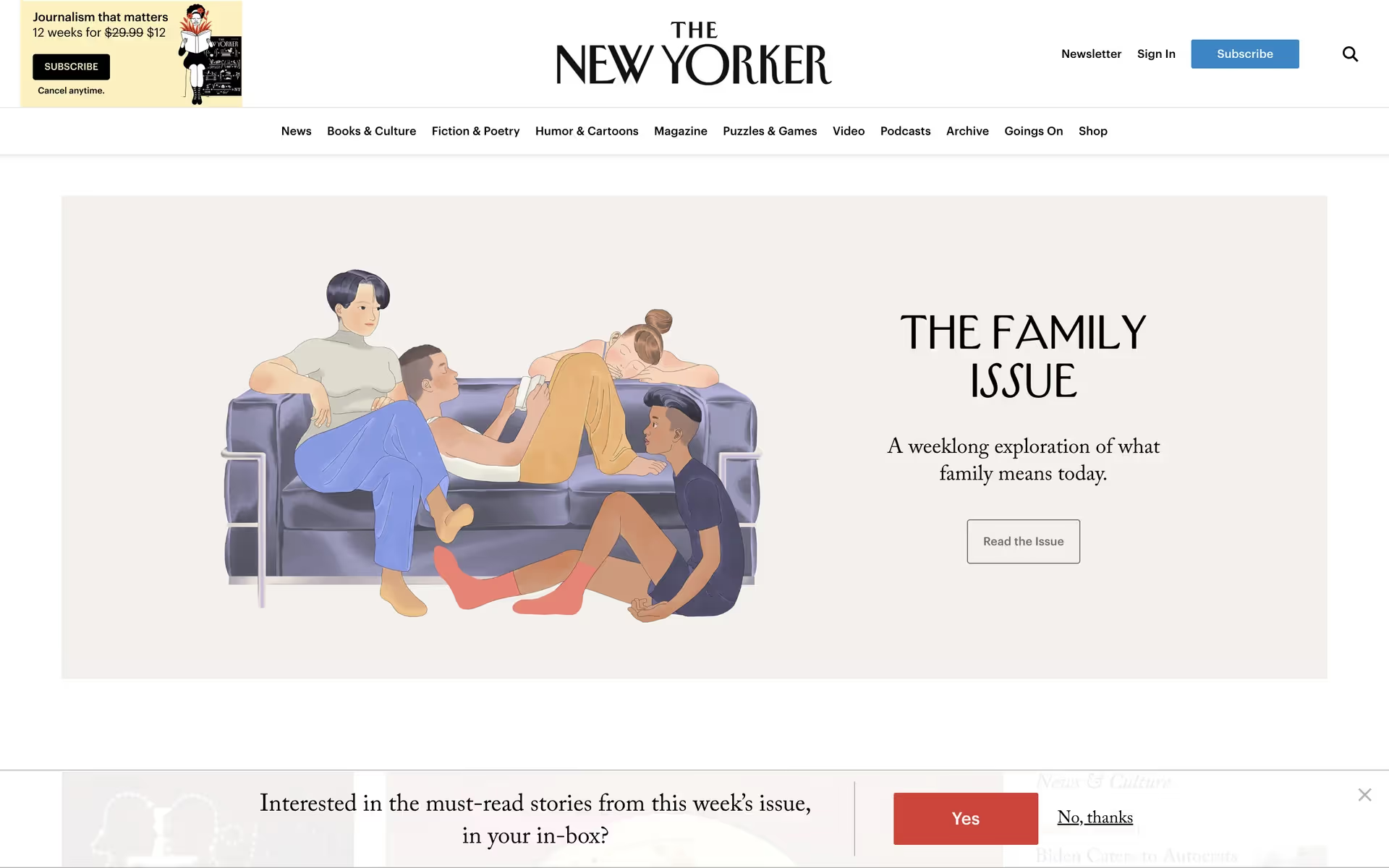
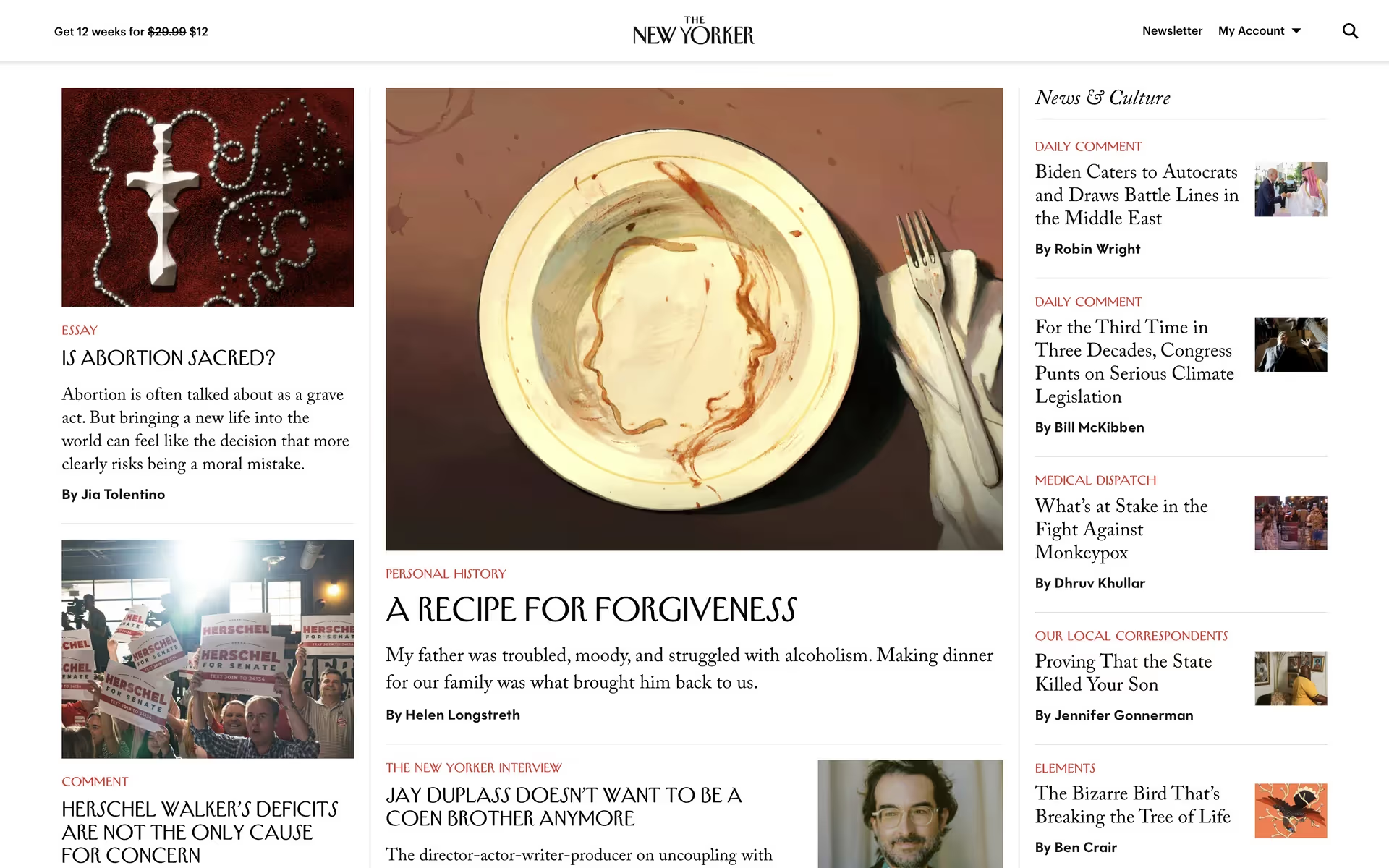
A color like Sandy Tan is not widely used by major brands, which gives it an air of distinction and sophistication. Its classic, almost parchment-like quality is reminiscent of the aesthetic found in publications such as The New Yorker. For a product, this color can signal a thoughtful, artisanal, or literary identity, helping it stand out in a crowded market.
You can use the tools below to explore curated palettes, test color contrast for accessibility, and preview Sandy Tan in real UI components from top brands.
Using Sandy Tan color codes?
When working with Sandy Tan, consistency is critical. Using the specific hex code #FDD9B5 ensures the color appears uniform across all your digital assets, from a website to a mobile application.
While #FDD9B5 is standard for the web, you will need to convert it for other mediums. RGB values, for example, define color for digital screens, whereas CMYK codes are necessary for any materials intended for print. Other models like HSL (Hue, Saturation, Lightness) provide a more intuitive way to make color adjustments.
To help you get started, we’ve converted Sandy Tan’s #FDD9B5 hex code into a range of popular formats. You can find and copy the exact values you need for your project below.
Analogous
Found next to each other on the color wheel, analogous colors create a serene and cohesive palette when used alongside Sandy Tan.
Complementary
To find Sandy Tan's complementary colors, look directly across the color wheel. These pairings produce a vibrant and energetic visual contrast.
Split Complementary
A split complementary scheme pairs Sandy Tan with the two colors adjacent to its complement, creating a vibrant look with less visual tension.
Triadic
A triadic combination pairs Sandy Tan with two other colors, all equally distant on the color wheel, resulting in a bold and balanced look.
Tetradic
Tetradic palettes create rich combinations by pairing Sandy Tan with three other colors, forming a rectangle of two complementary pairs on the color wheel.
Square
A square color scheme pairs Sandy Tan with three other colors, all equidistant on the color wheel, creating a balanced yet contrasting effect.
Text Color
Background Color
Your Catchy Large Text Goes Here
Shades
Shades of Sandy Tan are darker tones made by adding black, giving designs more depth and weight.
Tints
Tints of Sandy Tan are created by mixing in white, resulting in softer, lighter variations.
Tones
Tones are muted versions of Sandy Tan, created by adding gray to soften its saturation.
Hues
Hues are variations of Sandy Tan, differing in intensity or temperature to create distinct moods.

Never run out of inspiration again.
Use Mobbin for free as long as you like or get full access with any of our paid plans.