Safety Yellow
Meet Safety Yellow, #EED202. This isn't just any yellow; it's a high-voltage hue that practically vibrates off the screen. Its intense luminosity and pure, unapologetic brightness make it a powerful tool for grabbing attention and creating immediate focal points in any design composition.
What color is Safety Yellow?
Safety Yellow is a brilliant and highly saturated yellow, defined by its distinct warmth. It’s an intense hue that leans more towards gold than a cooler, lemon-like yellow.
The color has a subtle golden undertone, giving it a substantial quality without sacrificing its sharp clarity. This warmth provides a vibrant, luminous appearance.
What is the meaning of the color Safety Yellow (#EED202)?
Safety Yellow, with its hex code #EED202, is a color of dual meanings. While its bright disposition evokes feelings of energy and optimism, its primary psychological impact is to command attention and signal caution.
Chosen for its high visibility, it has become a universal symbol for awareness and warning, rooted in its ability to be perceived quickly by the human eye.
How should I use Safety Yellow in my UI design?
Because of its intensity, Safety Yellow (#EED202) works best as an accent color to guide attention toward key elements like notifications, calls-to-action, or interactive states. For maximum impact and readability, pair it with dark, cool-toned neutrals like charcoal gray or deep navy blue. These pairings create a strong visual hierarchy and make the vibrant yellow pop without overwhelming the user.
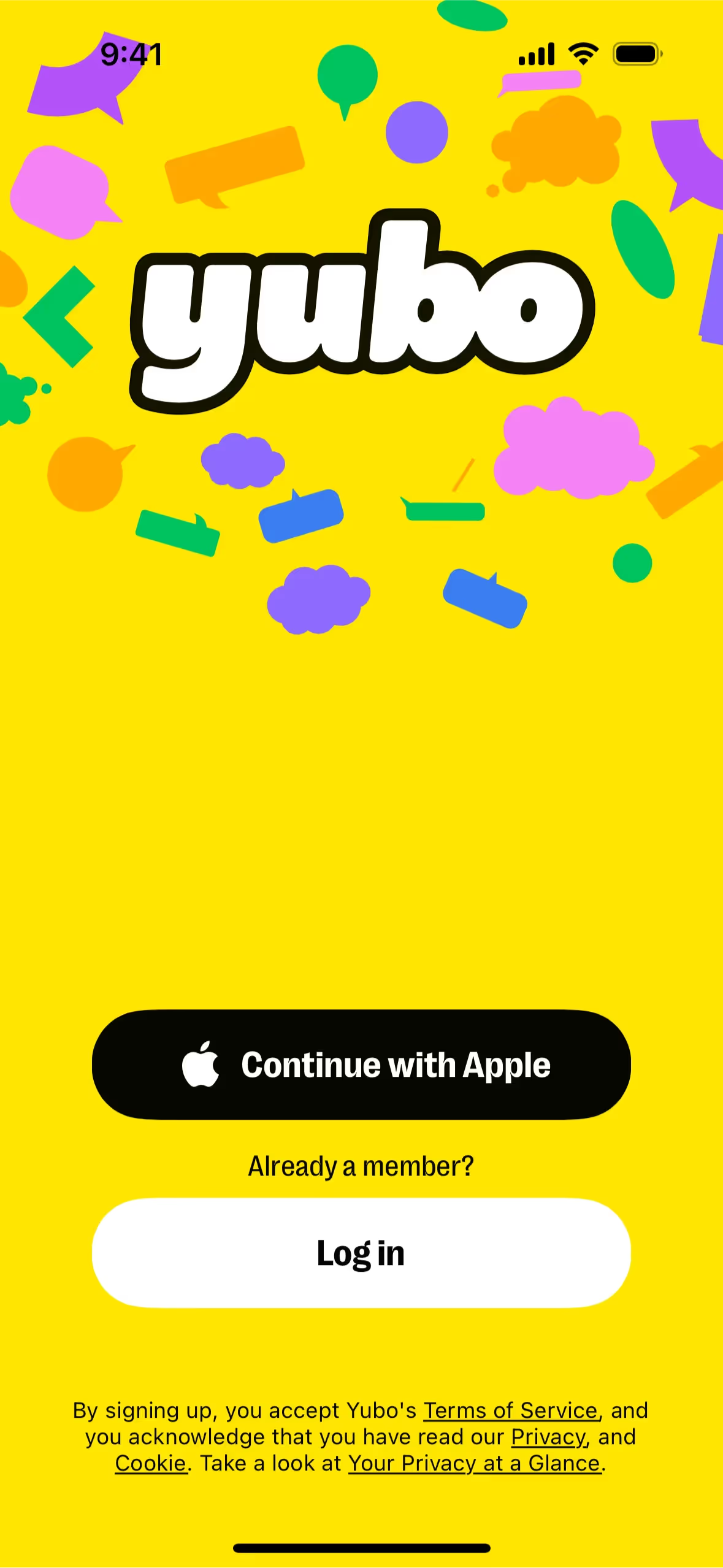
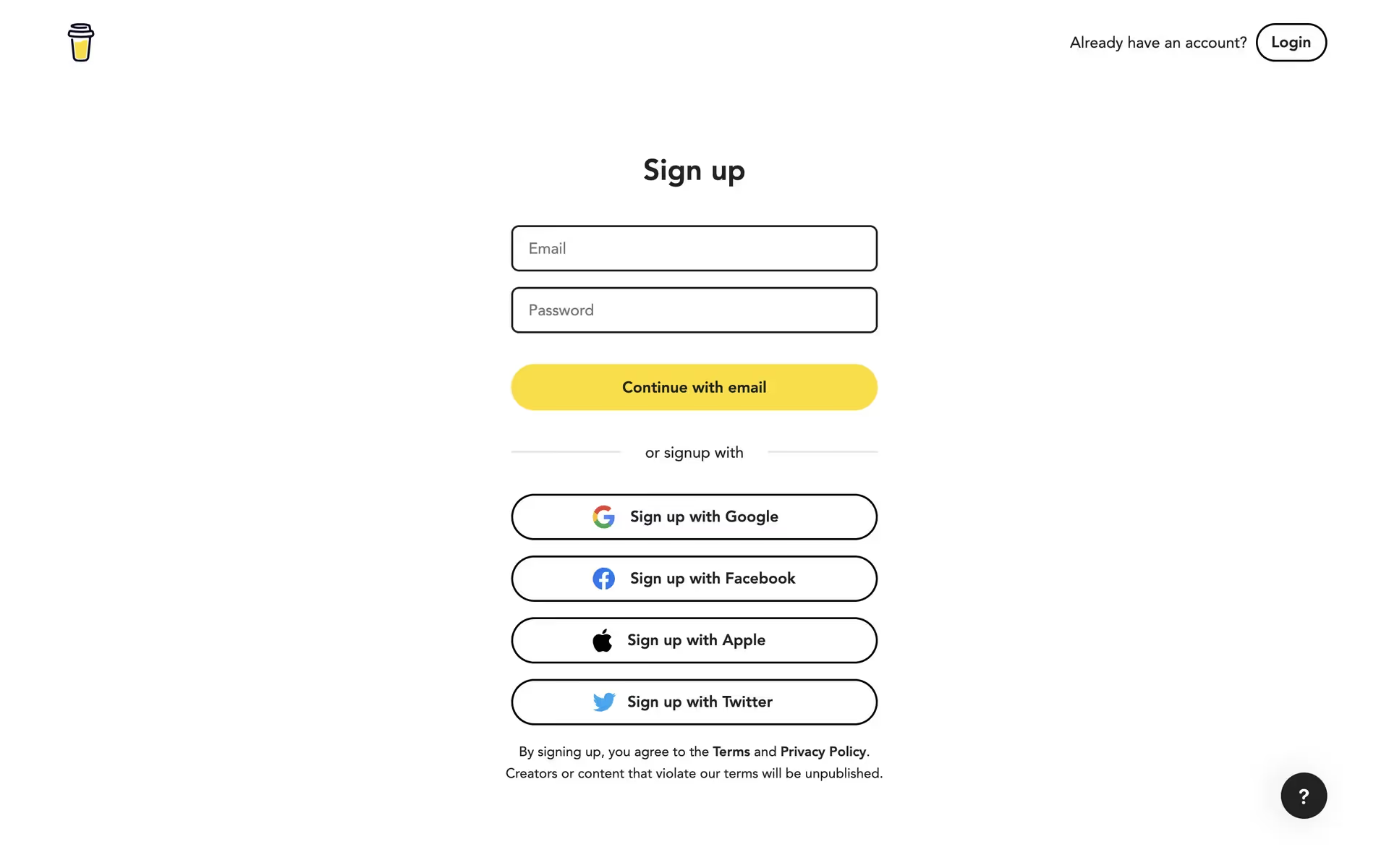
While not a dominant color in the branding world, several well-known companies use similar yellows to project energy and stand out. Brands like IKEA, Buy Me a Coffee, Rarible, and Vevo incorporate bright yellow to create a bold and memorable identity. Its infrequent use means choosing Safety Yellow can give a product a distinctive visual signature.
To see these principles in practice, use the tools below to explore curated palettes, test color contrast for accessibility, and preview Safety Yellow in real UI components from top brands.
How do I use the Safety Yellow color codes?
To apply Safety Yellow in your digital projects, use its hex code: #EED202. This code is the standard for defining colors in CSS and is directly supported by most design software. Simply copy and paste it into your color picker or stylesheet to get started.
While #EED202 is perfect for web development, you might need other formats for different applications. For instance, RGB (Red, Green, Blue) values define color for digital screens, while CMYK (Cyan, Magenta, Yellow, Key) is essential for print work. Other models like HSL (Hue, Saturation, Lightness) offer a more intuitive way to make adjustments during the design process.
To make things easier, we've converted Safety Yellow's #EED202 hex code into several popular color models. You can find and copy the exact values you need for your project below.
Analogous
Analogous colors are found side-by-side on the color wheel. With Safety Yellow, they form a unified and soothing color scheme, pleasing to the eye.
Complementary
Colors opposite Safety Yellow on the color wheel are its complement. This pairing produces a vibrant, high-contrast effect, making both colors pop.
Split Complementary
A split complementary scheme pairs Safety Yellow with the two colors neighboring its opposite on the color wheel, creating a high-contrast yet harmonious look.
Triadic
Triadic color schemes use three colors equally spaced on the color wheel, creating a vibrant and balanced palette when paired with Safety Yellow.
Tetradic
A tetradic scheme pairs Safety Yellow with three other colors, forming two complementary pairs in a rectangle on the color wheel.
Square
A square color scheme uses four colors evenly spaced on the color wheel, resulting in a vibrant, high-contrast palette built around Safety Yellow.
Text Color
Background Color
Your Catchy Large Text Goes Here
Shades
Adding black to Safety Yellow creates shades, which introduce a sense of depth and weight.
Tints
Tints of Safety Yellow are lighter versions made by adding white for a softer look.
Tones
Tones are softer, less saturated versions of Safety Yellow, made by mixing in gray.
Hues
Hues are variations of Safety Yellow, differing in intensity or temperature to create distinct moods.








Never run out of inspiration again.
Use Mobbin for free as long as you like or get full access with any of our paid plans.