Rusty Red
Meet Rusty Red (#D7494C), a color that commands attention without being overpowering. Its character comes from a rich, earthy base, balanced with a vibrant saturation that gives it a contemporary feel. This unique blend makes it a compelling choice for modern interface design.
What color is Rusty Red?
Rusty Red is a warm, earthy shade of red characterized by its distinct brown and orange undertones, reminiscent of oxidized iron.
This gives the color a muted, sophisticated quality, sitting comfortably between a pure red and a burnt orange with moderate saturation.
What is the meaning of Rusty Red (#D7494C)?
Rusty Red (#D7494C) combines the passionate energy of red with the grounded stability of brown. It evokes a sense of warmth and comfort, suggesting a more mature and settled form of vitality.
Symbolically, this earthy hue speaks to endurance and authenticity. Its connection to natural pigments gives it a timeless, historical weight, adding a feeling of substance and nostalgia to a design.
How can I use Rusty Red in my UI design?
Rusty Red (#D7494C) shines as an accent color, perfect for drawing the eye to calls-to-action, icons, or important highlights. Pair it with a generous amount of off-white or charcoal gray to let it pop without overwhelming the user. For a more striking palette, consider setting it against deep, muted blues or earthy greens, which creates a sophisticated contrast.
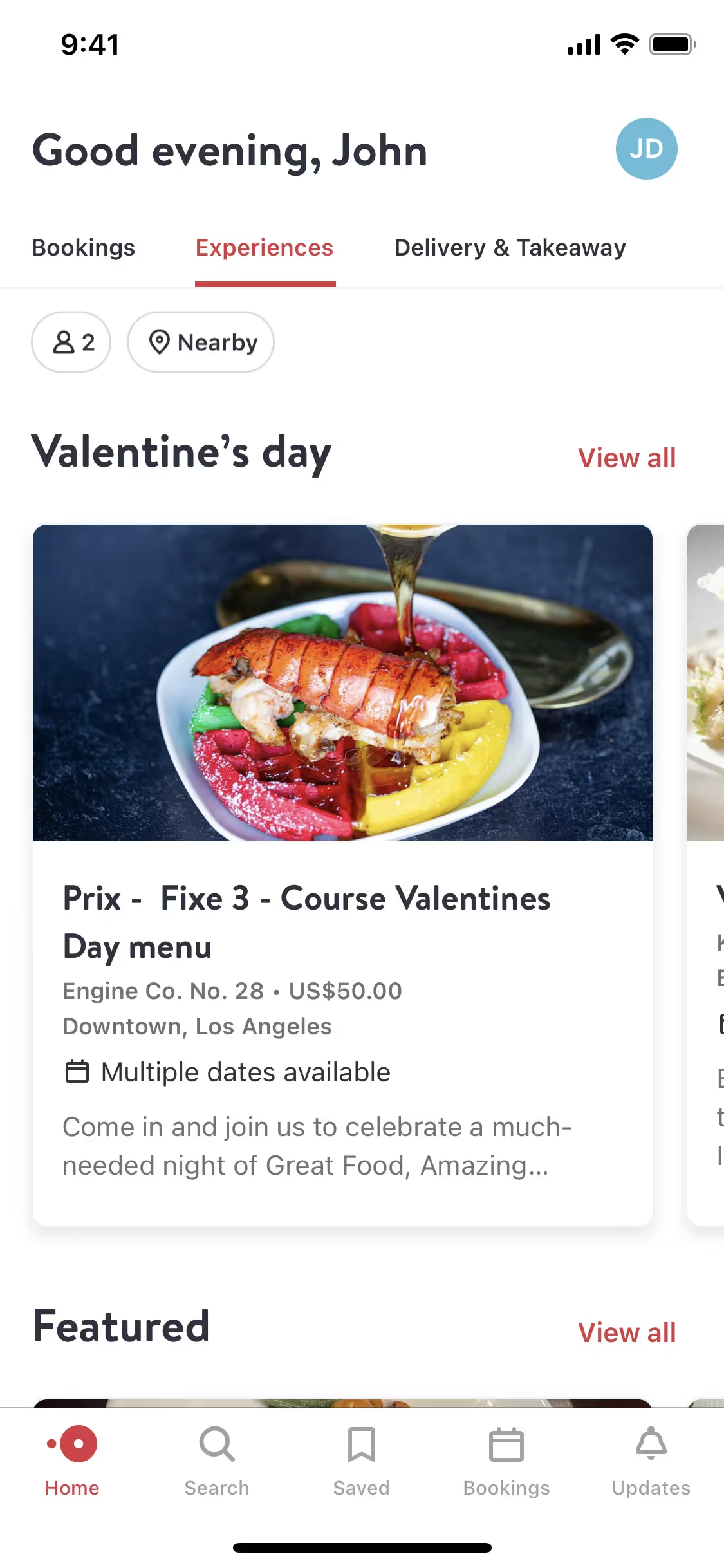
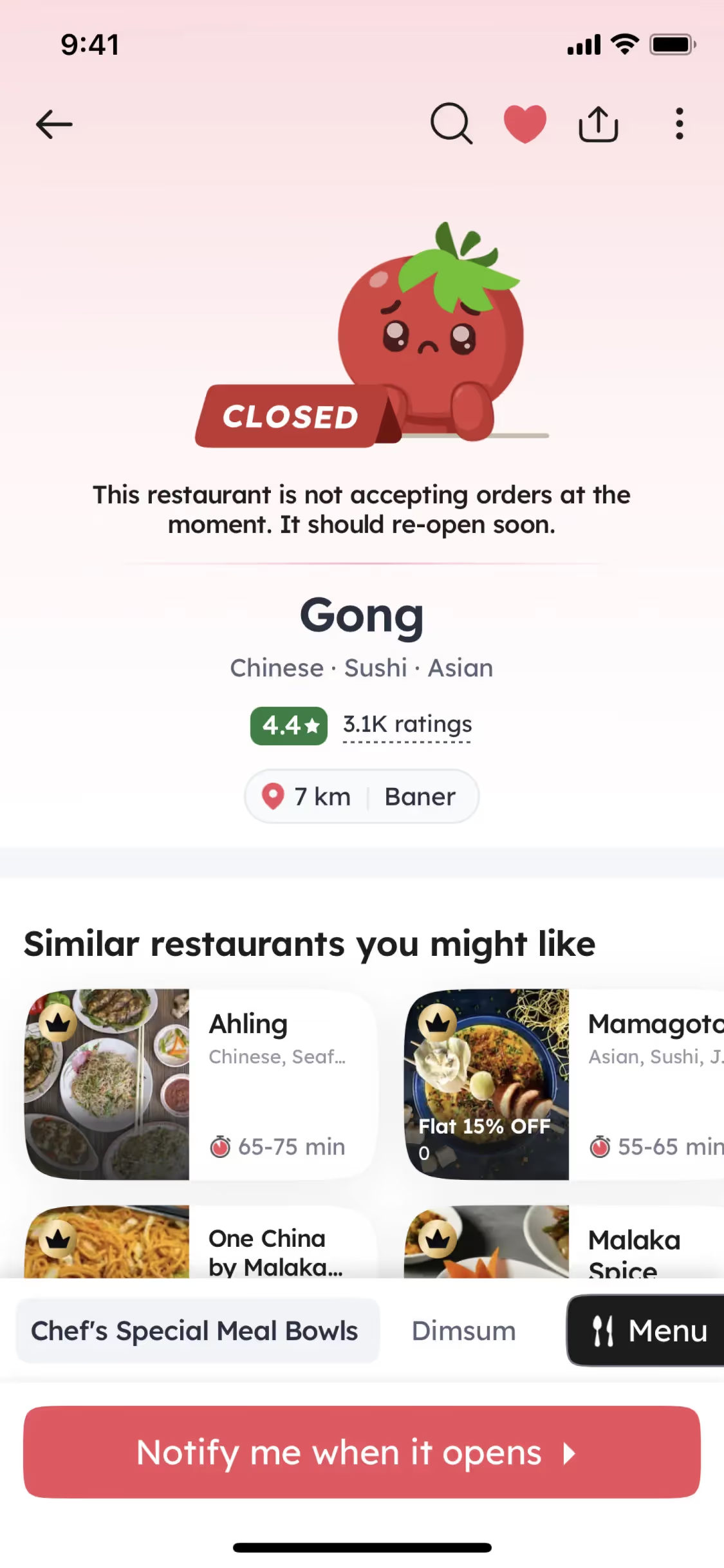
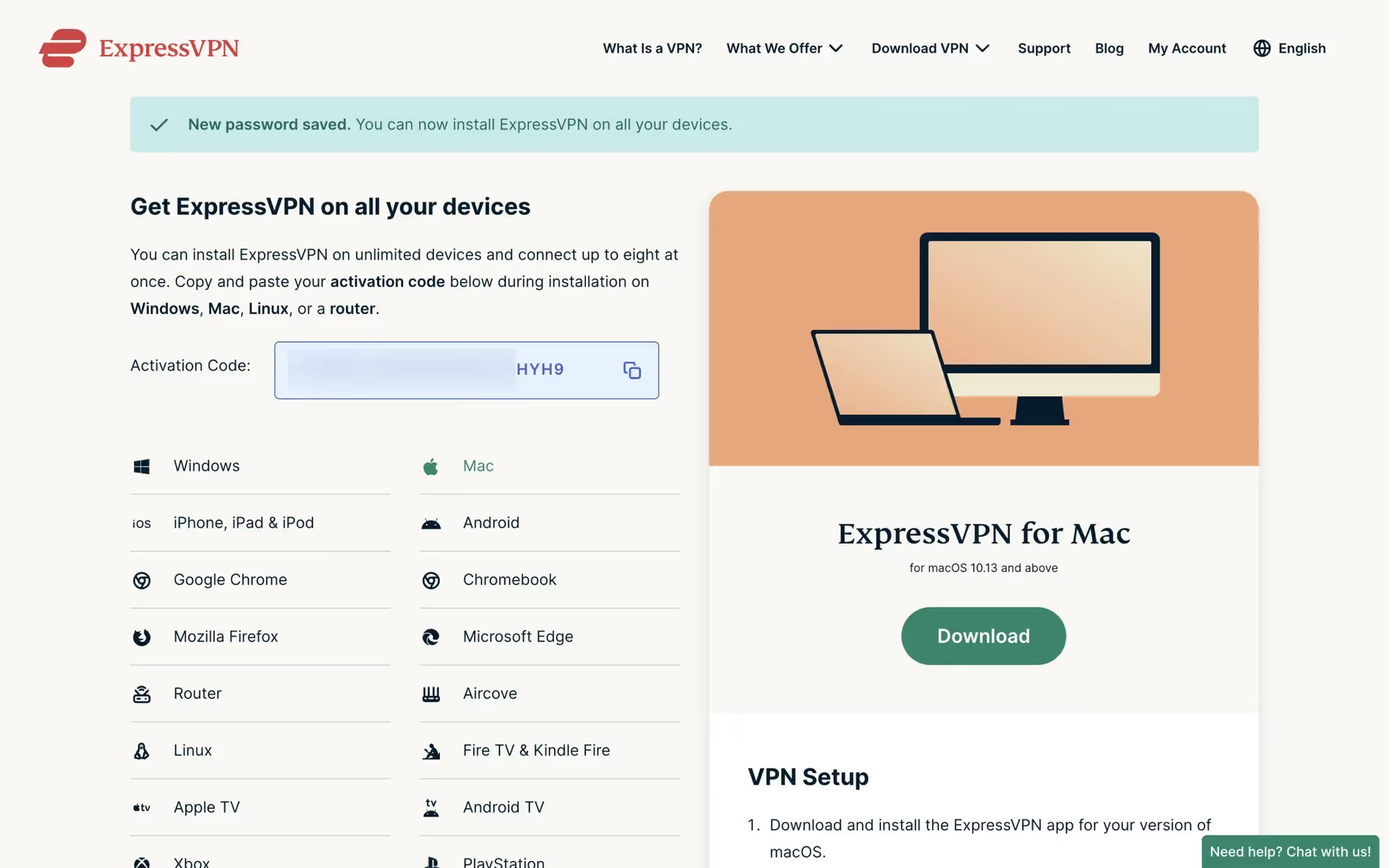
While not as widespread as other reds, this distinct shade is used effectively by brands like ExpressVPN, OpenTable, Zomato, and Bear. Its relative rarity in UI design offers a significant advantage: it can help a product establish a unique and memorable visual identity that feels both warm and assertive.
Use the tools below to explore curated palettes, test color contrast for accessibility, and preview how Rusty Red looks in real UI components from leading apps.
Using Rusty Red color codes
A bold color like Rusty Red (#D7494C) works well as a powerful accent to draw attention or to add warmth to a composition. Its versatility comes from how you apply its specific color code across different platforms.
Your starting point is often a HEX code, but you'll need to translate #D7494C for different applications. For anything on a screen, you'll use its RGB values (Red, Green, Blue), an additive model for digital displays. When a project moves to print, you'll need the CMYK values (Cyan, Magenta, Yellow, Key/Black), a subtractive model for ink. Other formats like HSL (Hue, Saturation, Lightness) give you a more intuitive way to make adjustments.
To get you started, we've converted Rusty Red's #D7494C into a full range of color codes. Find them below, ready to copy and paste directly into your design tools.
Analogous
Analogous colors are neighbors on the color wheel. For Rusty Red, these adjacent hues create a harmonious and visually cohesive palette, often perceived as serene.
Complementary
Complementary colors sit opposite each other on the color wheel. For Rusty Red, this pairing creates a high-contrast, visually striking effect.
Split Complementary
Split complementary colors for Rusty Red offer a vibrant yet balanced palette. They are formed by taking the two colors adjacent to its direct complement.
Triadic
A triadic scheme pairs Rusty Red with two other colors equidistant on the color wheel, creating a combination that is both bold and balanced.
Tetradic
A tetradic scheme for Rusty Red uses two pairs of complementary colors, forming a rectangle on the color wheel for a vibrant, balanced palette.
Square
A square color scheme pairs Rusty Red with three other colors, all evenly spaced on the color wheel, creating a vibrant, high-contrast palette.
Text Color
Background Color
Your Catchy Large Text Goes Here
Shades
Shades of Rusty Red are created by adding black, giving the color more depth and weight.
Tints
Tints are created by adding white to Rusty Red, resulting in lighter, softer tones.
Tones
Tones of Rusty Red are created by adding gray, which softens the color’s saturation.
Hues
Hues are variations of Rusty Red, differing in intensity or temperature to create distinct moods.





Never run out of inspiration again.
Use Mobbin for free as long as you like or get full access with any of our paid plans.