Rock Bottom
Meet Rock Bottom (#484C49), a complex dark shade that offers more than meets the eye. Its striking quality comes from subtle green undertones, giving this near-black a distinct character that separates it from standard charcoals and adds a quiet depth to your palette.
What color is Rock Bottom?
Rock Bottom is a profound, cool-toned charcoal gray, sitting just a few shades lighter than true black.
Its complexity comes from a subtle green undertone, which gives the color a quiet depth and prevents it from feeling flat or stark.
What is the meaning behind the color Rock Bottom (#484C49)?
Rock Bottom (#484C49) evokes a sense of foundational strength and resilience, suggesting a solid, unshakeable base from which to build.
Psychologically, this deep, grounding shade represents timelessness and quiet authority, lending a feeling of security and sophistication.
How can I effectively use Rock Bottom in my UI design?
As a primary dark theme color, Rock Bottom (#484C49) offers a softer, more organic alternative to pure black. For high contrast, pair it with vibrant accents like coral or electric blue. For a more subdued and elegant feel, consider a split-complementary scheme involving soft ochres and dusty rose tones.
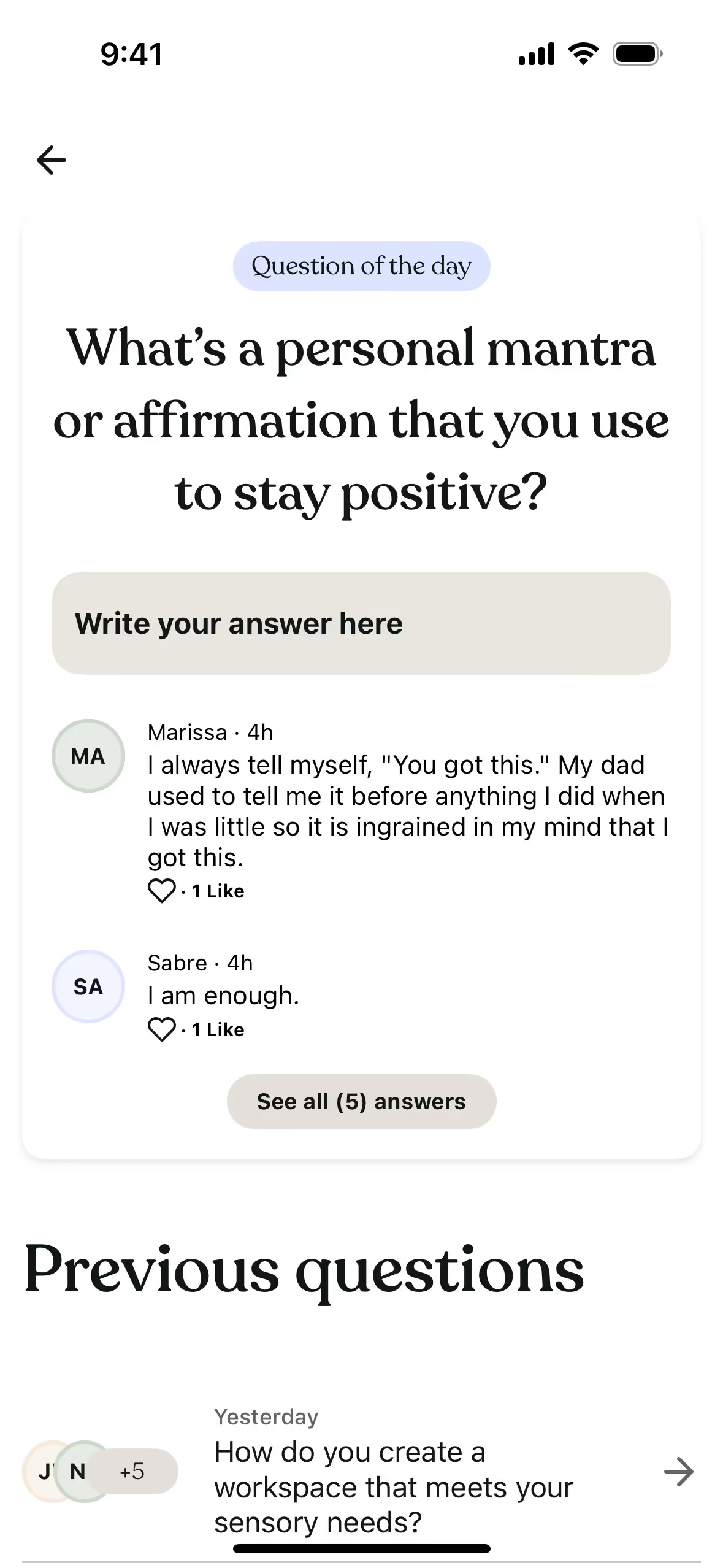
While not as widespread as navy or charcoal, colors similar to Rock Bottom appear in the UIs of apps like Tiimo, ESPN, Feeld, and Hopper. Its presence in these products shows its value in creating a focused and sophisticated atmosphere, helping a brand stand apart from competitors who rely on default darks.
Use the tools below to explore curated palettes, test color contrast for accessibility, and preview Rock Bottom in real UI components from top brands.
Using Rock Bottom color codes
The hex code #484C49 is your most direct path to using Rock Bottom in digital work, from CSS stylesheets to Figma files. It’s a precise, universally recognized value for specifying color on screens.
Beyond HEX, different color models are used for specific jobs. RGB values, for instance, define color for digital displays by mixing red, green, and blue light, while CMYK is the standard for anything destined for print. Other models like HSL offer a more intuitive way to adjust hue, saturation, and lightness.
To help you apply Rock Bottom across your projects, we’ve prepared the conversions for #484C49 in a range of formats below. Simply copy the code you need.
Analogous
Analogous colors are neighbors on the color wheel. When paired with Rock Bottom, they create a harmonious and visually pleasing palette with a tranquil effect.
Complementary
Complementary colors are opposites on the color wheel. Paired with Rock Bottom, they create a striking, high-contrast visual that makes any design pop.
Split Complementary
A split complementary scheme pairs Rock Bottom with the two colors neighboring its direct complement, creating a vibrant yet balanced and versatile palette.
Triadic
Triadic color schemes use three hues equally spaced on the color wheel. With Rock Bottom as a base, this creates a vibrant, high-contrast palette.
Tetradic
A tetradic scheme uses two complementary color pairs. For Rock Bottom, this creates a balanced four-color palette offering both harmony and high contrast.
Square
Using Rock Bottom as a base, a square scheme adds three equidistant colors from the color wheel for a balanced yet highly contrasting effect.
Text Color
Background Color
Your Catchy Large Text Goes Here
Shades
Shades are darker versions of Rock Bottom, made by adding black for more depth and weight.
Tints
Tints are lighter versions of Rock Bottom, created by adding white to soften the hue.
Tones
Tones are muted versions of Rock Bottom, created by adding gray to soften its saturation.
Hues
Hues are variations of Rock Bottom, sharing its base but differing in intensity or temperature.





Never run out of inspiration again.
Use Mobbin for free as long as you like or get full access with any of our paid plans.