Natural Canvas
Meet Natural Canvas (#DDD6CD), a warm, off-white that offers a subtle alternative to stark whites. Its gentle, earthy undertone provides a sophisticated foundation, bringing a sense of organic texture and quiet depth to any digital palette without overwhelming the design.
What color is Natural Canvas?
Natural Canvas is a soft, warm off-white with subtle greige undertones. Its warmth comes from a delicate balance of beige and gray, giving it a gentle, muted appearance that avoids the starkness of a pure white.
This results in a versatile neutral that feels both earthy and sophisticated, presenting a quiet complexity without being overwhelming.
What meaning does the color Natural Canvas (#DDD6CD) convey in design?
Natural Canvas evokes a sense of calm and comfort, reminiscent of raw, organic materials. In color psychology, this warm off-white suggests authenticity and simplicity, providing a grounding and stable foundation for any design.
Symbolically, the color #DDD6CD represents a clean slate and new beginnings. It carries a timeless quality, harking back to unbleached textiles and a connection to the natural world, offering a feeling of quiet sophistication.
How can I use Natural Canvas in my UI design?
In UI design, Natural Canvas (#DDD6CD) works beautifully as a primary background, offering a warmer, more organic alternative to stark white. Create a strong visual hierarchy by pairing it with deep charcoals or navy blues for text and key interactive elements. For a softer, more layered effect, combine it with other earthy tones like terracotta, olive green, or muted browns for accent colors.
While not a dominant color across the board, brands like Epidemic Sound have built palettes around similar off-white shades. Its infrequent use means employing Natural Canvas can give a product a distinctive, sophisticated feel that stands apart from competitors.
Use the tools below to explore curated palettes, test color contrast for accessibility, and preview Natural Canvas in real UI components of top brands.
Using Natural Canvas color codes
Using Natural Canvas starts with its hex code, #DDD6CD, which is the standard for web design. This code directly tells browsers and design software the exact shade to display on screen, forming the foundation for any digital palette you build.
While HEX is for screens, your projects might require other formats. For instance, RGB (Red, Green, Blue) also defines colors for digital displays through light intensity, whereas CMYK (Cyan, Magenta, Yellow, Key/Black) is essential for print work. Other models like HSL (Hue, Saturation, Lightness) offer a more intuitive way to adjust colors, while systems like LAB and LCH are designed for perceptually uniform color representation.
To help you apply Natural Canvas across your projects, we've converted #DDD6CD into a variety of common color models. You can find and copy the exact codes you need below.
Analogous
Analogous colors are neighbors on the color wheel. Paired with Natural Canvas, they build a harmonious and tranquil palette perfect for serene user interfaces.
Complementary
Complementary colors are direct opposites on the color wheel. Paired with Natural Canvas, they create a striking, high-contrast visual effect.
Split Complementary
A split complementary scheme pairs Natural Canvas with the two colors adjacent to its direct complement, offering a vibrant yet balanced palette.
Triadic
A triadic scheme pairs Natural Canvas with two other colors, all equidistant on the color wheel, for a vibrant and high-contrast effect.
Tetradic
Tetradic schemes pair Natural Canvas with three other colors. These are formed from two sets of complementary colors, offering a rich and versatile palette.
Square
A square color scheme pairs Natural Canvas with three other colors, all evenly spaced on the color wheel, creating a vibrant, high-contrast palette.
Text Color
Background Color
Your Catchy Large Text Goes Here
Shades
Shades are darker versions of Natural Canvas, created by adding black for depth and weight.
Tints
Tints lighten Natural Canvas by adding white, which gives the color a softer, more delicate quality.
Tones
Tones are muted variations of Natural Canvas, created by adding gray for a softer saturation.
Hues
Hues are variations of Natural Canvas, differing in intensity or temperature to create distinct moods.
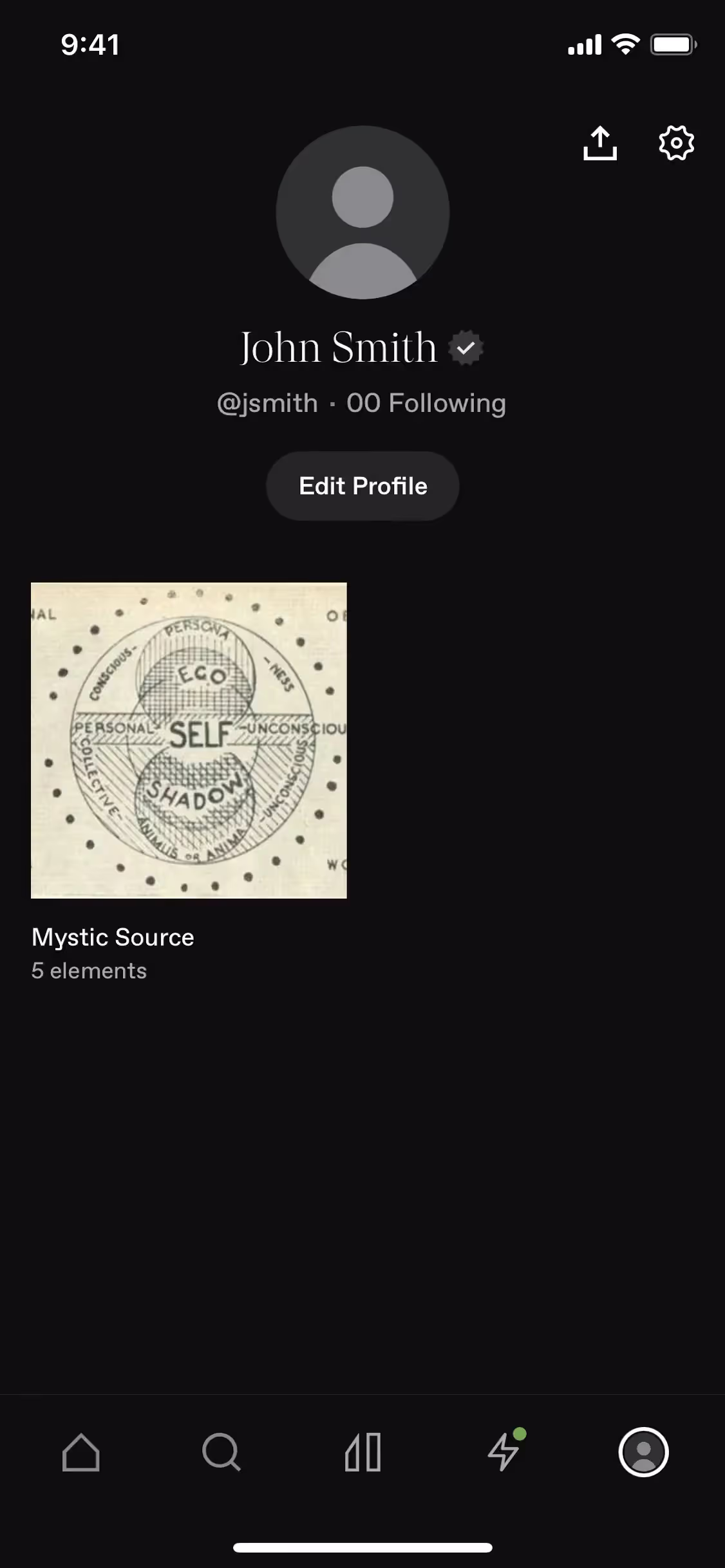

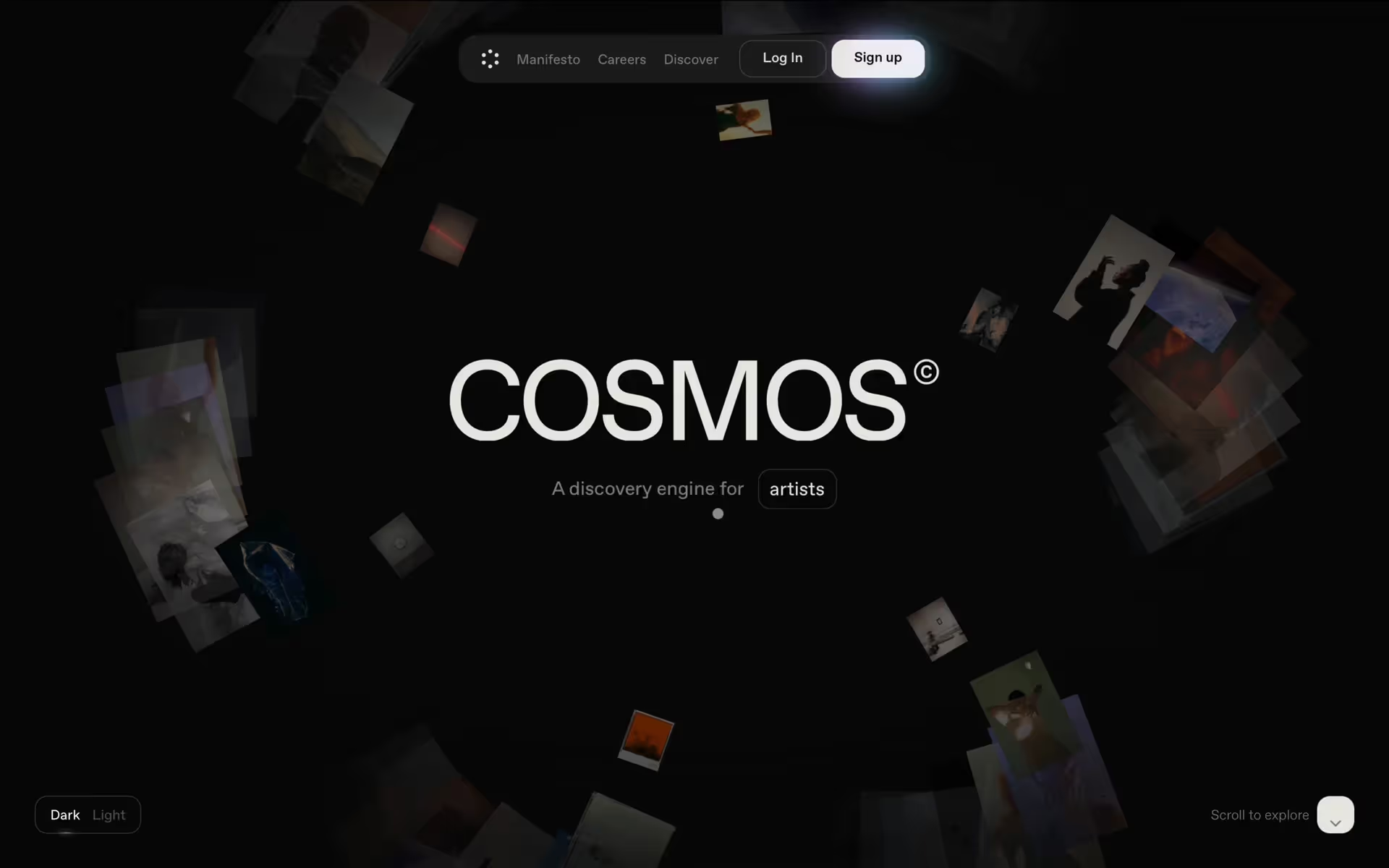

Never run out of inspiration again.
Use Mobbin for free as long as you like or get full access with any of our paid plans.