Midnight Blue
Meet Midnight Blue (#191970), a shade that pushes the boundaries of darkness. It’s a color so deep it nearly touches black, yet it holds a distinct, saturated blue core. This subtle complexity gives it a sophisticated and powerful presence in any design palette.
What color is Midnight Blue?
Midnight Blue is a profoundly dark shade of blue, bordering on black, yet it maintains a clear blue identity. It's a cool-toned color, characterized by its deep saturation and low brightness, evoking the color of a night sky just after dusk.
Its composition is primarily blue mixed with black, which gives it its signature depth. Depending on the surrounding light and colors, it can reveal subtle undertones of gray or even a hint of violet, adding a layer of complexity to its appearance.
What is the symbolic meaning of Midnight Blue in digital product design?
Midnight Blue carries a sense of sophistication, authority, and mystery, suggesting the vastness and stability of the cosmos.
Psychologically, this deep shade is perceived as trustworthy and formal, projecting confidence and seriousness as a softer alternative to pure black.
How can I effectively use Midnight Blue in my UI design?
Midnight Blue works beautifully as a foundational color, offering a sophisticated alternative to pure black. For a crisp, high-contrast interface, pair it with warm whites or light grays. To create a more dynamic composition, introduce accent colors like a vibrant coral, a rich gold, or even a sharp lime green. Applying the 60-30-10 principle can help balance these combinations, using Midnight Blue as either the dominant or secondary shade.
While some major brands like Coursera employ dark blues in their branding, a pure Midnight Blue (#191970) is relatively rare in the product design space. This scarcity offers a distinct advantage, giving new products a chance to build a memorable and unique visual identity that stands apart from the crowd.
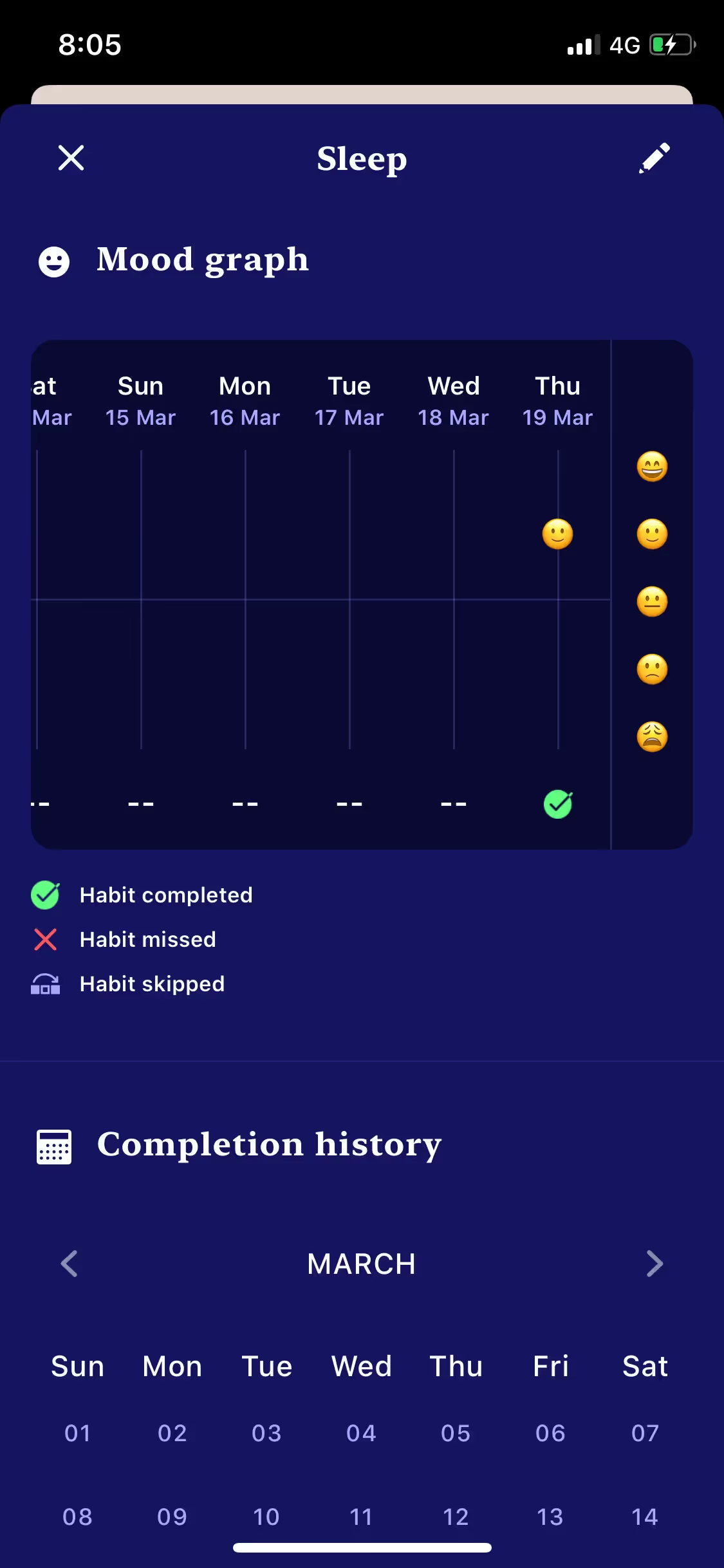
Use the tools below to explore curated palettes, test your color pairings for accessibility, and preview how Midnight Blue looks in real components from well-known apps.
Using Midnight Blue color codes
To apply Midnight Blue in your projects, start with its hex code, #191970. This code is the standard for web design and digital applications, directly telling browsers and design software the exact shade to display.
Depending on your medium, you may need to convert #191970. For digital screens, you'll use the RGB values which define the intensity of red, green, and blue light. For print materials, the CMYK values are required, specifying the mix of cyan, magenta, yellow, and black inks. Other models like HSL offer a more intuitive way to adjust hue, saturation, and lightness.
We've converted Midnight Blue's #191970 hex code into its corresponding RGB, CMYK, HSL, and other popular formats below. Simply copy the code you need for your specific application.
Analogous
Analogous colors are found next to Midnight Blue on the color wheel, creating a harmonious and visually pleasing palette with a serene effect.
Complementary
Colors on opposite ends of the color wheel are complementary. Paired with Midnight Blue, these hues create a bold look with maximum visual contrast.
Split Complementary
For Midnight Blue, a split complementary palette takes the two colors on either side of its opposite, creating a high-contrast look with less tension.
Triadic
A triadic scheme pairs Midnight Blue with two other colors, equally spaced on the color wheel, for a vibrant and balanced palette.
Tetradic
A tetradic scheme for Midnight Blue uses two pairs of complementary colors, forming a rectangle on the color wheel for a vibrant, balanced palette.
Square
A square color scheme pairs Midnight Blue with three other colors, all evenly spaced on the color wheel for a vibrant, high-contrast palette.
Text Color
Background Color
Your Catchy Large Text Goes Here
Shades
Shades are darker versions of Midnight Blue, created by adding black for more depth.
Tints
Tints are lighter versions of Midnight Blue, created by adding white for a softer feel.
Tones
Tones of Midnight Blue are created by adding gray, resulting in a softer, more muted appearance.
Hues
Hues are variations of Midnight Blue, differing in intensity and temperature to create distinct moods.








Never run out of inspiration again.
Use Mobbin for free as long as you like or get full access with any of our paid plans.