Mid-Day
Introducing Mid-Day (#FEDF75), a distinct yellow with a soft, buttery quality. This color offers a sophisticated glow that avoids the sharp intensity of primary yellows, providing a luminous presence that feels both modern and approachable in any design palette.
What color is Mid-Day?
Mid-Day is a warm, vibrant yellow with a distinct golden character.
It carries a soft, buttery undertone, stopping just short of orange to maintain a bright, sunlit quality.
What is the meaning of the color Mid-Day (#FEDF75)?
The color Mid-Day, #FEDF75, is psychologically tied to optimism, warmth, and happiness. It captures the feeling of a bright, sunlit day, sparking creativity and positive energy.
Symbolically, it represents a moment of peak clarity and vitality, much like the brightest point of the day it is named after.
How can I best use Mid-Day (#FEDF75) in my UI design?
In UI design, Mid-Day (#FEDF75) shines as an accent color to create visual hierarchy and guide attention. For a striking, high-contrast effect, pair it with deep blues or charcoals. For a more grounded and natural palette, combine it with muted earth tones. Using the 60-30-10 principle, Mid-Day is an excellent choice for the 10% accent that adds a burst of energy without overpowering the interface.
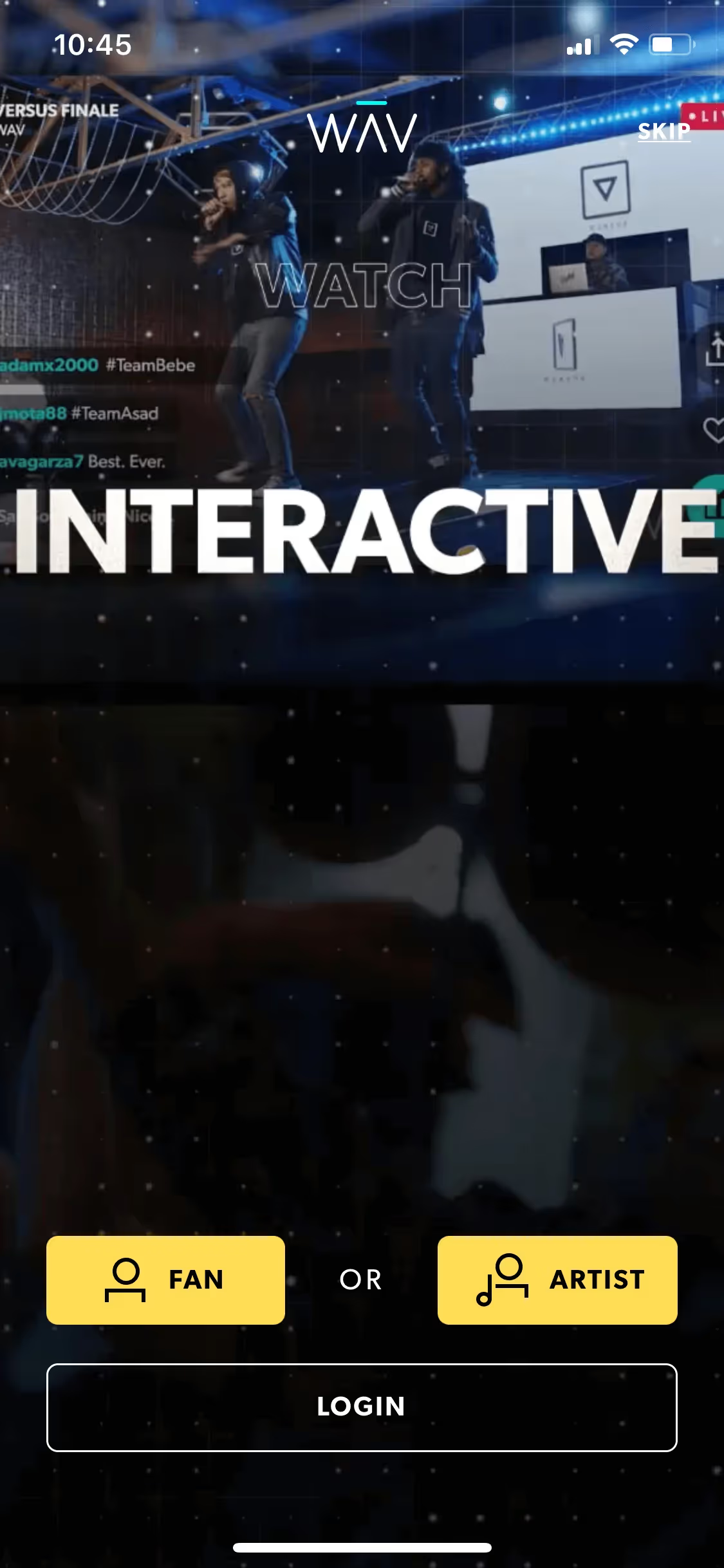
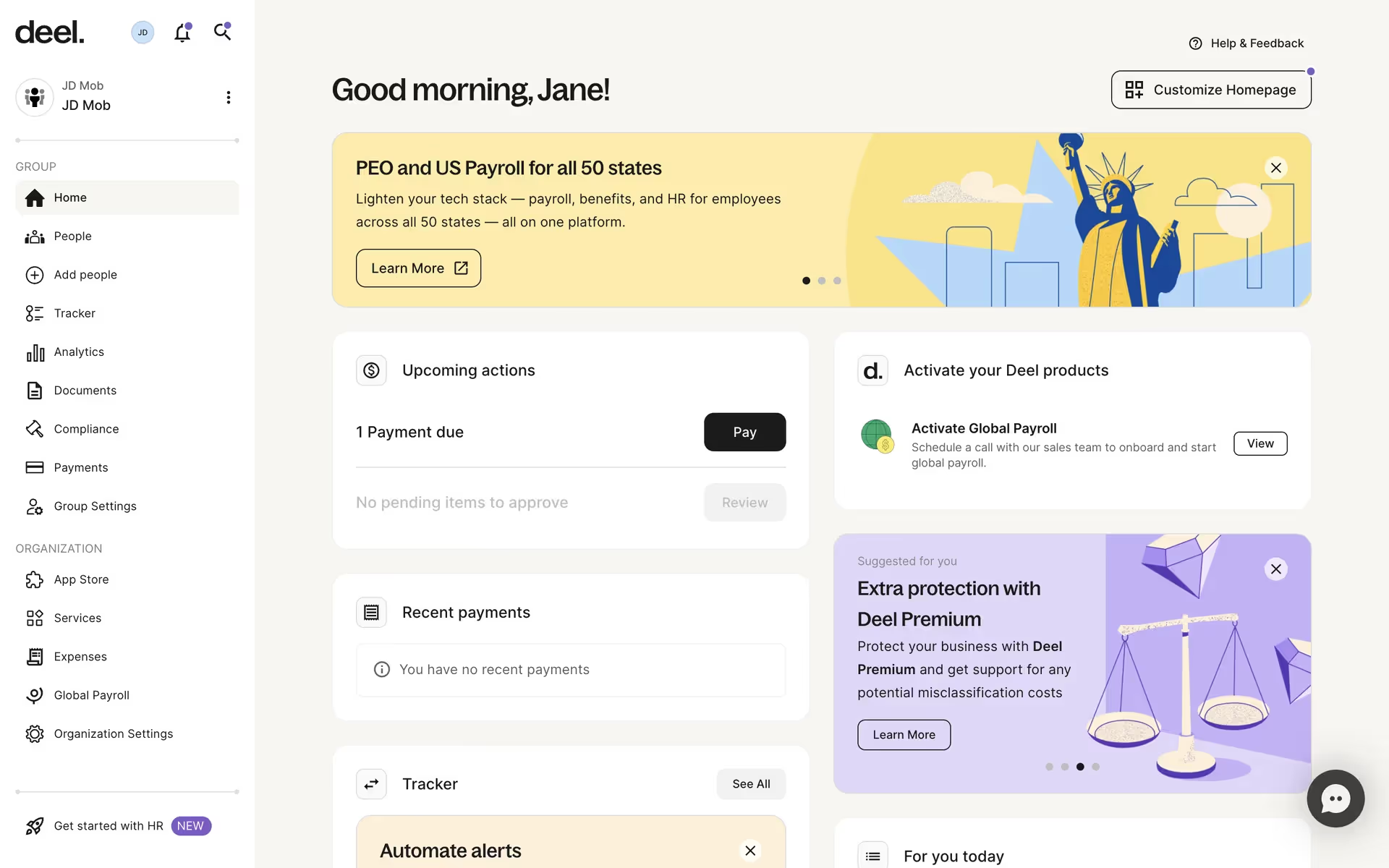
A number of brands, including Deel, Turo, and GoodRx, use similar warm yellows to appear friendly and energetic. Its inherent brightness makes it a bold choice, perfect for companies wanting to make a memorable statement and differentiate themselves visually.
You can use the tools below to explore curated palettes, test color contrast for accessibility, and preview Mid-Day in real UI components from leading brands.
Using Mid-Day color codes
While #FEDF75 is the standard hexadecimal code for Mid-Day, you'll often need to translate it for different projects. Your design tools or development frameworks might require a specific color model to render it correctly.
Each color code system serves a distinct purpose. RGB (Red, Green, Blue) values define colors for digital displays by mixing light, whereas CMYK (Cyan, Magenta, Yellow, Key/Black) is the standard for printed materials. Other models like HSL (Hue, Saturation, Lightness) offer a more intuitive way to make adjustments during the design process.
To help you get started, we've converted #FEDF75 to a range of popular formats below that you can copy and paste directly into your work.
Analogous
Analogous colors are neighbors on the color wheel. When paired with Mid-Day, they create a harmonious and serene palette for your designs.
Complementary
Complementary colors are opposites on the color wheel. When paired with Mid-Day, its complement creates a striking, high-contrast visual effect that pops.
Split Complementary
Create a vibrant, balanced palette by pairing Mid-Day with the two colors that sit on either side of its direct complement.
Triadic
Triadic color schemes use three hues equally spaced on the color wheel. With Mid-Day as a base, this creates a vibrant, high-contrast palette.
Tetradic
Tetradic palettes are built from two complementary color pairs. Here, Mid-Day is balanced against three other hues for a vibrant and versatile combination.
Square
A square color scheme uses four colors evenly spaced on the color wheel. This creates a vibrant, high-contrast palette with Mid-Day as the base.
Text Color
Background Color
Your Catchy Large Text Goes Here
Shades
Shades of Mid-Day are created by adding black, giving the color more depth and weight.
Tints
Tints are lighter variations of Mid-Day, created by adding white to produce a softer feel.
Tones
Tones are variations of Mid-Day created by adding gray, which softens its saturation.
Hues
Hues are variations of Mid-Day, differing in intensity and temperature to create distinct moods.







Never run out of inspiration again.
Use Mobbin for free as long as you like or get full access with any of our paid plans.