Limewash
Meet Limewash (#DBD5CB), a warm, muted neutral that offers a sophisticated alternative to stark whites and grays. Its subtle, earthy undertone provides a quiet strength and organic texture, making it a versatile foundation for clean and modern user interface design.
What color is Limewash?
Limewash is a warm, muted off-white that carries the soft, earthy character of its namesake finish.
This gentle neutral leans warm, with delicate yellow and gray undertones that give it a grounded, mineral-like quality.
What meaning does Limewash (#DBD5CB) carry in user interface design?
With historical roots in traditional finishes, the color Limewash suggests calm, warmth, and authenticity.
It symbolizes a connection to the natural world and provides a grounding foundation of quiet confidence for designers.
How should I use Limewash in a UI design?
In UI design, Limewash (#DBD5CB) works beautifully as a calming, expansive background that lets brighter accent colors pop. Pair it with deep greens, earthy terracottas, or soft charcoals for a natural, organic feel. For a more striking effect, contrast its softness with sharp black text or a single, vibrant highlight color to guide the user's attention.
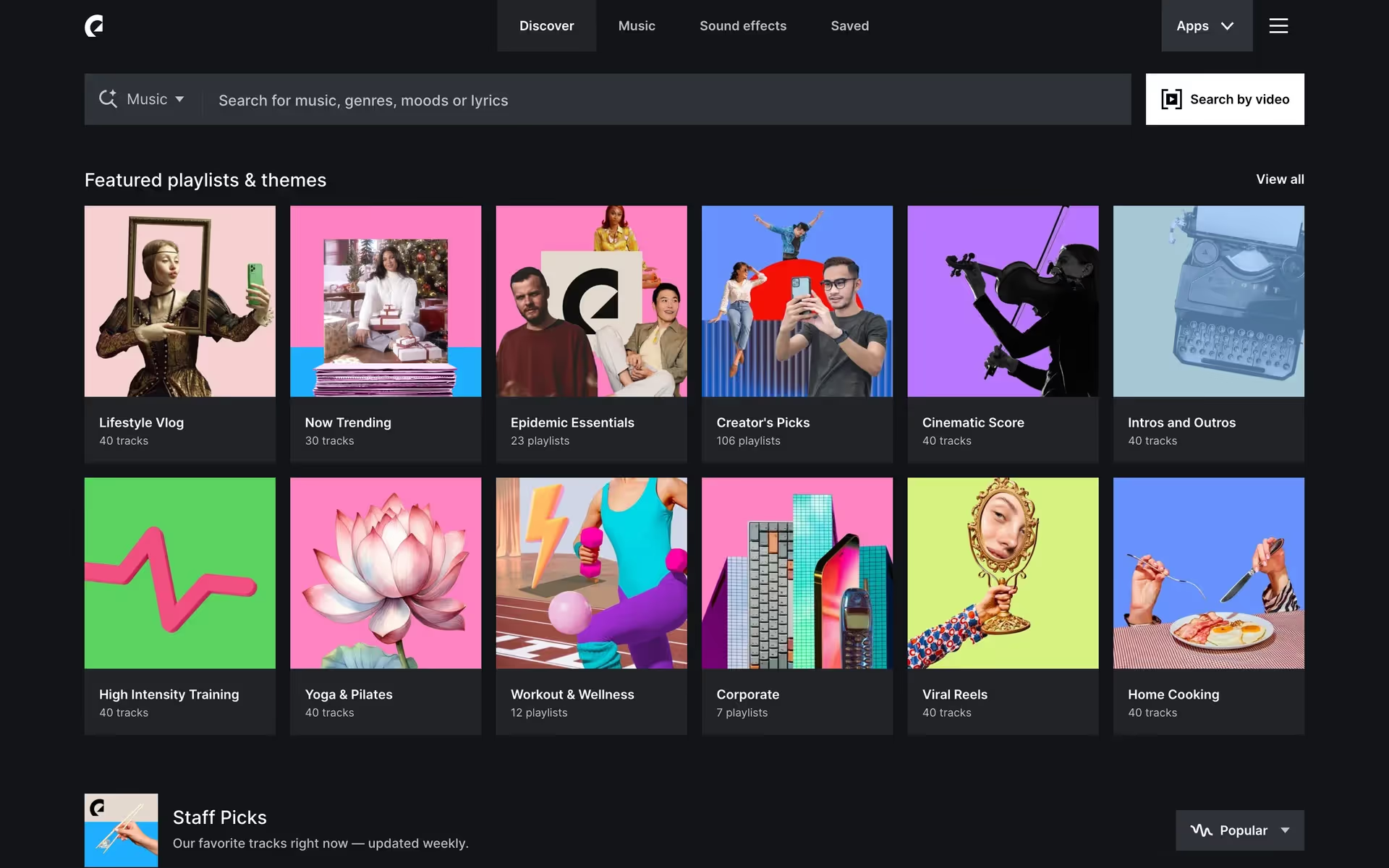
While few brands use a color like Limewash as their primary identifier, this rarity offers an opportunity to build a unique visual identity. Companies such as Epidemic Sound have incorporated similar muted tones into their design systems to achieve a clean, sophisticated look. Adopting #DBD5CB can help a brand appear thoughtful, refined, and distinct.
Use the tools below to explore curated palettes, test color contrast for accessibility, and preview Limewash in real UI components from top brands.
Using Limewash color codes
Using the Limewash color code is as simple as copying its hex value, #DBD5CB, into your design software. This versatile neutral works well as a background or a subtle accent.
While hex is standard for web work, you might need to translate #DBD5CB into other color models. For instance, RGB (Red, Green, Blue) is fundamental for digital screen displays, whereas CMYK (Cyan, Magenta, Yellow, Key/Black) is the go-to for print materials.
To make things easier, we've converted #DBD5CB to a range of popular formats below that you can copy directly into your projects.
Analogous
Analogous colors are neighbors on the color wheel. When paired with Limewash, they produce a calm, cohesive, and pleasing visual experience for users.
Complementary
Complementary colors are opposites on the color wheel. When paired with Limewash, they create a striking, high-contrast visual effect, making both colors pop.
Split Complementary
A split complementary scheme offers a more nuanced contrast, pairing Limewash with the two hues that sit next to its complementary color.
Triadic
A triadic palette combines three colors from equidistant points on the color wheel. With Limewash, this approach yields a balanced yet visually striking combination.
Tetradic
A tetradic color scheme for Limewash uses two pairs of complementary colors, forming a rectangle on the color wheel for a vibrant palette.
Square
A square color scheme for Limewash uses four colors evenly spaced on the color wheel, creating a palette with rich, balanced contrast.
Text Color
Background Color
Your Catchy Large Text Goes Here
Shades
By adding black to Limewash, you create darker shades that introduce depth and weight.
Tints
Tints are lighter variations of Limewash, created by adding white for a softer appearance.
Tones
Tones of Limewash are created by adding gray, which softens the color’s overall saturation.
Hues
Hues are variations of Limewash's base color, differing in their intensity or temperature.



Never run out of inspiration again.
Use Mobbin for free as long as you like or get full access with any of our paid plans.