Light Sky Blue
Meet Light Sky Blue, hex code #87CEFA, a color that brings a crisp, airy quality to any design palette. Its gentle saturation and high brightness create a clean, open feel, offering a refreshing alternative to more intense blues without losing visual presence.
What color is Light Sky Blue?
Light Sky Blue is a pale, airy shade of cyan-blue that captures the serene and crisp quality of a cloudless morning sky. It's a cool-toned color, sitting comfortably on the lighter end of the blue spectrum, giving it a fresh and gentle appearance.
As a tint of azure, its composition leans slightly towards green, giving it subtle cyan undertones. This creates a balanced and tranquil hue, distinct from more saturated or violet-leaning blues.
What is the meaning of Light Sky Blue (#87CEFA) in design?
Light Sky Blue evokes feelings of tranquility and clarity, much like a clear, open sky. In color psychology, this shade is known for its calming effects, promoting a sense of peace and mental serenity.
Symbolically, it represents trust, loyalty, and sincerity. The color suggests expansiveness and new beginnings, making it a popular choice for communicating reliability and inspiring confidence.
How do I incorporate Light Sky Blue (#87CEFA) into my next UI design project?
Light Sky Blue (#87CEFA) works beautifully as a background color to create an open, airy feel. For strong visual hierarchy, pair it with dark text or deep navy UI elements. For a more vibrant combination, consider complementary oranges or sunny yellows as accent colors, applying a classic 60-30-10 split to maintain balance.
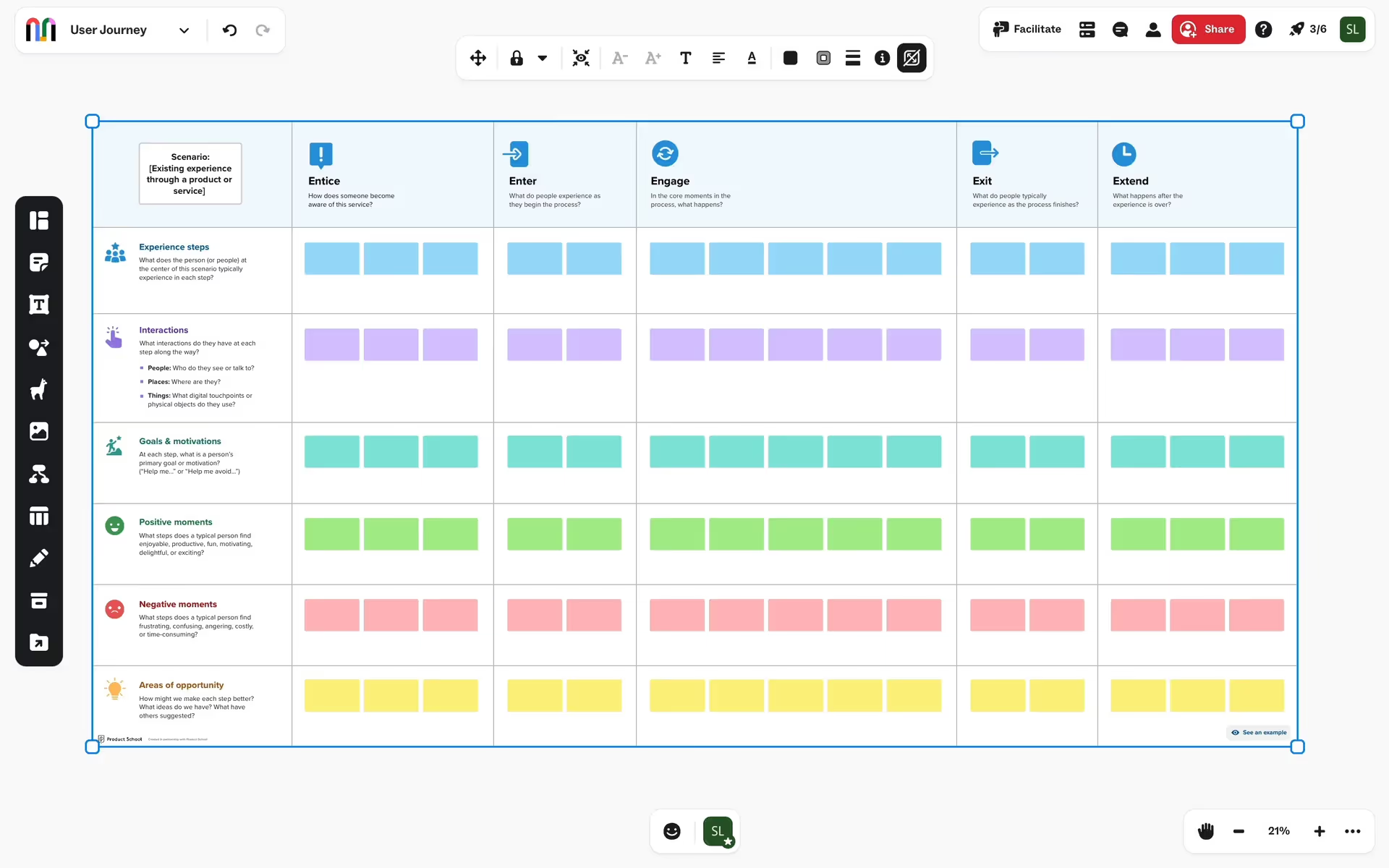
While not a dominant color in corporate branding, shades similar to Light Sky Blue appear in forward-thinking apps like Flighty, Artifact, and Mural. Its relative scarcity in the market can give a product a distinct, modern identity that stands out from the usual sea of blues.
To see these principles in action, use the tools below. You can explore curated palettes, test the accessibility of your color combinations, and preview how Light Sky Blue looks within real UI components from leading applications.
Using Light Sky Blue color codes
Applying Light Sky Blue (#87CEFA) in your work starts with its code. While its hex value is standard for web projects, the color's appearance can shift depending on the medium, so always consider whether your final design is for a digital screen or a physical print.
Different design contexts call for different color models. While HEX and RGB (Red, Green, Blue) are mainstays for digital interfaces that emit light, CMYK (Cyan, Magenta, Yellow, Key/Black) is essential for print work that absorbs light. Other systems like HSL (Hue, Saturation, Lightness) give designers a more intuitive way to make adjustments.
To get you started, we have translated #87CEFA into a range of popular color code formats. You can find them below, ready to copy for your specific project needs.
Analogous
Sitting beside Light Sky Blue on the color wheel, analogous colors produce a cohesive and serene palette, perfect for creating a sense of calm.
Complementary
For a vibrant pairing, look directly across the color wheel from Light Sky Blue. These complementary hues create maximum visual pop and contrast.
Split Complementary
A split complementary palette for Light Sky Blue uses the two colors adjacent to its direct complement, offering a vibrant yet balanced high-contrast combination.
Triadic
A triadic scheme creates a high-contrast palette by pairing Light Sky Blue with two other colors that are equally spaced on the color wheel.
Tetradic
Tetradic schemes for Light Sky Blue involve two pairs of complementary colors, creating a bold, rectangular palette that offers great visual variety.
Square
A square color scheme uses four colors evenly spaced on the color wheel, creating a vibrant, high-contrast palette with Light Sky Blue.
Text Color
Background Color
Your Catchy Large Text Goes Here
Shades
By adding black, shades of Light Sky Blue become darker, adding substance and visual weight.
Tints
Tints of Light Sky Blue are created by adding white, resulting in softer, airier variations.
Tones
Tones are subtle variations of Light Sky Blue, created by adding gray for a softer look.
Hues
Hues are variations of Light Sky Blue, differing in intensity or temperature to create distinct moods.


Never run out of inspiration again.
Use Mobbin for free as long as you like or get full access with any of our paid plans.