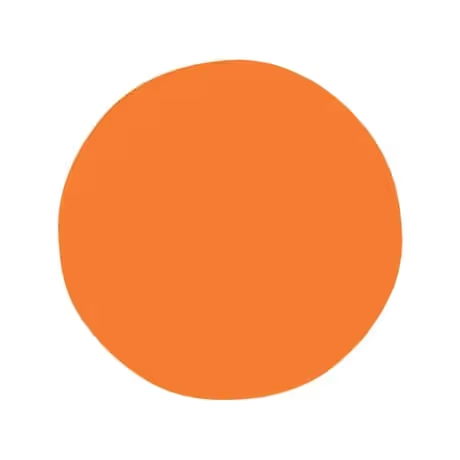
Light Gray
Light Gray, hex code #D3D3D3, is a quiet yet essential neutral in any designer's toolkit. Its subtle character provides a clean, unobtrusive foundation, allowing other design elements to take center stage while maintaining a sophisticated and modern feel.
What color is Light Gray?
Light Gray is a high-value neutral color, a soft shade that sits much closer to pure white than to black on the grayscale. It presents a clean, airy, and understated appearance, offering a subtle distinction without the starkness of white.
While technically a pure achromatic color, Light Gray often carries a cool temperature, sometimes revealing subtle blue or green undertones. This gives it a crisp quality, though its perceived character can shift based on the colors it's placed against.
What is the meaning of the color Light Gray in design?
Psychologically, Light Gray is the color of neutrality and balance. It represents composure and stability, a quiet middle ground that avoids the dramatic extremes of black and white, evoking a sense of calm and reservation.
The color often symbolizes sophistication, formality, and intellect. For designers, it offers a supportive foundation that feels both modern and timeless, frequently associated with professionalism and technological precision.
How can I best use Light Gray in my UI design?
Light Gray, with its hex code #D3D3D3, is a workhorse in UI design, often used for backgrounds, dividers, or disabled states. To maintain readability and meet accessibility standards, it must be paired with high-contrast elements. Consider using dark charcoal for text or a vivid accent color for interactive components to establish a clear visual hierarchy.
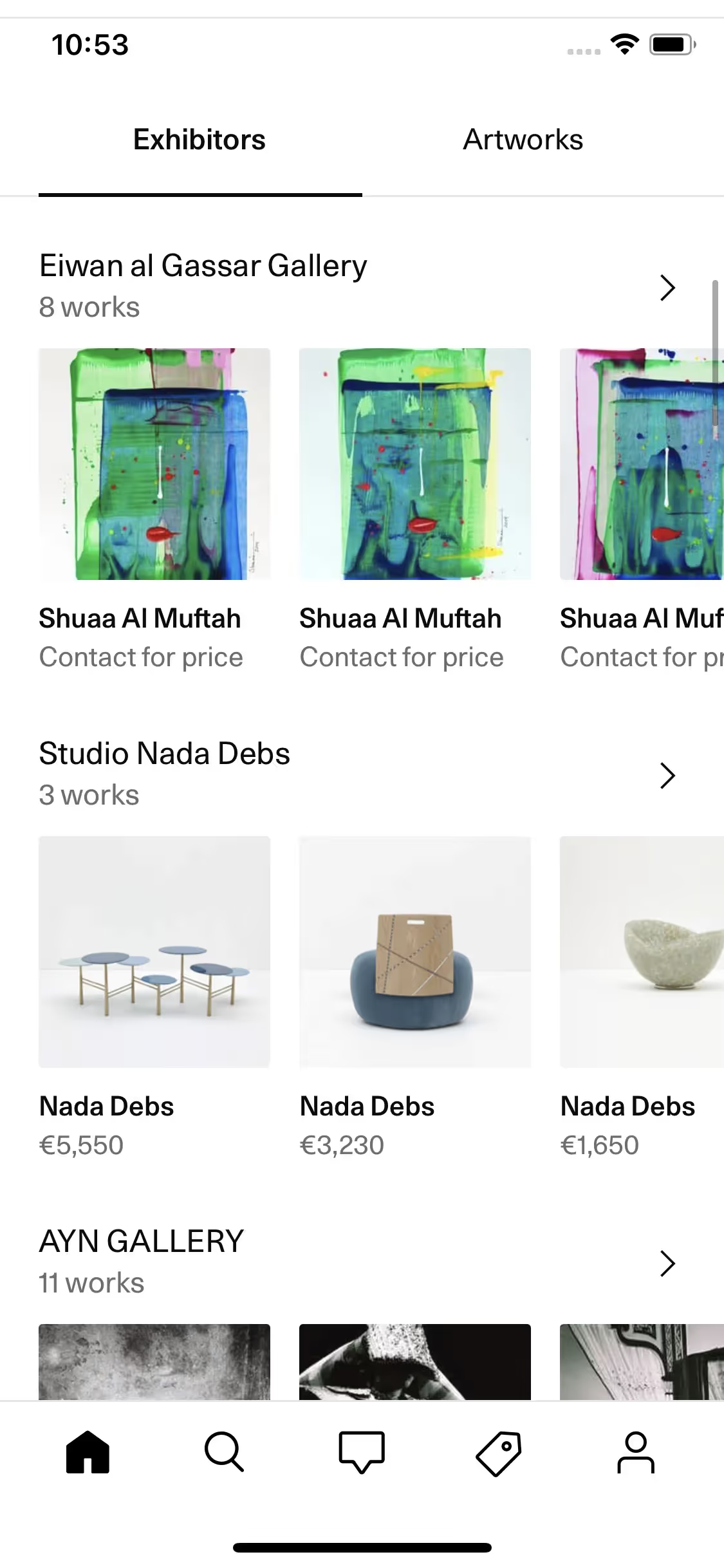
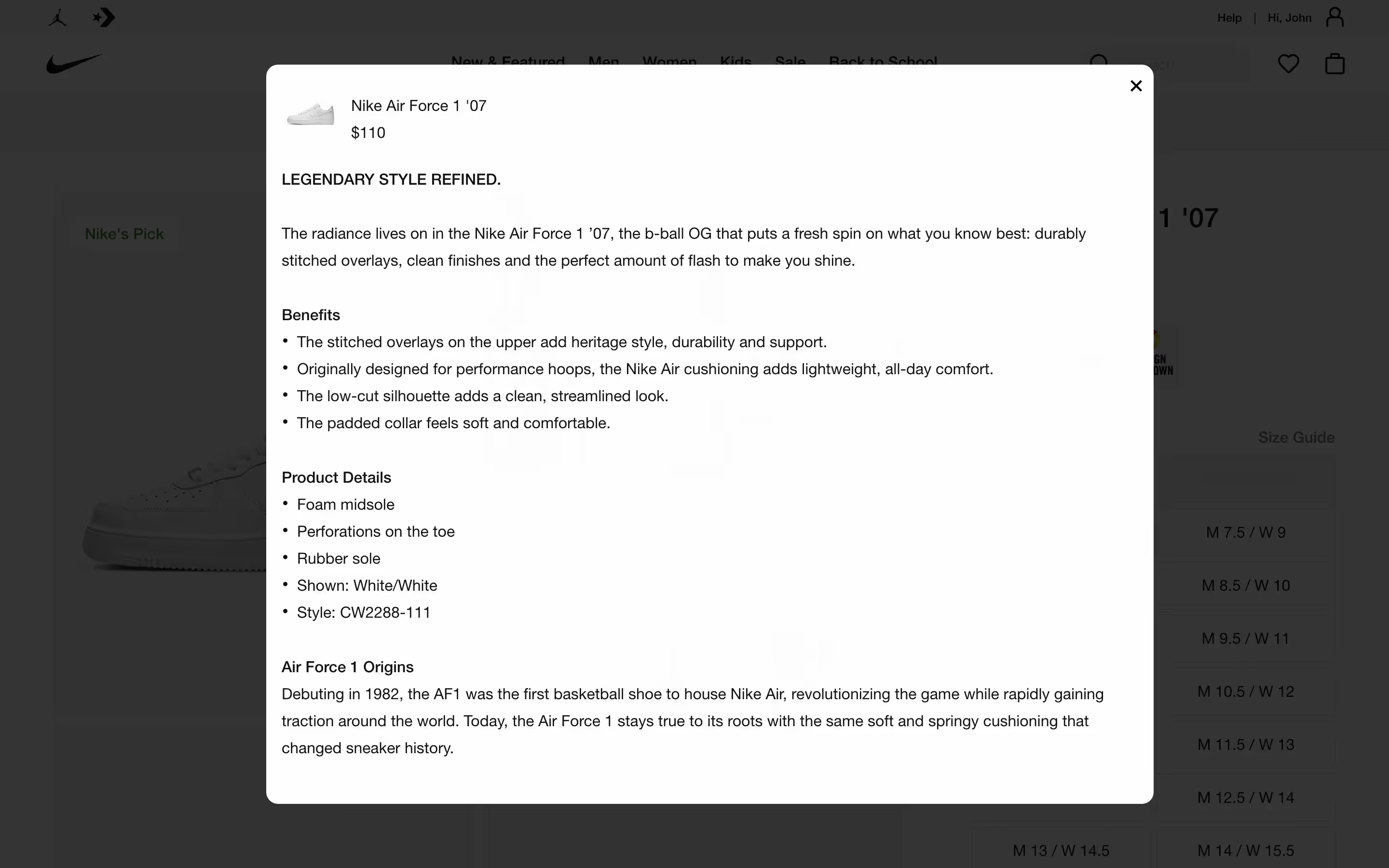
This foundational role is why you'll spot shades of Light Gray across many digital products. Brands like Sonos and Squarespace use it to build clean, sophisticated layouts, while others such as Nike and Artsy employ it to ground their more expressive brand elements. Its widespread use speaks to its utility as a supporting color that helps primary content and imagery stand out.
You can use the tools below to explore curated palettes, test color contrast for accessibility, and preview Light Gray in real UI components of top brands.
Using Light Gray color codes
Using Light Gray in your projects is straightforward with its hex code, #D3D3D3. This code is the standard for web development and digital design, ensuring precise color representation in CSS, HTML, and various design tools. Sticking to #D3D3D3 guarantees that the shade you picked is the shade everyone sees.
While #D3D3D3 is ideal for digital work, you might need other formats for different jobs. Color models like RGB (Red, Green, Blue) are for on-screen displays, while CMYK (Cyan, Magenta, Yellow, Key/Black) is essential for print materials. Others, such as HSL (Hue, Saturation, Lightness), provide an intuitive way to make adjustments.
To make things easy, we've converted the Light Gray hex code #D3D3D3 into a range of popular formats. You can find and copy the exact codes you need for your project below.
Analogous
By pairing Light Gray with its adjacent hues on the color wheel, you create an analogous scheme that feels both unified and tranquil.
Complementary
Complementary colors are direct opposites on the color wheel. Paired with a neutral like Light Gray, they create a high-contrast, vibrant visual relationship.
Split Complementary
For Light Gray, a split complementary scheme uses the two colors adjacent to its direct complement, offering a vibrant yet balanced palette.
Triadic
A triadic color scheme for Light Gray uses two additional colors, all equally spaced on the color wheel, creating a vibrant, high-contrast palette.
Tetradic
A tetradic scheme for Light Gray creates a rich palette by pairing it with three other colors, forming a rectangle of complementary hues.
Square
A square color scheme uses four colors evenly spaced on the color wheel. With Light Gray, this creates a vibrant, high-contrast palette.
Text Color
Background Color
Your Catchy Large Text Goes Here
Shades
Shades are darker versions of Light Gray, made by adding black for depth and weight.
Tints
Tints of Light Gray are created by adding white, producing progressively lighter, softer tones.
Tones
Tones are created by adding gray to Light Gray, producing softer, more subtle variations.
Hues
Hues are variations of Light Gray that differ in temperature, subtly altering its mood.










Never run out of inspiration again.
Use Mobbin for free as long as you like or get full access with any of our paid plans.