Cipria
Introducing Cipria (#FAE7EB), a delicate, dusty pink with a hint of warmth. This color stands out for its soft, powdery appearance, offering a sophisticated and modern feel that distinguishes it from typical pastels. It’s a nuanced shade for discerning design work.
What color is Cipria?
Cipria is a delicate, muted shade of pink, almost an off-white. It has the soft, powdery appearance of a cosmetic blush, carrying a gentle warmth that keeps it from feeling stark.
The color's sophistication lies in its subtle gray undertones, which create a dusty, muted effect. With its low saturation and high brightness, Cipria reads as an airy whisper of color rather than a loud declaration.
What is the meaning of the color Cipria (#FAE7EB)?
Cipria, with its hex code #FAE7EB, embodies a gentle warmth and understated elegance. The color evokes feelings of calm and tenderness, lending designs a soft, comforting quality that feels both modern and nostalgic.
Drawing its name from the Italian word for face powder, Cipria carries a symbolism of refined beauty and quiet intimacy. It suggests a delicate, personal touch, reminiscent of classic sophistication and self-care.
How can I use Cipria in my UI design?
Cipria (#FAE7EB) is a delicate shade that works beautifully as a background or a subtle accent. To maintain good readability, pair it with dark, high-contrast text—think deep charcoals or navy blues. For a harmonious palette, consider combining it with other soft pastels, clean neutrals, or a single, bold complementary color for a striking effect.
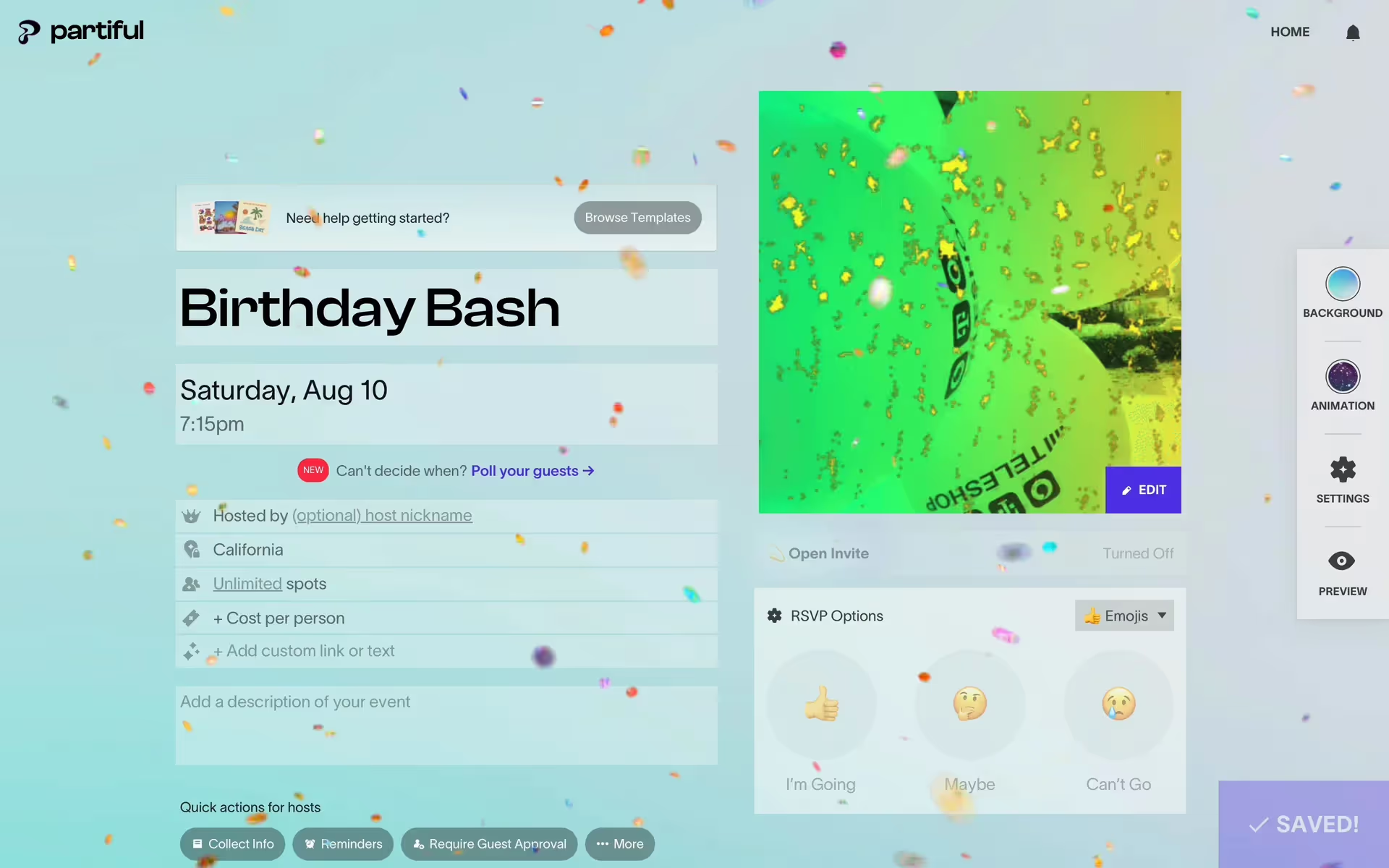
Several modern brands like Partiful, Uxcel, and Dovetail incorporate similar soft, rosy tones to create a welcoming and approachable user interface. Its use by companies such as Qatalog, Craft, and Brainly shows its versatility in building a brand identity that feels both gentle and contemporary.
Use the tools below to explore curated palettes, test color contrast for accessibility, and preview Cipria in real UI components from top brands.
Using Cipria color codes
To use the color Cipria in your projects, you'll need its specific code. While #FAE7EB is the standard for web design, you'll need to convert it for other applications. For instance, RGB values are essential for digital displays, defining the intensity of red, green, and blue light, whereas CMYK values are required for physical printing, specifying the mix of cyan, magenta, yellow, and black inks.
Other models offer different advantages. HSL (Hue, Saturation, Lightness) allows for more intuitive color manipulation, while models like LAB and LCH are designed for perceptual uniformity, which is useful for creating accessible and consistent color systems.
To make things simple, we've converted Cipria's #FAE7EB hex code into a variety of popular formats. You can find and copy the exact values you need for your project below.
Analogous
Analogous color schemes use colors next to Cipria on the color wheel, creating a harmonious and serene visual experience for any interface.
Complementary
Complementary colors sit directly opposite each other on the color wheel. Pairing them with Cipria creates a high-contrast, visually striking combination.
Split Complementary
For a more nuanced take on high contrast, Cipria's split complementary scheme pairs it with the two colors adjacent to its direct opposite.
Triadic
A triadic harmony is built from three colors equidistant on the color wheel. These combinations, featuring Cipria, offer high contrast and visual energy.
Tetradic
Tetradic schemes pair two sets of complementary colors. Below, you'll find palettes that use Cipria as a starting point for balanced, four-color combinations.
Square
A square color scheme uses four colors evenly spaced on the color wheel. Starting with Cipria, this creates a vibrant, high-contrast palette.
Text Color
Background Color
Your Catchy Large Text Goes Here
Shades
Shades are darker versions of Cipria, created by adding black to introduce depth and weight.
Tints
Tints are lighter versions of Cipria, created by adding white for a softer feel.
Tones
Tones of Cipria are created by adding gray, resulting in softer, more muted variations.
Hues
Hues are variations of Cipria (#FAE7EB), differing in intensity or temperature to create unique visual effects.








Never run out of inspiration again.
Use Mobbin for free as long as you like or get full access with any of our paid plans.