Charcoal Blue
Meet Charcoal Blue (#293754), a deep and muted shade that sits at the intersection of classic navy and modern gray. Its striking quality comes from this unique balance, offering a sophisticated foundation with a subtle, cool undertone that feels both familiar and fresh.
What color is Charcoal Blue?
Charcoal Blue is a deep shade of blue that is heavily muted with gray undertones.
This results in a cool, grounded color with a sophisticated weight, landing somewhere between a dark navy and a soft black.
What is the psychological meaning of Charcoal Blue (#293754)?
Charcoal Blue merges the stability of blue with the sophistication of charcoal, representing authority and intelligence.
It evokes a sense of professionalism and security, symbolizing a quiet, grounded strength.
How can I use Charcoal Blue in my UI design?
Charcoal Blue works beautifully as a foundational color, creating a sophisticated and focused backdrop. For maximum legibility, set it against crisp off-whites or light grays. To add some energy, introduce a single, vibrant accent—think a warm ochre or a cool mint—which will stand out against the deep #293754 base.
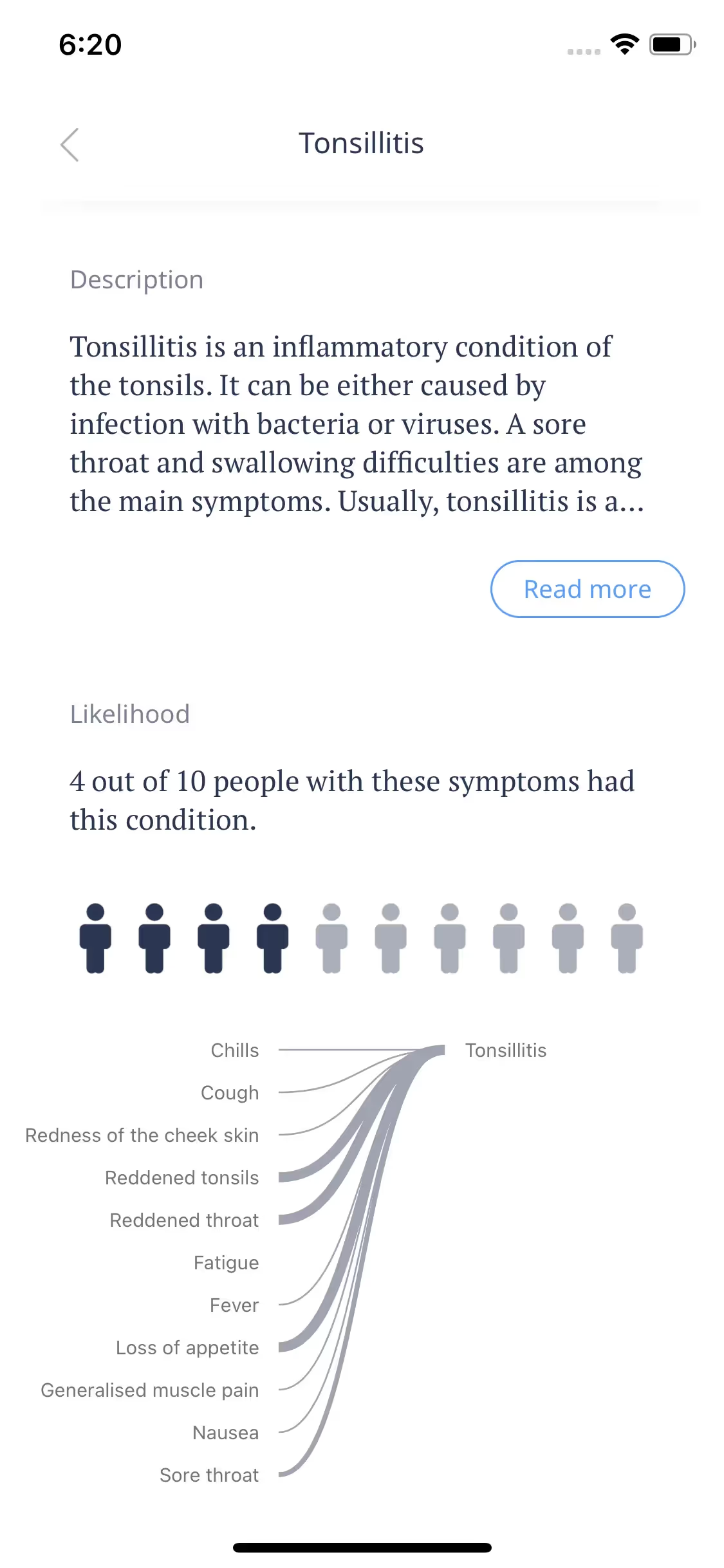
While not ubiquitous, you'll find shades similar to Charcoal Blue used by thoughtful brands like Ada, Opendoor, and Productboard. Its presence in these palettes suggests a color that communicates stability and intelligence, making it a strong choice for products that want to be taken seriously without defaulting to plain black or gray.
To see these principles in action, use the tools below. You can explore curated palettes, test your combinations for accessibility contrast, and even preview how Charcoal Blue looks within the actual interfaces of leading apps.
Using Charcoal Blue color codes
The most direct way to specify Charcoal Blue is with its hex code, #293754. This code is the standard for web design and many digital tools, giving you precise control over the color.
Different projects require different color models. You can convert the HEX code to formats like RGB (Red, Green, Blue) for screen-based work, where colors are created by adding light, or CMYK (Cyan, Magenta, Yellow, Key/Black) for print materials, which uses subtractive ink mixing.
To make things easier, we've converted #293754 to a range of popular formats. You can find and copy the exact codes you need for your project below.
Analogous
Analogous colors sit next to each other on the color wheel. Paired with Charcoal Blue, they produce a cohesive and tranquil visual effect.
Complementary
Colors opposite Charcoal Blue on the color wheel are its complements. These pairings produce a vibrant, high-contrast visual relationship when used together.
Split Complementary
For a nuanced high-contrast look, a split complementary palette pairs Charcoal Blue with the two colors neighboring its opposite on the wheel.
Triadic
A triadic scheme pairs Charcoal Blue with two other colors, creating a vibrant, high-contrast palette from equidistant points on the color wheel.
Tetradic
Tetradic palettes are built from two pairs of complementary colors. See how Charcoal Blue works within this four-color arrangement for a vibrant combination.
Square
A square color scheme pairs Charcoal Blue with three other colors, all equidistant on the color wheel, for a vibrant, high-contrast palette.
Text Color
Background Color
Your Catchy Large Text Goes Here
Shades
Shades of Charcoal Blue are created by mixing in black, which adds depth and gravity.
Tints
Tints of Charcoal Blue are lighter variations made by adding white for a softer effect.
Tones
Tones are muted variations of Charcoal Blue, created by adding gray to soften saturation.
Hues
Hues are variations of Charcoal Blue, creating different effects by altering its intensity and temperature.






Never run out of inspiration again.
Use Mobbin for free as long as you like or get full access with any of our paid plans.