Baby Blue Eyes
Meet Baby Blue Eyes (#A1CAF1), a soft yet vibrant shade that brings a clean, airy quality to any design palette. Its gentle saturation offers a refreshing alternative to more common blues, providing a calm foundation without fading into the background.
What color is Baby Blue Eyes?
Baby Blue Eyes is a light, airy shade of blue with a distinctly cool temperature, appearing gentle and serene.
Its composition includes a hint of gray, which desaturates the hue and gives it a sophisticated, muted character.
What is the symbolic meaning of the color Baby Blue Eyes?
The color Baby Blue Eyes, #A1CAF1, evokes a sense of tranquility, innocence, and sincerity. It's a color that speaks to calmness and peace, often associated with gentle beginnings and open spaces.
Psychologically, this shade of blue builds trust and suggests reliability and stability. For designers, it's a tool to create a feeling of security and clarity, making users feel at ease.
How can I use Baby Blue Eyes in my UI design?
When working with Baby Blue Eyes, its role in your hierarchy is key. As a background, its airy quality needs a dark counterpart—like a deep charcoal or navy—for text and critical UI elements to maintain readability. For accent work, pair #A1CAF1 with warmer colors like coral or a soft orange to create a vibrant focal point. For a more serene palette, try analogous colors like periwinkle or mint green.
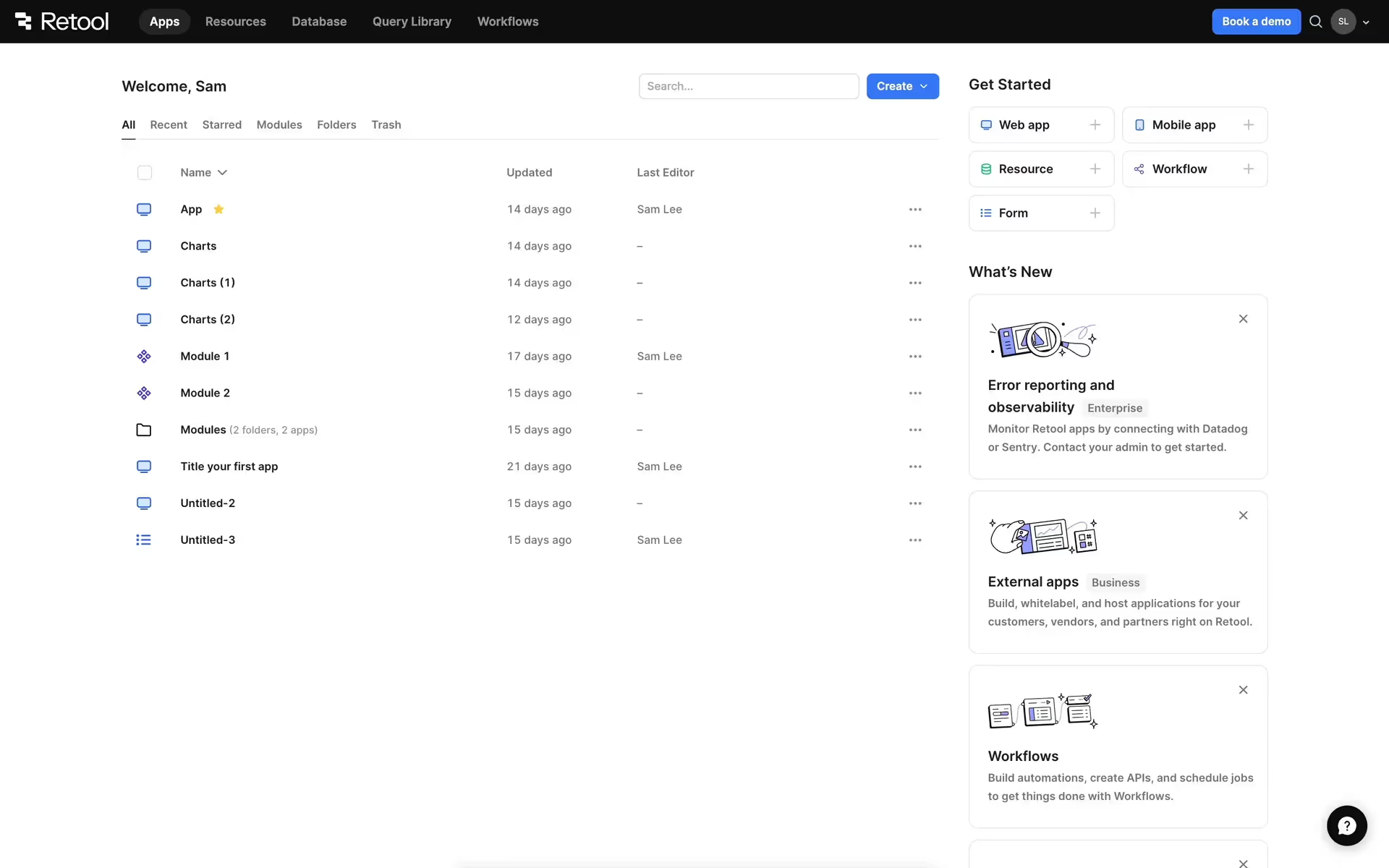
You can see similar blues in the branding of companies like Culture Trip, Retool, Deel, Sprout Social, and Quartz. Its presence in these interfaces suggests the color is effective for products that need to project clarity and reliability, making it a solid choice for SaaS platforms and information-rich websites.
To see these principles in action, use the tools below. You can explore curated palettes, test color contrast for accessibility, and preview Baby Blue Eyes in real UI components from leading brands.
Using Baby Blue Eyes color codes
Using Baby Blue Eyes in your digital work is straightforward with its hex code, #A1CAF1. This code is a universal language for color on the web and in design software, ensuring the exact shade appears consistently across different projects and platforms.
Beyond hex, you may need to translate #A1CAF1 into other color models depending on your medium. RGB (Red, Green, Blue) values are fundamental for anything displayed on a screen, as they define color through light. For print materials, you’ll need the CMYK (Cyan, Magenta, Yellow, Key/Black) equivalent, which specifies ink mixtures. Other models like HSL (Hue, Saturation, Lightness) offer a more intuitive way to make adjustments during the creative process.
To simplify your workflow, we've converted #A1CAF1 into a range of popular formats. You can find and copy the exact codes you need for your project directly below.
Analogous
Analogous colors are adjacent on the color wheel. With Baby Blue Eyes, they form a cohesive and naturally serene palette, ideal for tranquil designs.
Complementary
Complementary colors sit opposite each other on the color wheel. For Baby Blue Eyes, its complement creates a striking, high-contrast visual pairing.
Split Complementary
For Baby Blue Eyes, a split complementary scheme uses the two colors adjacent to its direct opposite, offering a vibrant yet balanced palette.
Triadic
Triadic color schemes use three hues equally spaced on the color wheel. With Baby Blue Eyes, this creates a vibrant and balanced high-contrast palette.
Tetradic
Tetradic schemes pair Baby Blue Eyes with three other hues, forming two complementary pairs for a vibrant and well-balanced design palette.
Square
A square color scheme pairs Baby Blue Eyes with three other colors, all equidistant on the color wheel, creating a vibrant, high-contrast palette.
Text Color
Background Color
Your Catchy Large Text Goes Here
Shades
Shades of Baby Blue Eyes are darker versions, created by adding black for depth and weight.
Tints
Tints of Baby Blue Eyes are created by adding white, resulting in softer, airier variations.
Tones
Tones of Baby Blue Eyes are created by adding gray, producing softer, desaturated variations.
Hues
Hues are variations of Baby Blue Eyes, differing in intensity or temperature to create distinct moods.






Never run out of inspiration again.
Use Mobbin for free as long as you like or get full access with any of our paid plans.