Water
Meet Water (#D4F1F9), a light, airy cyan that brings a crisp, refreshing feel to any digital project. Its high brightness and low saturation give it a subtle yet distinct presence, making it a fascinating choice for modern user interfaces that require a touch of clarity.
What color is Water?
Water is an extremely light, cool-toned blue that borders on off-white.
It carries a subtle green undertone, giving it a crisp and airy character.
What is the meaning of the color Water (#D4F1F9)?
The color Water, #D4F1F9, embodies tranquility and clarity, often associated with feelings of calm and renewal.
Symbolically, it suggests fluidity and purity, bringing a sense of open space and refreshment to a design.
How can I use the color Water in my UI design?
To make Water (#D4F1F9) work in your design, consider it for spacious backgrounds or as a subtle accent. It creates excellent, readable contrast when set against deep navy blues or charcoal grays. For a more lively combination, pair it with a warm coral or a sunny yellow to build a palette that feels both refreshing and energetic.
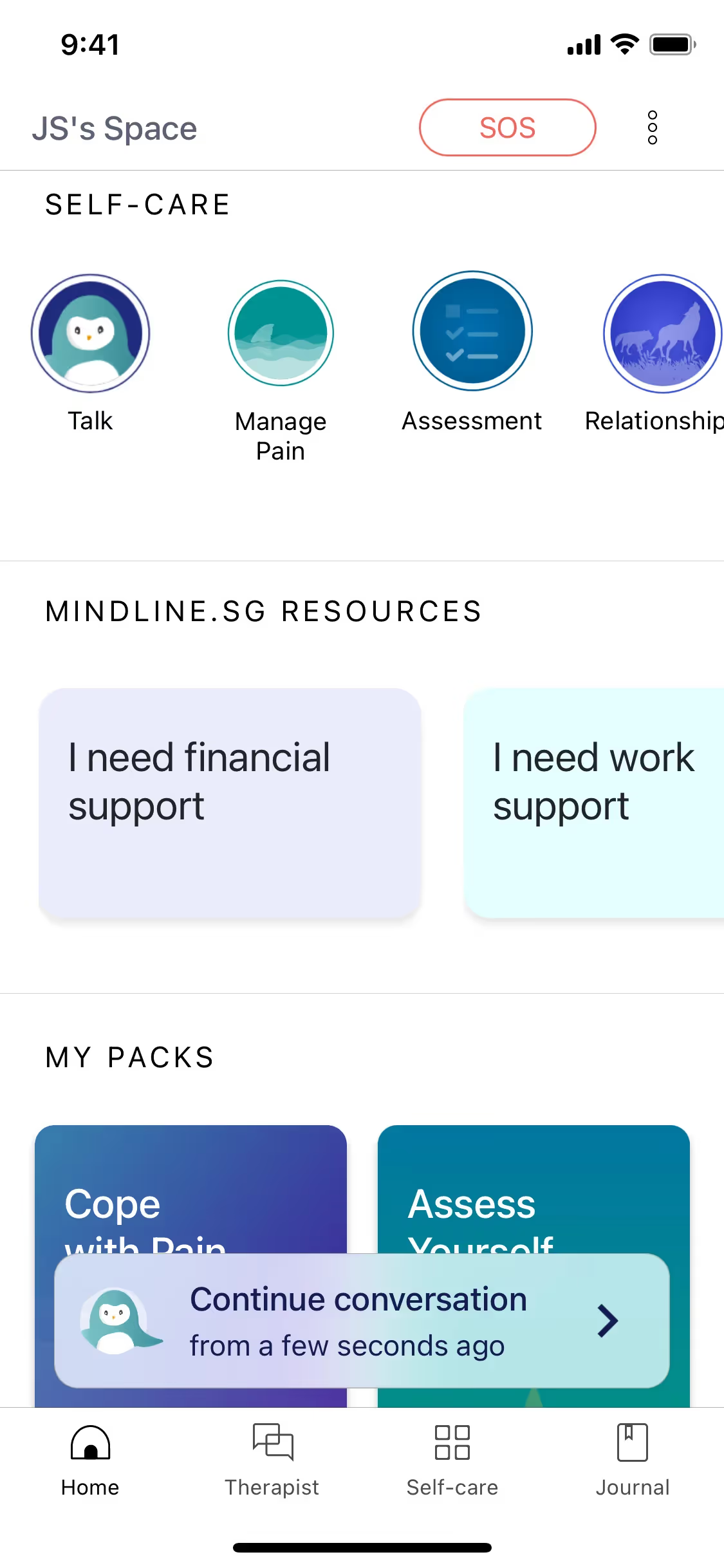
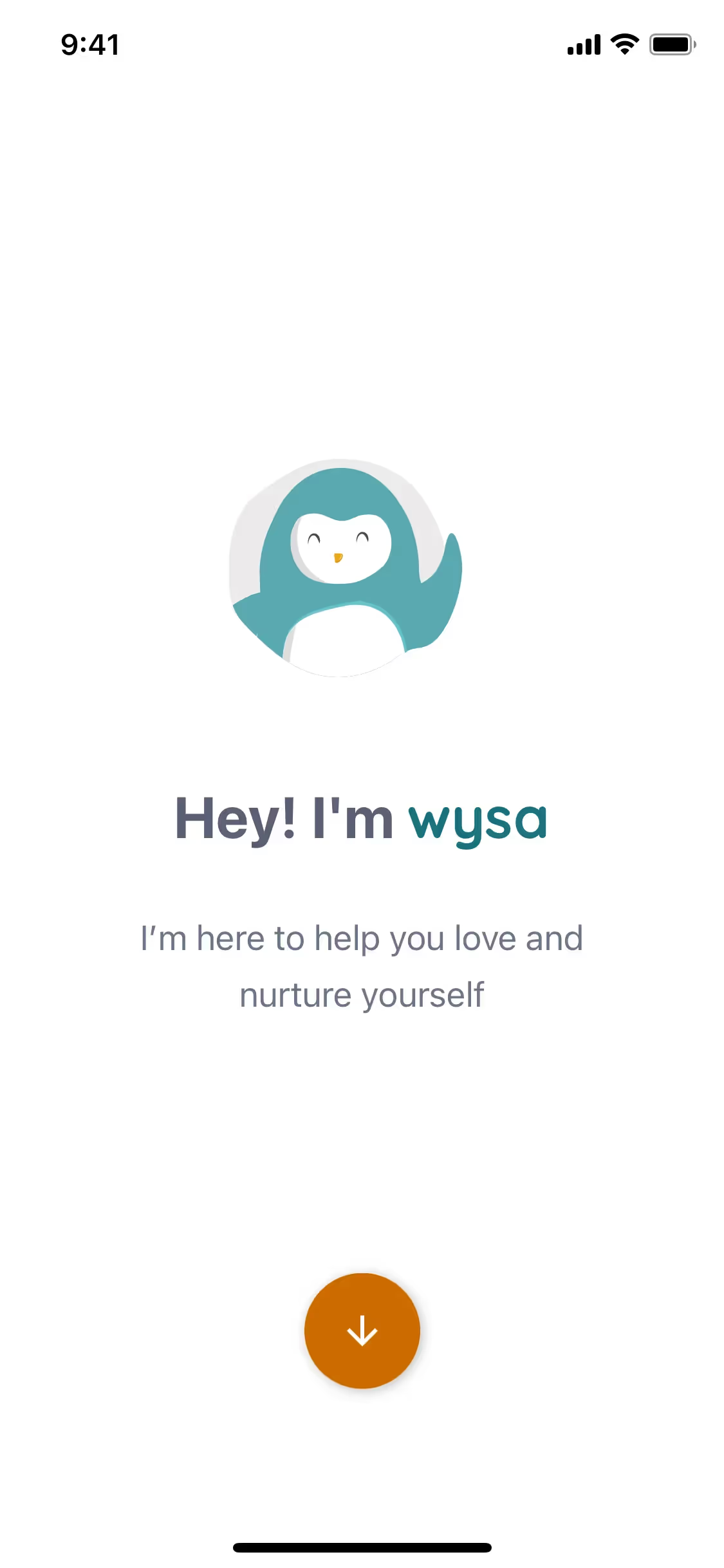
Few brands use a color like Water for their primary identity, which presents a unique opportunity. The mental wellness app Wysa, for example, uses a similar light blue to foster a calming atmosphere. Using this color can help a product feel distinct and approachable in a crowded market.
You can explore curated palettes, test color contrast for accessibility, and preview Water in real UI components from leading brands with the tools below.
How do I use the Water color codes?
The hex code #D4F1F9 is the most direct way to use the color Water in digital work, whether you're writing CSS or working in a design application. It’s a universally recognized format for web browsers and software to represent this specific shade.
For other mediums, you'll need to convert #D4F1F9. Print projects, for example, use CMYK values that correspond to ink mixtures, while RGB is used for digital screens that emit red, green, and blue light. Other models like HSL, LAB, and LCH define color based on attributes like hue, saturation, and perceptual lightness, which are useful in different design contexts.
We've converted #D4F1F9 to a range of popular formats below that you can copy for your own projects.
Analogous
Analogous colors are found next to Water on the color wheel. This combination creates a harmonious and serene palette, perfect for calm designs.
Complementary
A complementary scheme pairs Water with its direct opposite on the color wheel, creating a bold combination with maximum visual contrast.
Split Complementary
A split complementary scheme for Water pairs it with the two colors adjacent to its direct complement, offering high contrast with more nuance.
Triadic
A triadic scheme pairs Water with two other colors, all equally spaced on the color wheel, for a vibrant and high-contrast combination.
Tetradic
A tetradic color scheme uses four colors, including Water, arranged as two complementary pairs on the color wheel for a vibrant palette.
Square
A square color scheme with Water (#D4F1F9) uses four colors evenly spaced on the color wheel, creating a vibrant palette with strong contrast.
Text Color
Background Color
Your Catchy Large Text Goes Here
Shades
By adding black to Water, you create its shades, which add depth and weight.
Tints
Tints are lighter versions of Water, created by adding white to achieve a softer look.
Tones
Tones are muted versions of Water, created by adding gray to soften the saturation.
Hues
Hues are variations of Water's base color, differing in intensity or temperature to create distinct moods.

Never run out of inspiration again.
Use Mobbin for free as long as you like or get full access with any of our paid plans.