Vivid Red
Meet Vivid Red (#D62700), a powerful and saturated hue that immediately draws the eye. Its intensity is balanced by a subtle warmth, giving it a distinct character that stands apart from primary reds and makes it a compelling choice for any designer's palette.
What color is Vivid Red?
Vivid Red is a brilliant, highly saturated hue with a strong orange undertone. It’s a warm, fiery color that commands attention without the harshness of a pure primary red.
Lacking any cool or blueish tints, it sits squarely on the warm side of the color wheel, giving it an energetic and forward-moving quality.
What meaning does Vivid Red (#D62700) convey in design?
Vivid Red is a color of intense emotion, representing everything from passionate love and boundless energy to urgency and alarm. Its psychological impact is immediate, grabbing attention and signaling importance.
Historically, this powerful hue was linked to status and vitality, and it continues to carry strong cultural symbolism across the globe, often tied to celebration or revolution.
How can I effectively use Vivid Red (#D62700) in my UI design?
Vivid Red (#D62700) is a powerful accent that commands attention. To make it stand out, place it against a backdrop of muted neutrals like off-whites, charcoals, or deep grays. For a more energetic composition, consider pairing it with split-complementary colors—think teals and cyans—to create a balanced yet striking visual tension. It's most effective when used sparingly for key interactive elements like call-to-action buttons or notifications.
While not overwhelmingly common, this fiery hue is the signature of bold brands that want to project energy and immediacy. Companies like DoorDash, ESPN, Burger King, and 15Five all use a similar shade of red to create a memorable and active brand presence. Its selective use suggests confidence and a clear call to action.
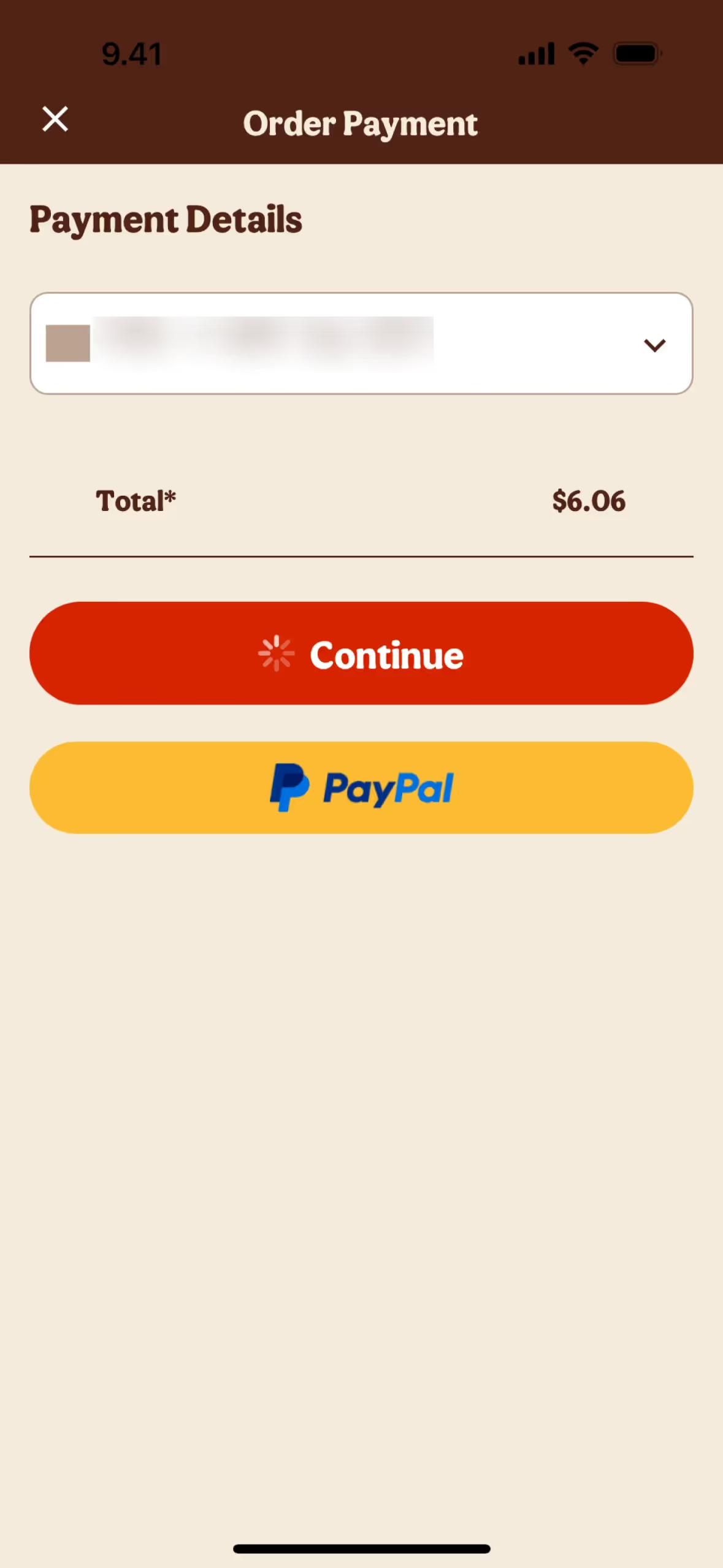
To see how this color works in practice, use the tools below. You can explore curated palettes, test the contrast of #D62700 for accessibility compliance, and preview Vivid Red within the actual UI components of leading applications.
Using Vivid Red color codes
Using Vivid Red in your projects starts with its digital identifier, the hex code #D62700. While this code is standard for web design, your work might require different formats depending on the medium.
For instance, RGB values are essential for screen-based applications, defining the color through a mix of red, green, and blue light. If your design is headed for print, you'll need the CMYK equivalent, which specifies ink proportions. Other models like HSL offer a more human-friendly way to modify color by adjusting its hue, saturation, and lightness.
To help you get started, we've converted Vivid Red's #D62700 hex code into a full range of popular color models. You can find and copy the exact values you need for your project below.
Analogous
Analogous colors are neighbors on the color wheel. For Vivid Red, these adjacent hues create a harmonious and visually soothing composition.
Complementary
To find Vivid Red's complement, look directly opposite it on the color wheel. This pairing creates a striking, high-contrast visual relationship.
Split Complementary
A split complementary scheme for Vivid Red uses the two colors adjacent to its direct complement, offering a vibrant yet balanced palette.
Triadic
A triadic harmony is built from three hues equidistant on the color wheel. Starting with Vivid Red, the result is a bold and balanced combination.
Tetradic
Tetradic schemes pair Vivid Red with three other colors, creating two complementary sets that form a rectangle on the color wheel.
Square
The square scheme pairs Vivid Red with three other colors, all equidistant on the color wheel, for a balanced yet highly contrasting effect.
Text Color
Background Color
Your Catchy Large Text Goes Here
Shades
Shades are created by mixing black with Vivid Red, resulting in darker, weightier tones.
Tints
Tints of Vivid Red are made by adding white, creating lighter and softer tones.
Tones
Adding gray to Vivid Red creates tones, which are softer, more understated versions of the color.
Hues
Hues are variations of Vivid Red, differing in intensity or temperature to create distinct moods.







Never run out of inspiration again.
Use Mobbin for free as long as you like or get full access with any of our paid plans.