Violet Blue
Meet Violet Blue (#324AB2), a deep and saturated hue that commands attention. Its unique position between violet and blue gives it a striking character, offering a bold yet sophisticated option for designers looking to make a memorable visual impact.
What color is Violet Blue?
Violet Blue is a deep, cool-toned color that sits squarely between blue and violet on the color wheel. It presents as a rich blue with prominent purple undertones, giving it a sense of depth and complexity.
This shade is characterized by its high saturation and low brightness, creating a bold yet stable appearance. It carries the calm of blue while borrowing a touch of intrigue from its violet side.
What is the meaning of the color Violet Blue (#324AB2) in design?
Violet Blue, with the hex code #324AB2, marries the stability of blue with the creativity of violet. It often symbolizes wisdom, intuition, and a sense of profound depth, making it a color of introspection and authority.
This hue can evoke feelings of tranquility and spiritual awareness, drawing from violet's historical association with royalty and mysticism. It suggests a quiet confidence and a sophisticated, imaginative spirit.
How can I effectively incorporate Violet Blue into a UI design?
In UI design, Violet Blue (#324AB2) works exceptionally well as an accent color to draw attention to key elements like buttons or links. For a clean, professional look, pair it with a neutral palette of cool grays and crisp whites. To create a more dynamic composition, consider applying the 60-30-10 rule, using a light neutral for the majority of the space, a secondary neutral for 30%, and Violet Blue for the final 10% on interactive components.
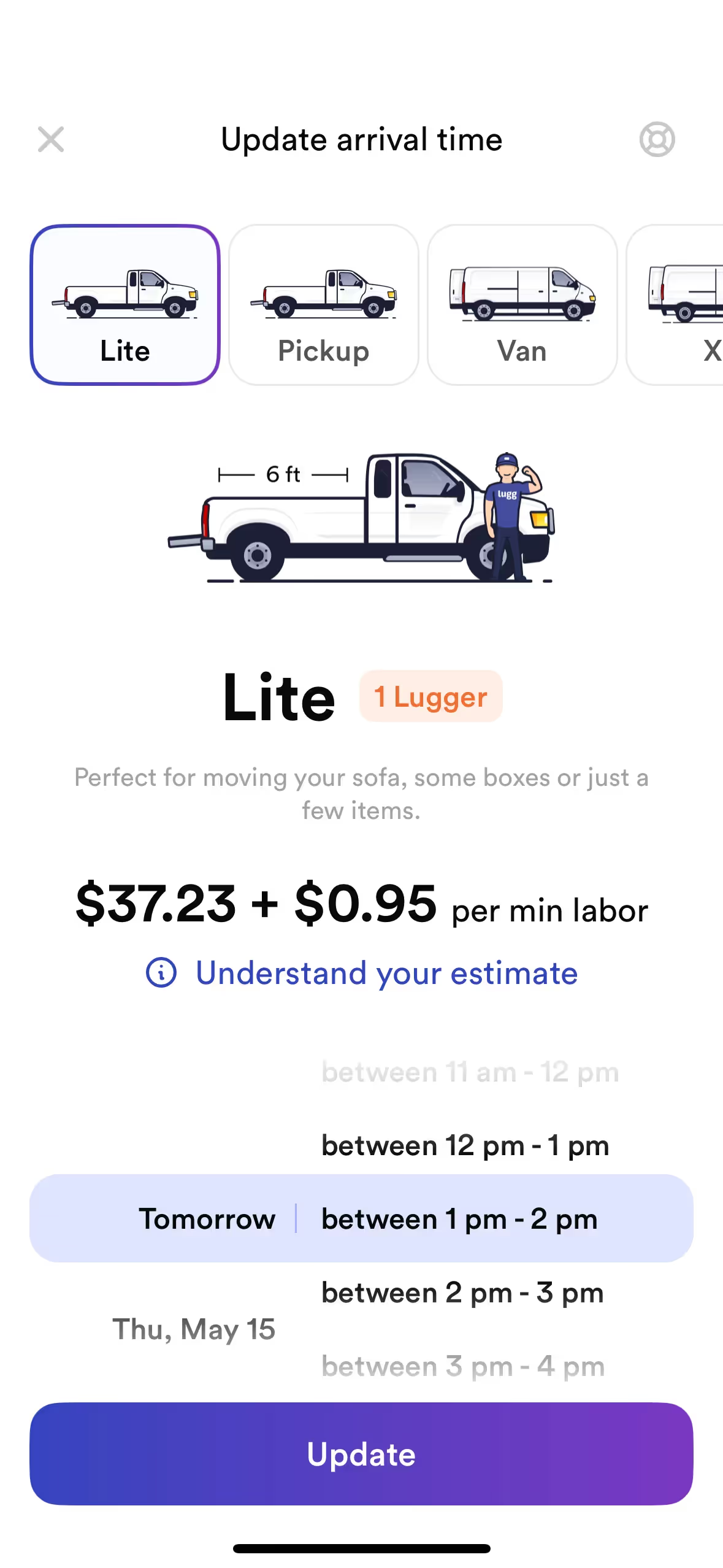
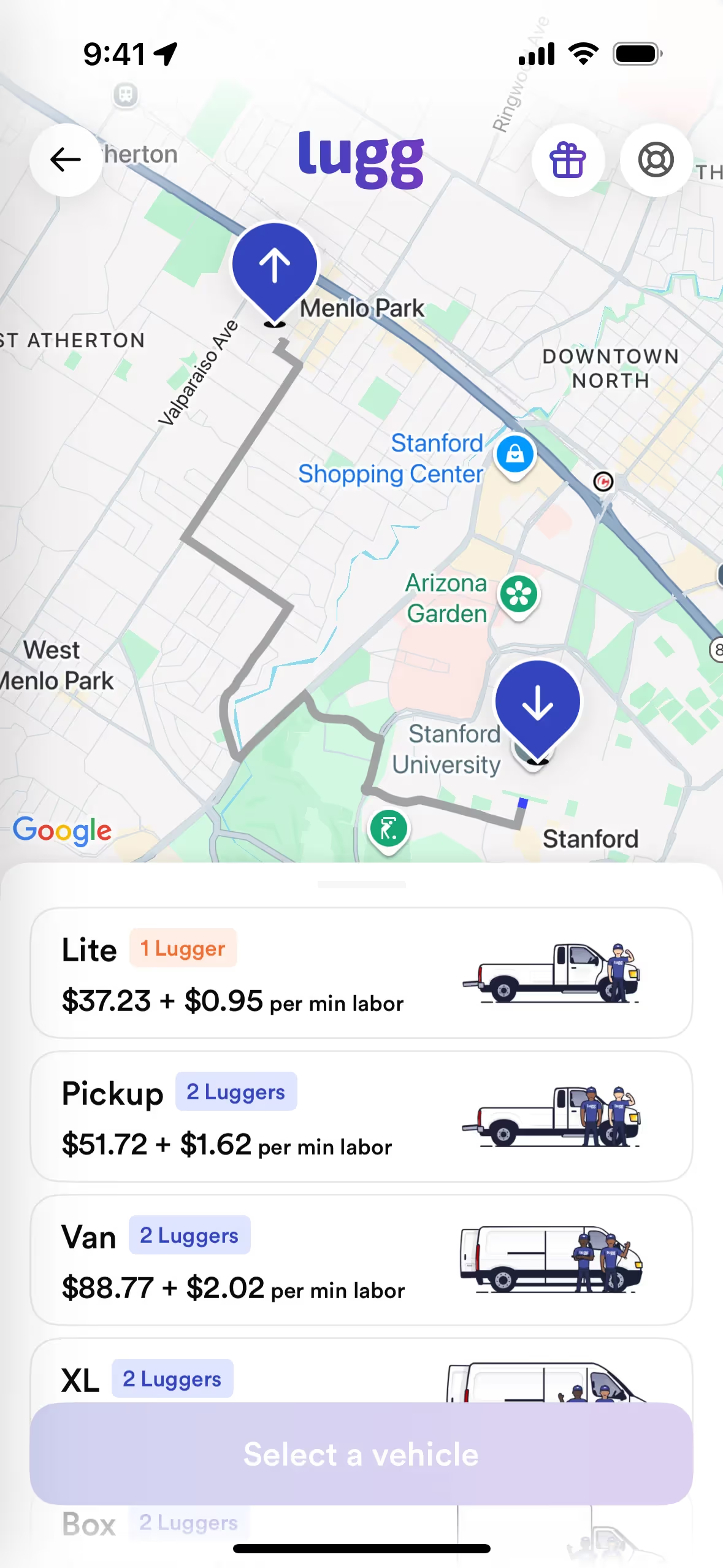
While not a color you see every day in brand identities, its rarity is its strength. A brand that uses a similar shade, like Lugg Breaker, can establish a distinctive and memorable presence. Choosing an uncommon color like Violet Blue can help a product stand out in a crowded market.
To see how Violet Blue performs in practice, use the tools below. You can explore curated palettes, check the color's contrast ratios for accessibility, and even preview it within real UI components from well-known apps.
Using Violet Blue color codes
When working with Violet Blue, #324AB2, consider its strong presence. It functions well as a foundational tone in a palette or as a striking accent, depending on the desired visual weight and the medium you're designing for.
A color's HEX code is just one of its identities. For digital work, you'll often use its RGB values, which define the mix of red, green, and blue light on a screen. For print, you'll need the CMYK values for cyan, magenta, yellow, and black ink. Other models like HSL (hue, saturation, lightness) offer more intuitive ways to modify the color for different creative needs.
We've converted Violet Blue's #324AB2 code into a variety of popular formats. You can find and copy the exact values you need for your project below.
Analogous
To create an analogous palette, select colors adjacent to Violet Blue on the color wheel. This combination produces a cohesive and tranquil design.
Complementary
Complementary colors are opposites on the color wheel. When paired with Violet Blue, its complement creates a striking, high-contrast visual effect.
Split Complementary
This scheme takes Violet Blue and adds the two colors bordering its complement, resulting in a high-contrast palette with less visual tension.
Triadic
A triadic scheme pairs Violet Blue with two other colors equidistant on the color wheel, producing a vibrant, high-contrast, and balanced palette.
Tetradic
Tetradic schemes for Violet Blue feature two pairs of complementary colors, forming a rectangle on the color wheel for a bold, versatile palette.
Square
A square color scheme uses four colors evenly spaced on the color wheel, creating a vibrant, high-contrast palette with Violet Blue as a base.
Text Color
Background Color
Your Catchy Large Text Goes Here
Shades
Adding black to Violet Blue creates its shades, giving the color more depth and weight.
Tints
Tints of Violet Blue are made by mixing in white, producing softer, less saturated hues.
Tones
Tones of Violet Blue are created by adding gray, resulting in a softer, desaturated appearance.
Hues
Hues are variations of Violet Blue, differing in intensity or temperature to create distinct moods.



Never run out of inspiration again.
Use Mobbin for free as long as you like or get full access with any of our paid plans.