Titanium
Meet Titanium (#878681), a sophisticated neutral defined by its position between gray and beige. What makes it striking is a subtle warmth that creates a grounded, metallic quality, distinguishing it from flat, one-dimensional grays and giving it a distinct character.
What color is Titanium?
Titanium is a sophisticated mid-tone gray with a distinctively warm, earthy character. Its subtle green and yellow undertones give it a complex quality that sets it apart from cooler, more industrial grays.
This results in a soft, muted color that feels both natural and grounded. It's a versatile neutral that carries a quiet strength, reminiscent of the unpolished metal it's named after.
What meaning does the color Titanium have in design?
Named after the powerful Titans of Greek mythology, the color Titanium embodies strength, resilience, and permanence. It suggests the unyielding durability of the metal it's based on, projecting a sense of quiet confidence and advanced engineering.
For designers, Titanium offers a sophisticated neutral that feels stable, reliable, and modern. The color #878681 communicates a sense of authority and high-tech elegance without the starkness of pure black or the passivity of lighter grays.
How can I use the color Titanium in my UI design projects?
In UI design, Titanium (#878681) works as a sophisticated neutral. Its balanced character allows it to be a grounding background for more vibrant accents or the main feature in a minimalist, monochromatic scheme. For readability, pair it with high-contrast text, such as deep charcoals or crisp off-whites, to ensure your content remains clear and accessible.
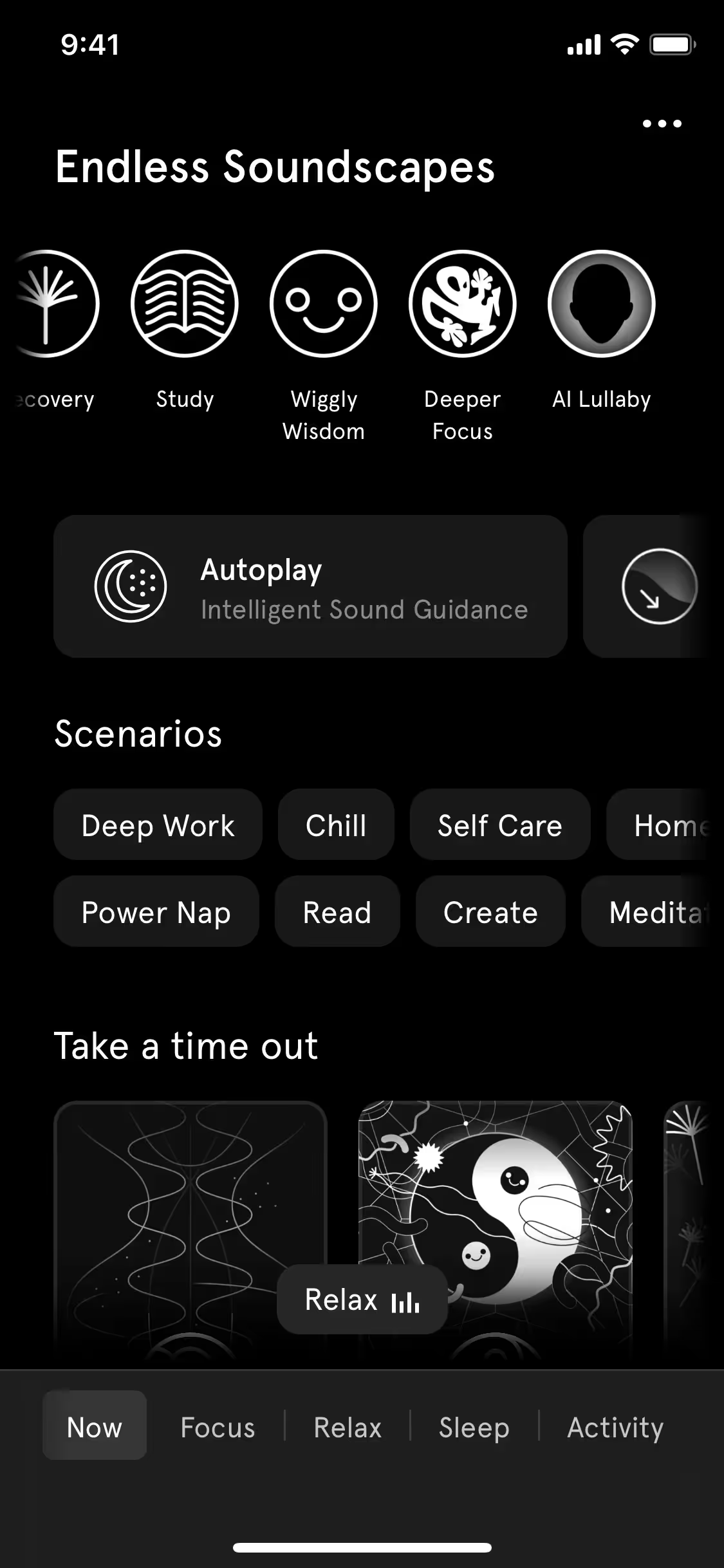
While not a widely adopted brand color, its rarity presents an opportunity for distinction. The soundscape app Endel, for example, uses a similar muted palette to build a serene experience. Choosing Titanium can help position a brand as modern, composed, and thoughtful, setting it apart from competitors who favor more conventional colors.
To see how it performs, use the tools below to explore curated palettes, test color contrast for accessibility, and preview Titanium in real UI components from leading apps.
Using Titanium color codes
Applying the color Titanium in your projects starts with its hex code, #878681. This six-digit code is a web-safe standard, but it's just one of many ways to represent this specific shade across different media.
For digital displays, you'll work with RGB values that mix red, green, and blue light, while print jobs require the CMYK equivalent for ink percentages. Other models like HSL (Hue, Saturation, Lightness) offer more intuitive ways to make adjustments.
To simplify your workflow, we've converted #878681 into a range of popular formats. Find and copy the exact values you need for your project in the tables below.
Analogous
Analogous color schemes pair Titanium with its neighbors on the color wheel, creating a harmonious and serene visual experience for any interface.
Complementary
Complementary colors sit directly across from each other on the color wheel. Paired with Titanium, they create a vibrant, high-contrast visual effect.
Split Complementary
For Titanium, a split complementary scheme uses the two colors adjacent to its complement, creating a high-contrast palette with greater harmony.
Triadic
A triadic scheme pairs Titanium with two other colors equally spaced on the color wheel, creating a vibrant and balanced high-contrast palette.
Tetradic
A tetradic scheme uses two pairs of complementary colors. With Titanium as a base, this creates a rich, four-color palette offering great versatility.
Square
A square color scheme pairs Titanium with three other colors, all equidistant on the color wheel, creating a vibrant and high-contrast palette.
Text Color
Background Color
Your Catchy Large Text Goes Here
Shades
Shades are darker versions of Titanium made by adding black, which introduces depth and substance.
Tints
Tints are lighter variations of Titanium, created by adding white to soften the hue.
Tones
Tones are muted versions of Titanium, created by adding gray to soften the color's saturation.
Hues
Hues are variations of Titanium that share its base color but differ in intensity or temperature.

Never run out of inspiration again.
Use Mobbin for free as long as you like or get full access with any of our paid plans.