Soft Green
Soft Green (#BFE3B4) is a gentle, muted hue that sits between mint and sage. Its high brightness and low saturation give it a fresh, airy quality, making it a versatile choice for modern user interfaces that require a touch of nature without overwhelming the senses.
What color is Soft Green?
Soft Green is a light, airy shade with a cool temperature, sitting on the cusp between a pastel and a muted tone.
It has subtle yellow undertones that lend it a fresh, organic quality, keeping it from feeling sterile while maintaining a gentle and calming presence.
What is the meaning of the color Soft Green (#BFE3B4)?
Soft Green embodies tranquility, balance, and renewal, drawing its meaning from the gentle aspects of the natural world.
It symbolizes fresh starts and well-being, often used to create a soothing and restorative atmosphere for users.
How to use Soft Green in UI design?
When working with Soft Green, prioritize readability by pairing it with dark text for strong contrast. The color #BFE3B4 serves as an excellent background with deep grays or blacks. For a richer palette, try pairing it with complementary muted pinks or analogous earthy tones for a balanced composition.
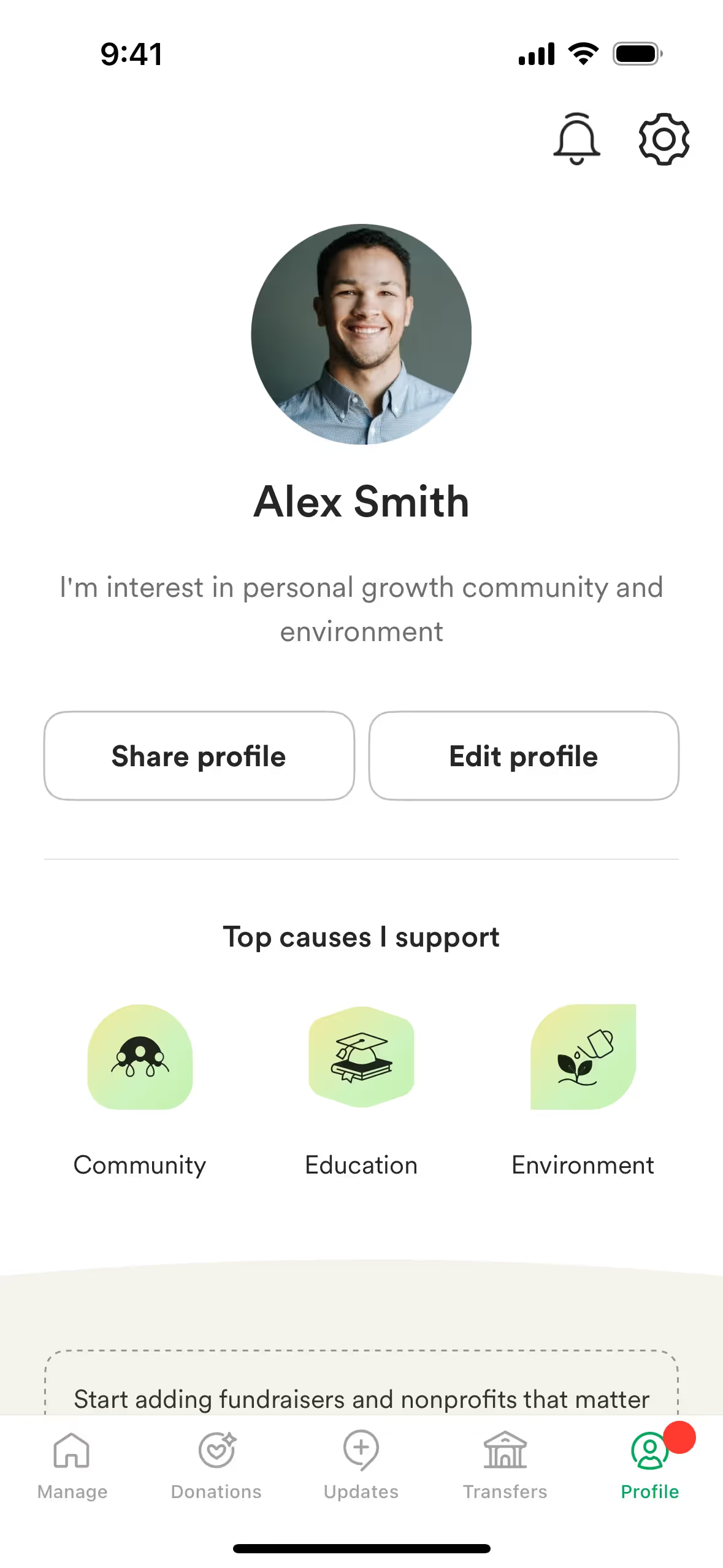
Few major brands use this specific shade, though GoFundMe's branding has a similar feel. This rarity offers a chance to build a distinct visual identity that stands out from the typical blues and grays of the digital space.
Explore our tools below to experiment with curated palettes, test your color pairings for accessibility, and preview Soft Green in real UI components from leading applications.
Using Soft Green color codes
To apply Soft Green in your work, you will need the correct color code for your specific medium. While the hex code #BFE3B4 is standard for web development, you may require a different format for print materials or digital illustrations to guarantee color accuracy across projects.
Each color model serves a distinct purpose. For instance, RGB (Red, Green, Blue) is an additive model for digital displays, whereas CMYK (Cyan, Magenta, Yellow, Key/Black) is a subtractive model for printed media. Other systems like HSL (Hue, Saturation, Lightness) give designers a more intuitive way to make adjustments. Converting #BFE3B4 across these formats is key to maintaining color consistency.
We have converted #BFE3B4 into a range of popular formats for you. You can copy the codes you need from the list below.
Analogous
Analogous colors are neighbors on the color wheel. For Soft Green, these adjacent hues create a harmonious and tranquil palette, perfect for serene designs.
Complementary
Complementary colors sit opposite each other on the color wheel. When paired with Soft Green, they create a high-contrast, vibrant visual effect.
Split Complementary
Split complementary palettes for Soft Green use the two colors adjacent to its direct complement, offering a vibrant yet balanced and harmonious look.
Triadic
For a vibrant and balanced palette, a triadic scheme pairs Soft Green with two other colors equally spaced on the color wheel.
Tetradic
A tetradic palette for Soft Green uses four colors, forming a rectangle on the color wheel with two complementary pairs for a vibrant combination.
Square
A square color scheme pairs Soft Green with three other colors, all equidistant on the color wheel, creating a vibrant, high-contrast palette.
Text Color
Background Color
Your Catchy Large Text Goes Here
Shades
Shades of Soft Green are created by adding black, resulting in darker, weightier versions.
Tints
Tints are lighter versions of Soft Green, created by adding white for a softer feel.
Tones
Tones of Soft Green are created by adding gray, resulting in softer, more muted versions.
Hues
Hues are variations of Soft Green, differing in intensity or temperature to create distinct moods.

Never run out of inspiration again.
Use Mobbin for free as long as you like or get full access with any of our paid plans.