Sea Horse
Meet Sea Horse (#CEE4E1), a soft, muted aqua that balances delicately between green and blue. Its most striking quality is its airy lightness and desaturated character, offering a whisper of color that feels both refreshing and sophisticated without demanding the spotlight.
What color is Sea Horse?
Sea Horse is a pale, cool-toned green with a whisper of blue undertone.
Its high brightness and muted saturation give it an airy, almost ethereal quality, sitting softly between mint and seafoam.
What is the meaning behind the color Sea Horse (#CEE4E1)?
Sea Horse (#CEE4E1) brings a sense of tranquility and clarity, often associated with the quiet, misty moments of dawn by the ocean.
Symbolically, this gentle hue represents renewal and a connection to the natural world, carrying the delicate and patient spirit of its namesake.
How can I use Sea Horse in my UI design?
In UI design, Sea Horse (#CEE4E1) excels as a primary background color, creating a serene canvas that lets key interface elements pop. Pair it with deep charcoals or navy for crisp, readable text, or create an analogous palette with soft blues and mints for a harmonious effect. Its subtlety makes it ideal for minimalist interfaces, wellness platforms, or financial tech apps aiming for a trustworthy, modern aesthetic.
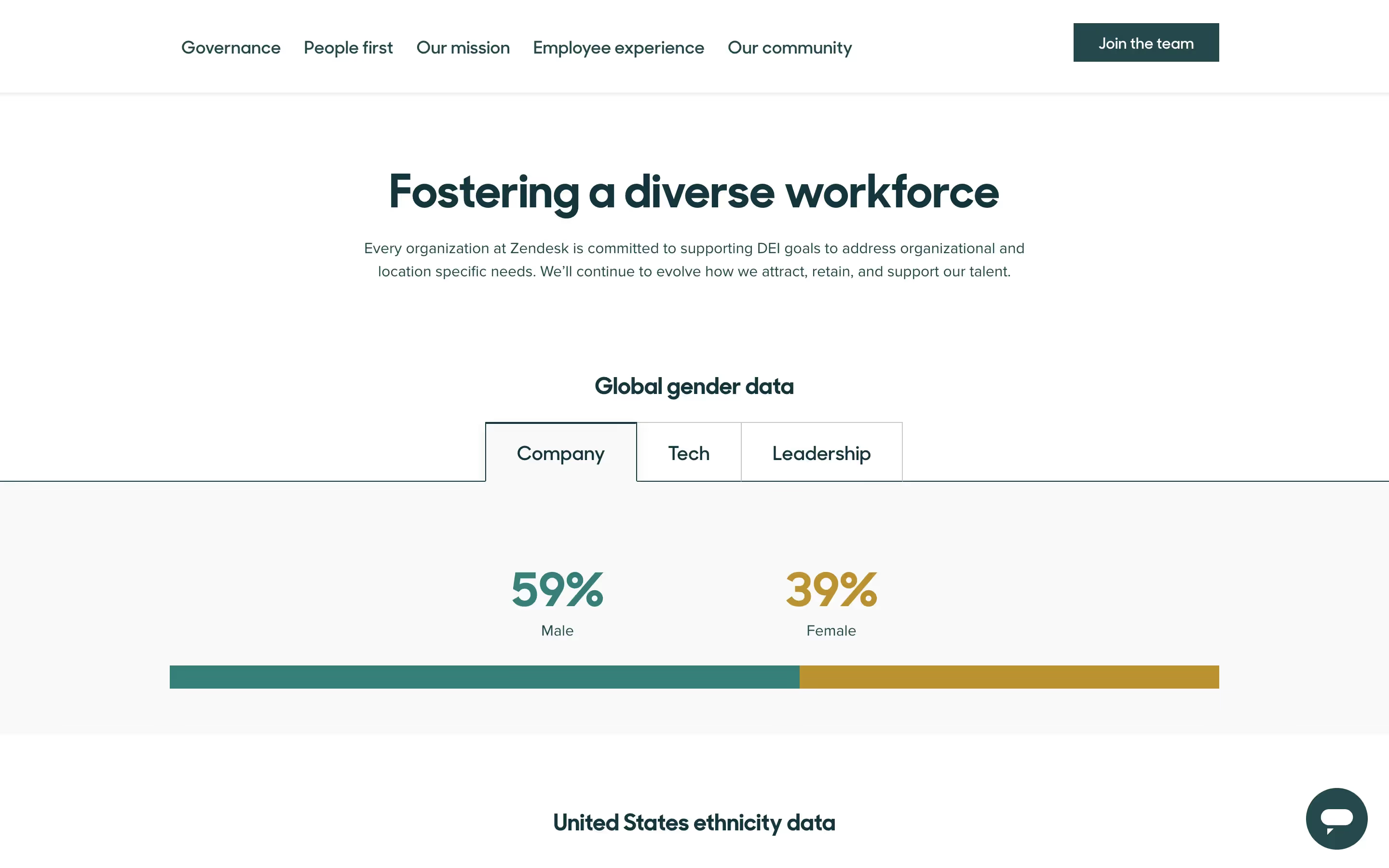
You won't find many major brands sporting a color quite like Sea Horse. Its muted, complex nature is distinct from the more saturated greens of brands like Starbucks or Zendesk. This uniqueness is a strategic advantage, offering a chance to craft a memorable visual identity that stands apart from the competition.
Explore curated palettes, test color contrast for accessibility, and preview how Sea Horse performs in real UI components from top brands with the tools below.
How do I use the Sea Horse color codes?
Using Sea Horse in your designs starts with its hex code, #CEE4E1. However, you'll often need to convert this value into a different format depending on your medium.
For instance, digital work uses the RGB (Red, Green, Blue) model for on-screen color, while print projects require CMYK (Cyan, Magenta, Yellow, Key) values. Other codes like HSL or LAB provide alternative ways to manipulate the color.
To make things easy, we've converted #CEE4E1 into a range of popular formats below. Just find the one you need and copy it for your project.
Analogous
Analogous colors are neighbors on the color wheel. When paired with Sea Horse (#CEE4E1), they create a harmonious and tranquil visual experience.
Complementary
Complementary colors are found on opposite sides of the color wheel. Paired with Sea Horse, they make for a vibrant, high-contrast combination.
Split Complementary
The split complementary palette for Sea Horse uses the two colors on either side of its complement, creating high contrast with less tension.
Triadic
A triadic palette is built from three colors equidistant on the color wheel. Using Sea Horse as a base, these combinations offer balanced yet striking contrast.
Tetradic
Tetradic palettes build on Sea Horse by adding three more hues, creating two complementary pairs that form a rectangle on the color wheel.
Square
A square color scheme uses four colors evenly spaced on the color wheel, creating a vibrant and high-contrast palette with Sea Horse.
Text Color
Background Color
Your Catchy Large Text Goes Here
Shades
Shades are darker versions of Sea Horse. Adding black gives the color more depth and weight.
Tints
Tints are lighter variations of Sea Horse, created by adding white for a softer look.
Tones
Tones of Sea Horse are created by adding gray, resulting in a softer, more muted color.
Hues
Hues are variations of Sea Horse, sharing its base color but differing in intensity or temperature.





Never run out of inspiration again.
Use Mobbin for free as long as you like or get full access with any of our paid plans.