Rust
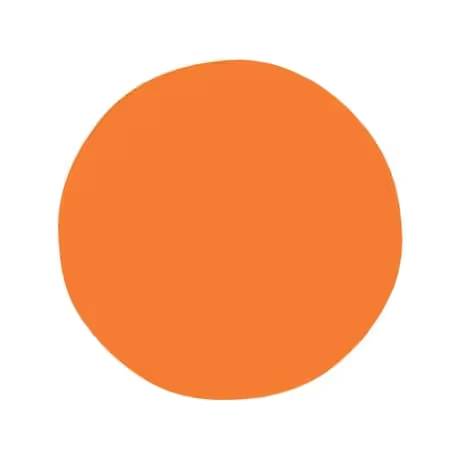
Meet Rust (#B7410E), a deep, earthy hue that balances the warmth of red with the stability of brown. Its rich, saturated character offers a sophisticated alternative to brighter oranges, providing a grounded yet compelling visual anchor for any design palette.
What color is Rust?
Rust is a warm, earthy color that sits between red and brown. It captures the muted, textured appearance of oxidized iron, presenting a deep orange-red hue that feels both organic and industrial.
This color carries strong orange and brown undertones, giving it a grounded yet vibrant quality. Its temperature is distinctly warm, suggesting comfort and age without feeling dated.
What is the meaning of the color Rust in design?
A blend of red's energy and brown's stability, Rust evokes a sense of warmth and groundedness. It suggests comfort and a connection to the natural world, feeling both organic and approachable.
Symbolically, Rust represents the beauty of aging and the passage of time, much like autumn leaves or weathered metal. It carries a feeling of authenticity and experience, offering a touch of nostalgia and worldly wisdom.
How can I effectively use the color Rust in my UI design?
In UI design, Rust (#B7410E) works powerfully as an accent color for buttons, icons, or key notifications. To create a balanced and sophisticated interface, pair it with neutral backgrounds like soft creams, light grays, or deep charcoals. For a more dynamic composition, consider a split-complementary scheme by pairing it with shades of teal and blue-green, which makes the warm tone of Rust pop.
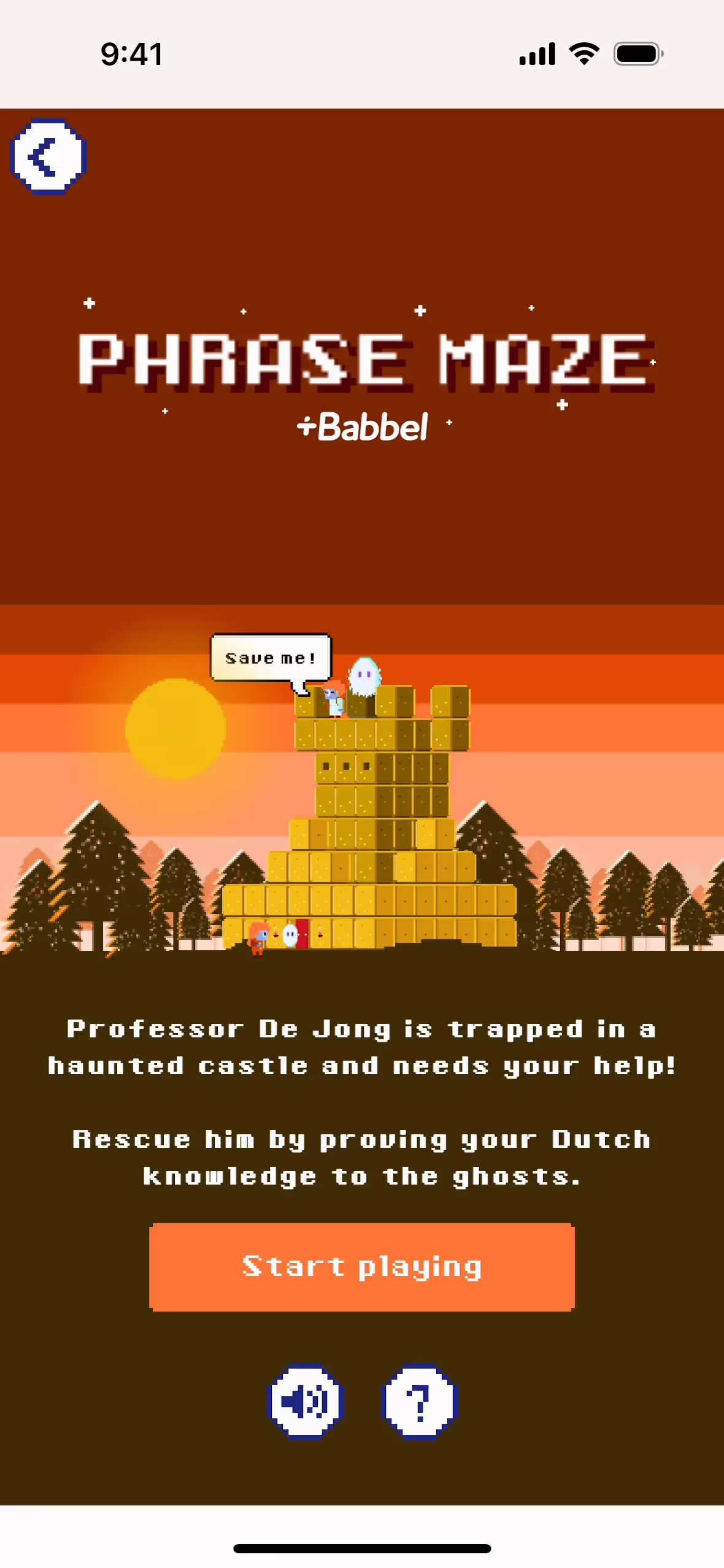
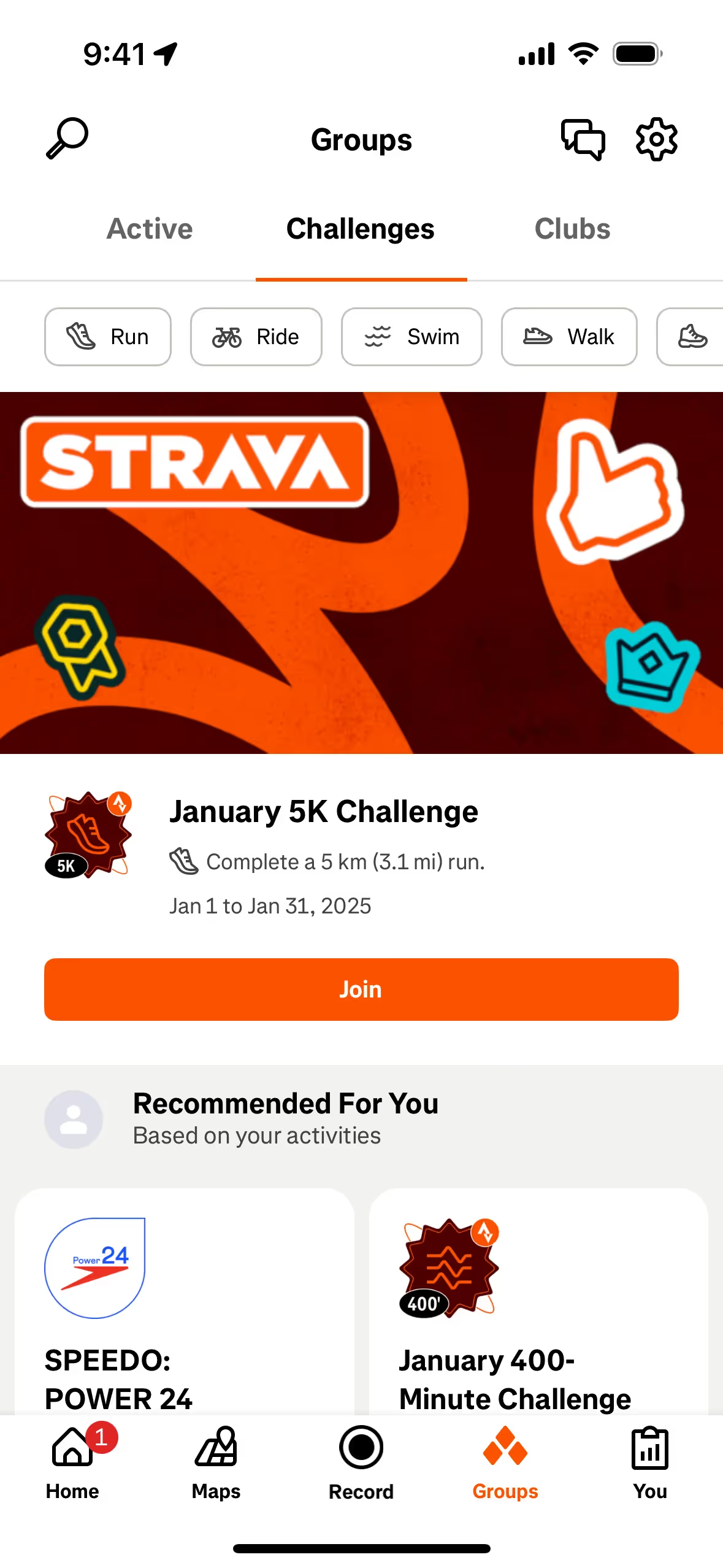
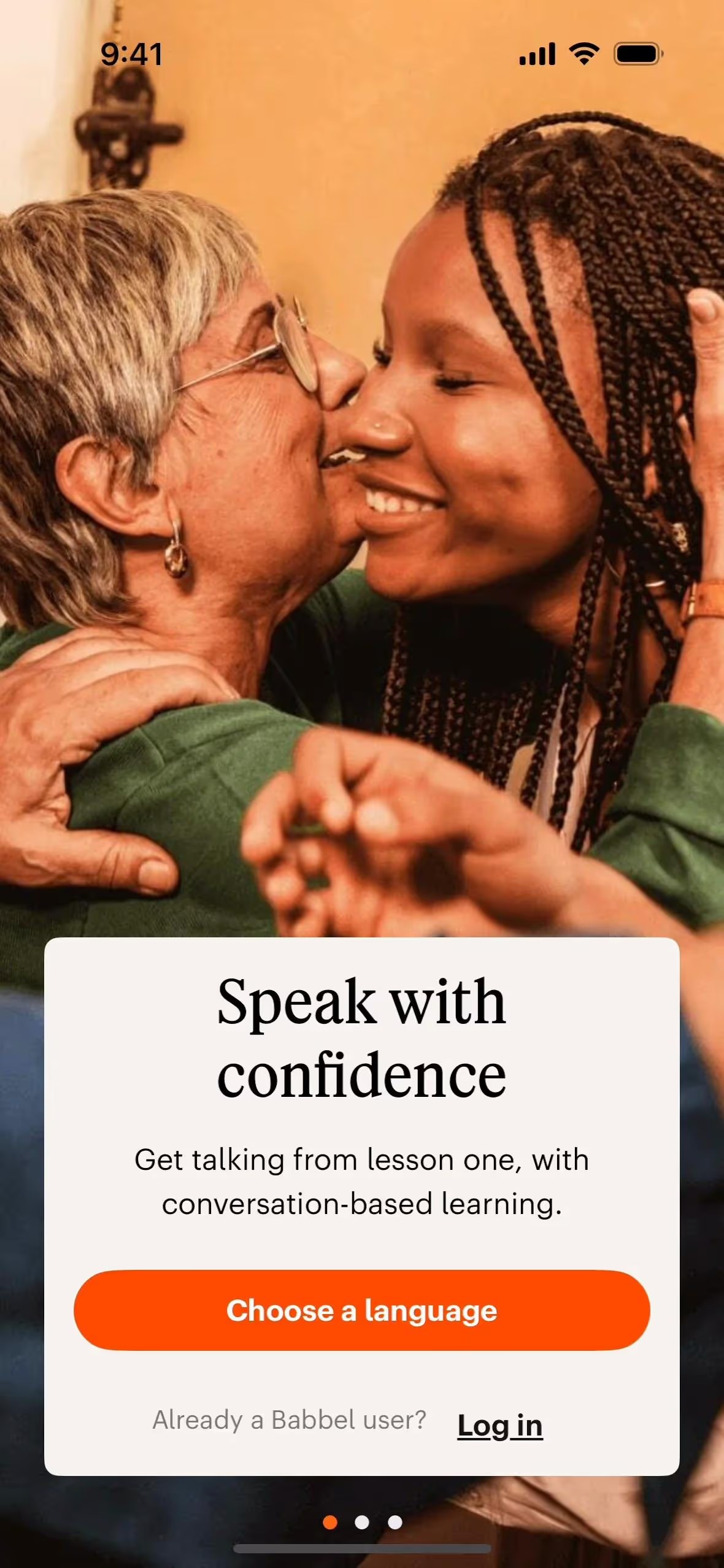
While not as common as corporate blues, Rust’s distinctive warmth is seen in brands like Babbel, Swiggy, and Strava. Its relative rarity offers a strategic advantage: using it can make a product feel more grounded, human, and memorable, helping it stand out in a crowded market.
Explore curated palettes, check the accessibility of your color combinations, and see how Rust looks in real UI components from leading apps with the tools below.
How do I use the Rust color codes?
To correctly apply the color Rust in your work, it is essential to use its specific color code, #B7410E. Using the precise code ensures your color appears uniform across different platforms and materials, from a website to a printed brochure.
Different design contexts call for different color models. While the HEX code #B7410E is standard for web development, you will need its RGB equivalent for digital screen work or its CMYK values for physical print jobs. Other codes like HSL provide a more intuitive way to modify color attributes like saturation and lightness.
We have converted the Rust HEX code #B7410E into a variety of popular formats. You can find and copy the exact values you need for your project below.
Analogous
Analogous colors are neighbors on the color wheel. When paired with Rust, they create a harmonious and serene palette for any design.
Complementary
Complementary colors are opposites on the color wheel. When paired with Rust, its complement creates a striking, high-contrast visual effect that makes both colors pop.
Split Complementary
For a high-contrast look with less tension, a split complementary palette pairs Rust with the two colors neighboring its direct complement.
Triadic
Triadic color schemes for Rust (#B7410E) use two other colors equally spaced on the color wheel, creating a vibrant and balanced high-contrast palette.
Tetradic
Formed by two pairs of complementary colors, a tetradic scheme for Rust creates a balanced yet vibrant four-color palette for your designs.
Square
A square color scheme pairs Rust with three other colors, all equidistant on the color wheel, creating a vibrant and high-contrast palette.
Text Color
Background Color
Your Catchy Large Text Goes Here
Shades
By mixing Rust with black, you create shades that add depth and gravity.
Tints
By mixing Rust with white, you create tints—lighter versions that add a gentle quality.
Tones
Tones of Rust are created by adding gray, resulting in a softer, muted color.
Hues
Hues are variations of Rust, differing in intensity and temperature to create distinct moods.

Never run out of inspiration again.
Use Mobbin for free as long as you like or get full access with any of our paid plans.