Pacific Blue
Meet Pacific Blue (#1CA9C9), a vibrant cyan that captures the clarity of tropical waters. Its striking quality comes from a perfect balance between blue and green, offering a refreshing yet assertive hue for any design palette. It's a color that commands attention without being overwhelming.
What color is Pacific Blue?
Pacific Blue (#1CA9C9) is a vibrant, cool-toned shade of cyan. It sits comfortably between blue and green, evoking the bright, clear waters of a tropical ocean.
It possesses distinct green undertones, giving it a character that can appear as a bright teal or a soft turquoise depending on the surrounding light and colors.
What is the meaning of the color Pacific Blue (#1CA9C9)?
Pacific Blue (#1CA9C9) channels the tranquility and vastness of its namesake ocean. It evokes feelings of stability, trust, and serenity, making it a color that communicates calmness and reliability.
Symbolically, this shade of blue represents clarity of thought and open communication. It's a color that can inspire creativity and a sense of peaceful escape.
How can I use Pacific Blue in my UI design?
In UI design, Pacific Blue works beautifully as a primary color against neutral backgrounds like crisp white or dark charcoal, creating a clean and approachable interface. For a more striking effect, use it as an accent. Pairing #1CA9C9 with a complementary warm orange or a split-complementary yellow-orange can make calls-to-action and key information pop.
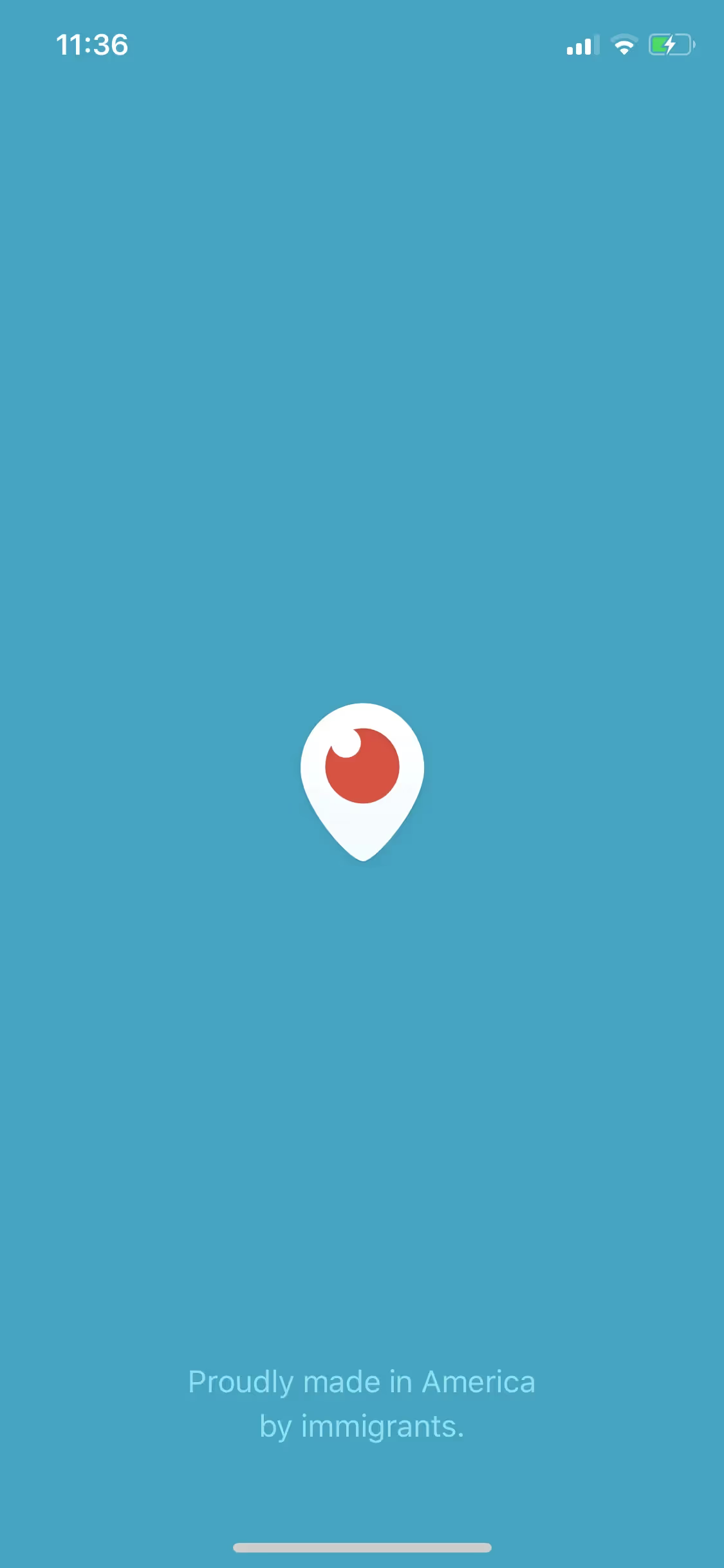
While not a dominant color in the branding world, its relatives have been used by companies like Periscope. This relative rarity is an advantage; it offers a chance to build a distinct visual identity that stands apart from the more common sea of corporate blues.
Use the tools below to explore curated palettes, test your color contrast for accessibility, and preview Pacific Blue in real UI components from leading apps.
How do I use the Pacific Blue color codes?
When working with Pacific Blue, the key is to match the color code to your medium. The hex code #1CA9C9 is your starting point for digital work, but for physical applications like print, you'll need to convert it to ensure color fidelity across different materials.
Think of color codes as different languages for the same hue. While HEX and RGB (Red, Green, Blue) are standard for screens, CMYK (Cyan, Magenta, Yellow, Key/Black) is essential for printing. Other models like HSL (Hue, Saturation, Lightness) offer a more intuitive way to make adjustments, while systems like LAB, LCH, and XYZ are used for precise, device-independent color communication.
To get you started, we’ve converted #1CA9C9 into a range of popular formats. Find the exact values you need below and copy them directly into your project.
Analogous
Analogous colors are found side-by-side on the color wheel. When used with Pacific Blue, they create a unified and calming effect, perfect for serene designs.
Complementary
To find Pacific Blue's complementary colors, look directly across the color wheel. These opposing hues create a striking, high-contrast pairing.
Split Complementary
For a high-contrast yet balanced look, a split complementary scheme pairs Pacific Blue with the two colors adjacent to its direct opposite.
Triadic
Triadic palettes are built from three hues equidistant on the color wheel. Starting with Pacific Blue, this combination offers a bold yet balanced sense of contrast.
Tetradic
A tetradic color scheme is built from two complementary pairs. See how Pacific Blue works within these vibrant, four-color palettes.
Square
A square color scheme uses four colors evenly spaced on the color wheel. With Pacific Blue as the base, this creates a vibrant, high-contrast palette.
Text Color
Background Color
Your Catchy Large Text Goes Here
Shades
Adding black to Pacific Blue creates shades, which introduce a sense of depth and weight.
Tints
Tints are lighter versions of Pacific Blue, created by adding white for a softer feel.
Tones
Tones of Pacific Blue are created by adding gray, resulting in a softer, more muted appearance.
Hues
Hues are variations of Pacific Blue, differing in intensity and temperature to create distinct moods.

Never run out of inspiration again.
Use Mobbin for free as long as you like or get full access with any of our paid plans.