Oxley
Meet Oxley (#789d85), a muted green that strikes a unique balance between nature-inspired tones and digital sophistication. Its grayish undertone gives it a subtle complexity, making it a versatile choice for modern interfaces without being overpowering.
What color is Oxley?
Oxley is a sophisticated, muted green with a noticeably cool temperature.
Subtle gray and blue undertones give it a desaturated quality, lending the hue a tranquil and grounded character.
What is the meaning of Oxley in design?
The color Oxley, #789d85, brings a sense of calm and balance, rooted in the natural world. It suggests tranquility and restoration, much like a quiet forest or a peaceful garden.
Symbolically, this muted green stands for stability and understated sophistication. It’s a color that feels grounded and enduring, offering a touch of organic elegance without being overpowering.
How should I use Oxley (#789D85) in UI design?
In practice, Oxley (#789d85) shines when paired with warm neutrals like creams and beiges, creating a balanced and organic feel. For a more dynamic composition, consider accents of soft terracotta or deep navy. This muted green is versatile enough for backgrounds, key call-to-action buttons, or subtle highlights, lending interfaces a sense of calm sophistication.
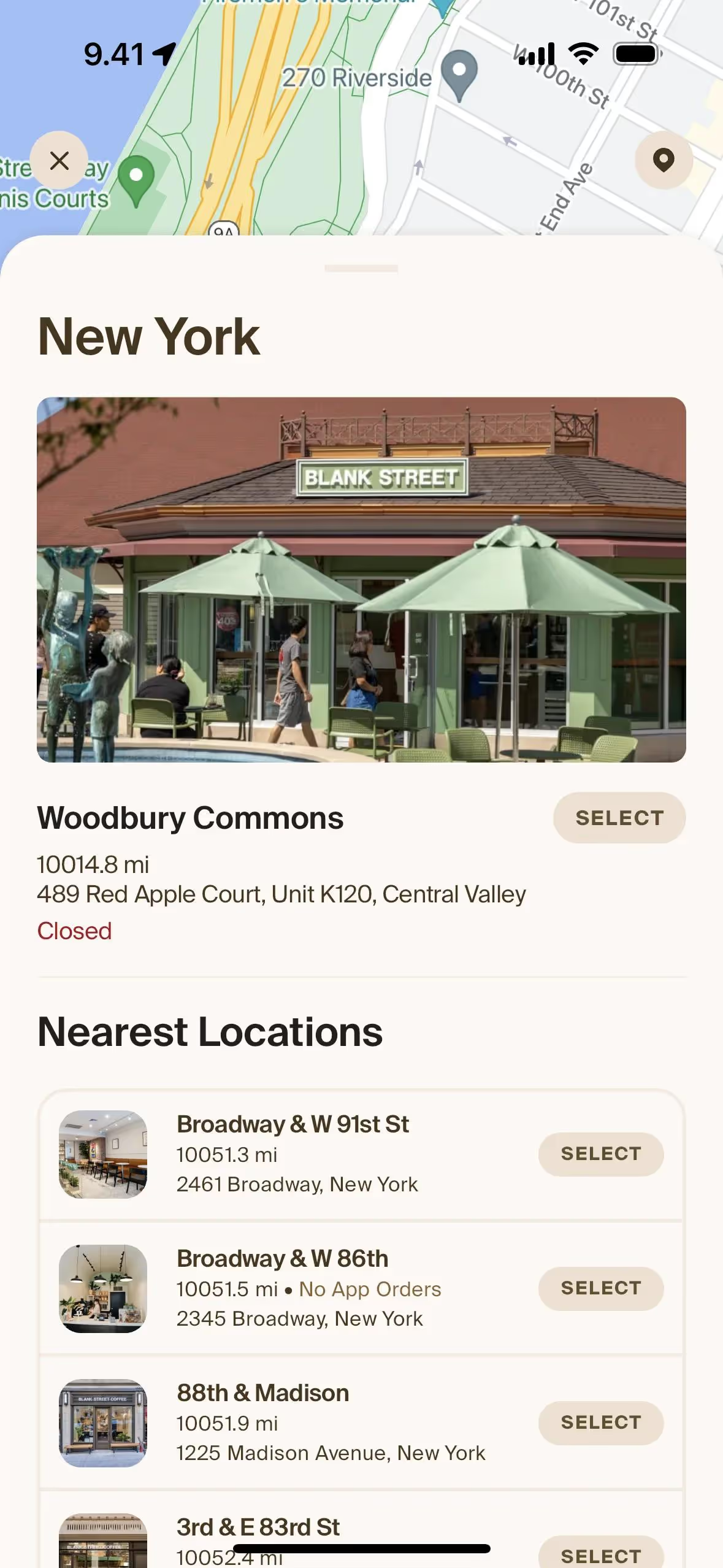
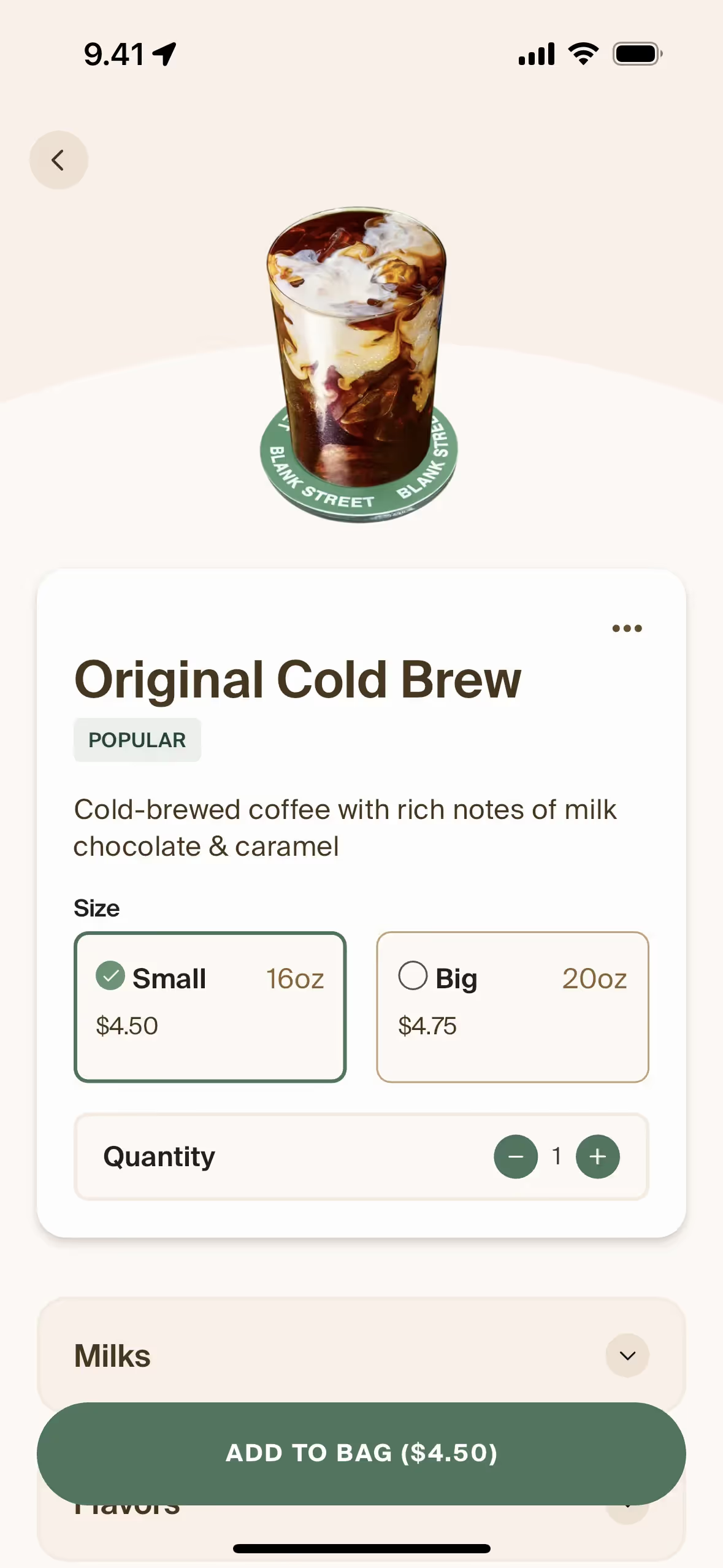
While not a dominant color in the branding world, its distinctive quality is seen in companies like Customer.io and Blank Street. This relative rarity presents an opportunity for brands to build a memorable and unique visual identity.
Use the tools below to explore curated palettes, check the accessibility of your color combinations, and see how Oxley looks in components from well-known apps.
Using Oxley color codes?
While the hex code #789d85 is the standard for using Oxley in web development, you'll often need to convert it for different mediums. Every design tool and production process speaks its own color language.
For instance, RGB values are essential for digital displays, which mix red, green, and blue light. For print projects, you'll need the CMYK equivalent, which is based on ink colors. Other models like HSL (Hue, Saturation, Lightness) offer a more intuitive way to make adjustments.
To help you get started, we've converted Oxley's #789d85 hex code into a variety of popular formats. Simply copy the values you need from the list below.
Analogous
An analogous color scheme uses colors adjacent to Oxley on the color wheel. This grouping produces a naturally harmonious and visually soothing effect.
Complementary
Paired with its opposite on the color wheel, Oxley creates a vibrant, high-contrast effect perfect for making elements stand out.
Split Complementary
A split complementary scheme for Oxley takes the two colors adjacent to its direct complement, creating a vibrant yet balanced palette with strong contrast.
Triadic
A triadic palette is built from three colors equidistant on the color wheel. See how Oxley pairs with two other hues for a bold, balanced effect.
Tetradic
A tetradic scheme builds on Oxley with two complementary pairs, resulting in a rich, four-color palette that is both dynamic and balanced.
Square
Square color schemes build on Oxley by adding three evenly spaced colors from the color wheel, resulting in a rich, contrasting combination.
Text Color
Background Color
Your Catchy Large Text Goes Here
Shades
Shades of Oxley are created by adding black, which gives the color more depth and weight.
Tints
Tints of Oxley are lighter versions made by mixing in white to soften the hue.
Tones
Tones of Oxley are made by adding gray, which softens the color by reducing saturation.
Hues
Hues are variations of Oxley, altering its intensity and temperature to create different moods.



Never run out of inspiration again.
Use Mobbin for free as long as you like or get full access with any of our paid plans.