Navy Blue
Meet Navy Blue (#000080), a color of profound depth and intensity. Its near-black saturation gives it a commanding presence, offering a sophisticated alternative to pure black. This classic hue provides a strong foundation for any design palette, standing out with its rich, dark character.
What color is Navy Blue?
Navy Blue is a deep, dark shade of blue, bordering on black. As a cool color, it possesses a low saturation and brightness, giving it a classic, grounded appearance. Its undertones can subtly shift, sometimes revealing hints of gray or even a touch of purple under different lighting conditions.
While the definitive Navy Blue is #000080, the color exists across a spectrum. Variations can range from shades with more pronounced blue hues to those that are almost indistinguishable from black, each offering a slightly different character and feel.
What is the meaning of Navy Blue in design?
Named for the dark blue uniforms worn by officers in the British Royal Navy, Navy Blue carries a legacy of authority and confidence. The color represents stability, order, and unwavering responsibility.
Psychologically, this deep hue is perceived as a color of seriousness and intelligence. It inspires feelings of trust and loyalty, making it a cornerstone for brands aiming to project dependability and expertise.
How can I effectively use Navy Blue in my UI design?
Navy Blue works beautifully as a foundational color, offering a softer alternative to pure black. For maximum legibility and a clean look, pair it with crisp whites or light grays for body text and backgrounds. To add some energy, introduce a vibrant accent color like mustard yellow or a soft coral for buttons and links, following a classic 60-30-10 principle for a balanced composition.
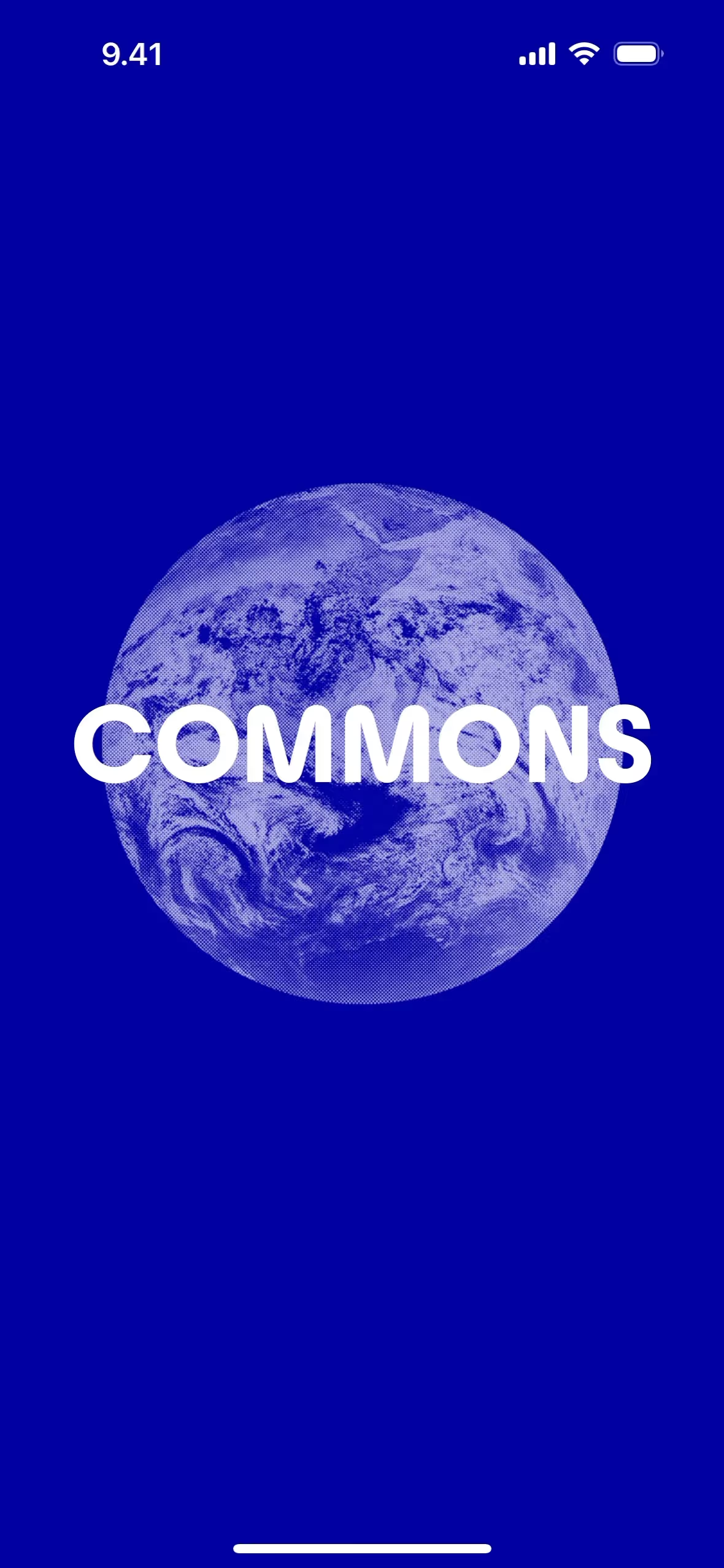
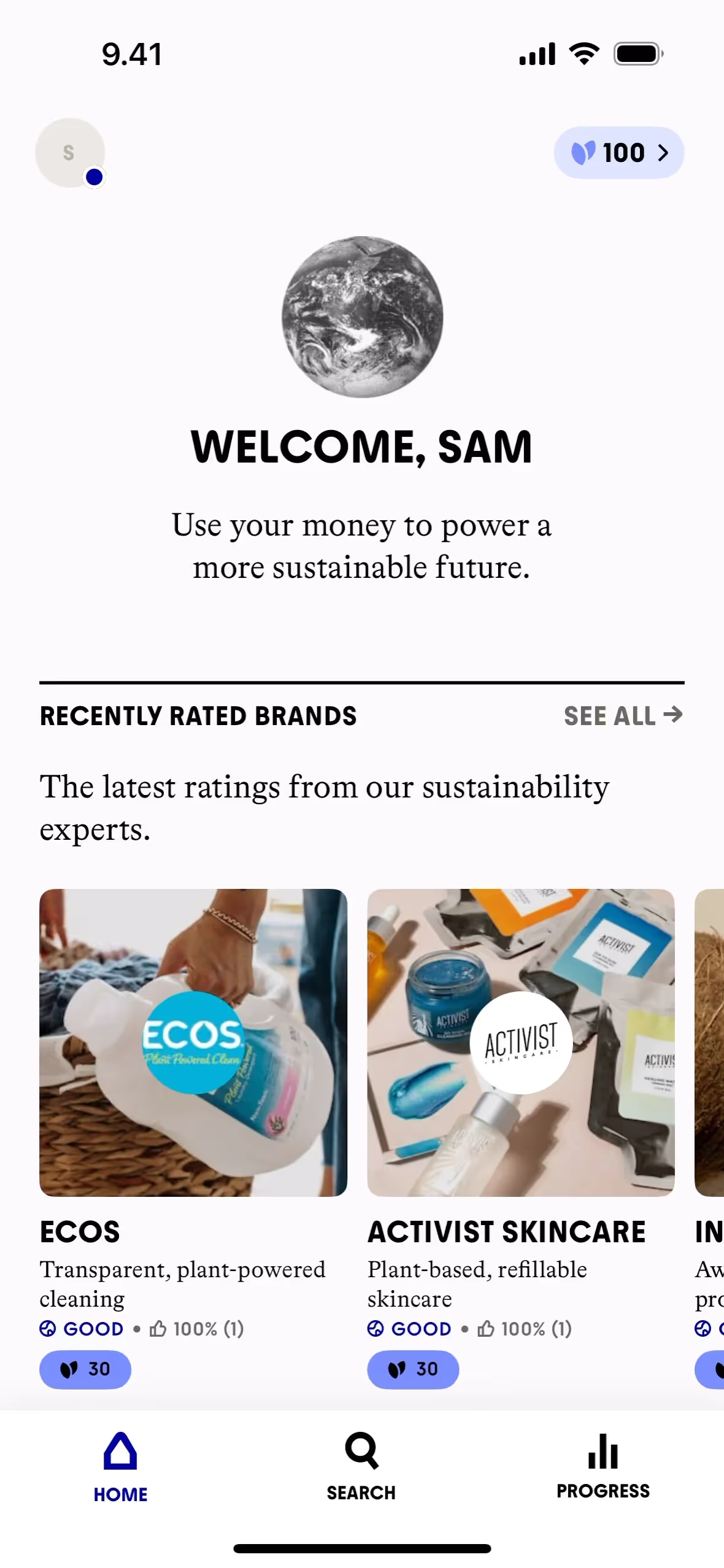
While not as widespread as other neutrals, Navy Blue is trusted by brands like Trainline, Grammarly, and Commons to project stability and intelligence. Its relative rarity can make a design feel more considered and unique, setting it apart from interfaces that rely solely on black or charcoal.
To see these principles in action, use the tools below. You can explore curated palettes, check the accessibility of your color combinations, and even preview how Navy Blue looks within the UI components of well-known applications.
Using Navy Blue color codes
Using Navy Blue in your designs is straightforward with its hex code, #000080. This specific code ensures you get the exact deep, saturated shade every time, providing a reliable foundation for any project.
While hex codes are common for web work, you may need to convert #000080 for different applications. For digital displays, you'll use its RGB (Red, Green, Blue) values, which mix light to create color on screens. For physical print jobs, you'll need the CMYK (Cyan, Magenta, Yellow, Key/Black) equivalent, which is based on ink mixing. Other systems like HSL, LAB, and LCH provide alternative ways to define color based on properties like hue, saturation, and lightness.
To simplify your process, we have translated the #000080 hex code into a range of popular formats. You can find and copy these codes for your own use in the section below.
Analogous
Sitting next to each other on the color wheel, analogous colors pair with Navy Blue to produce a cohesive and calming effect.
Complementary
Complementary colors sit opposite Navy Blue on the color wheel, creating a high-contrast pairing that makes both hues appear more vivid and striking.
Split Complementary
A split complementary scheme for Navy Blue uses the two colors adjacent to its direct complement, offering a vibrant yet balanced palette.
Triadic
A triadic scheme for Navy Blue involves two other colors equally spaced on the color wheel, creating a vibrant and balanced high-contrast palette.
Tetradic
A tetradic scheme for Navy Blue uses two pairs of complementary colors, forming a rectangle on the color wheel for a vibrant, balanced palette.
Square
A square color scheme builds on Navy Blue with three equidistant colors on the wheel, creating a palette that is both bold and harmonious.
Text Color
Background Color
Your Catchy Large Text Goes Here
Shades
By adding black to Navy Blue, you create shades that add depth and weight.
Tints
Tints are lighter versions of Navy Blue, created by adding white for a softer feel.
Tones
Tones of Navy Blue are made by adding gray, creating softer, more subtle variations.
Hues
Hues are variations of Navy Blue, differing in intensity or temperature to create distinct moods.





Never run out of inspiration again.
Use Mobbin for free as long as you like or get full access with any of our paid plans.