Mauve
Meet Mauve (#E0B0FF), a soft yet luminous shade that sits at the intersection of purple and gray. Its muted vibrancy offers a unique alternative to traditional pastels, providing a sophisticated base with a subtle, contemporary glow that catches the eye without overwhelming the senses.
What color is Mauve?
Mauve (#E0B0FF) is a pale, cool-toned purple with distinct gray and sometimes blue undertones. It occupies a unique space, softer than a vibrant violet but with more presence than a simple pastel.
This gives the color a muted, sophisticated quality. As a tint of purple, Mauve's desaturated nature makes it an understated shade that feels both modern and timeless.
What is the meaning of the color Mauve (#E0B0FF)?
Mauve’s meaning is rooted in its history as the first synthetic dye, symbolizing innovation and the democratization of a once-royal color. It carries a sense of Victorian-era nostalgia and idealism.
Psychologically, the color evokes a gentle, thoughtful calm. It suggests tenderness and introspection, offering a feeling of quiet sophistication without being overly sentimental.
How can I use Mauve in my UI design?
In UI design, Mauve’s subtlety shines when contrasted against darker backgrounds like charcoal or deep navy to ensure readability. It pairs beautifully with analogous colors such as dusty rose and periwinkle for a harmonious feel, or with complementary muted greens and warm grays for a more sophisticated, earthy palette. Consider using it for accent elements, highlighted states, or background fields to add a soft, modern touch without overwhelming the user.
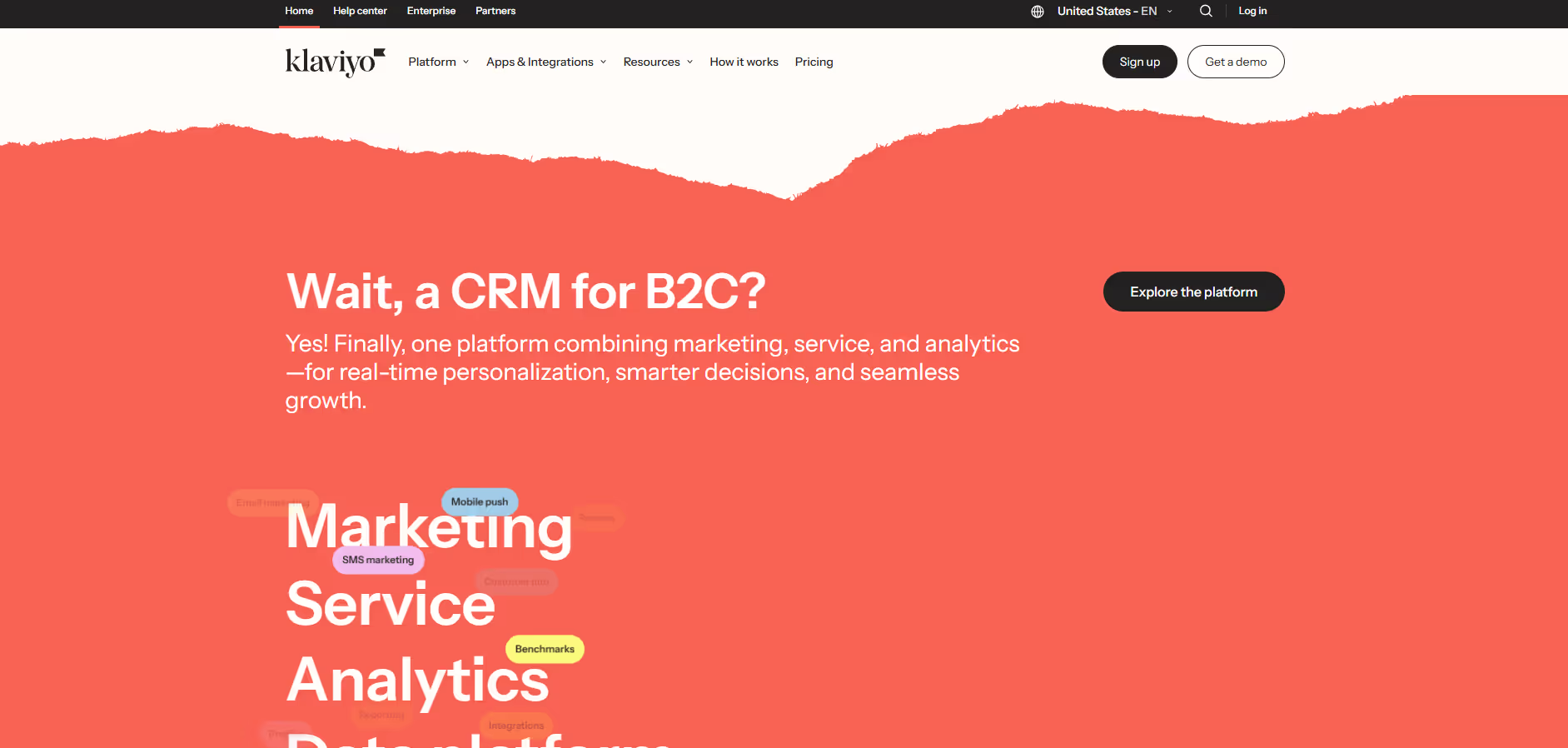
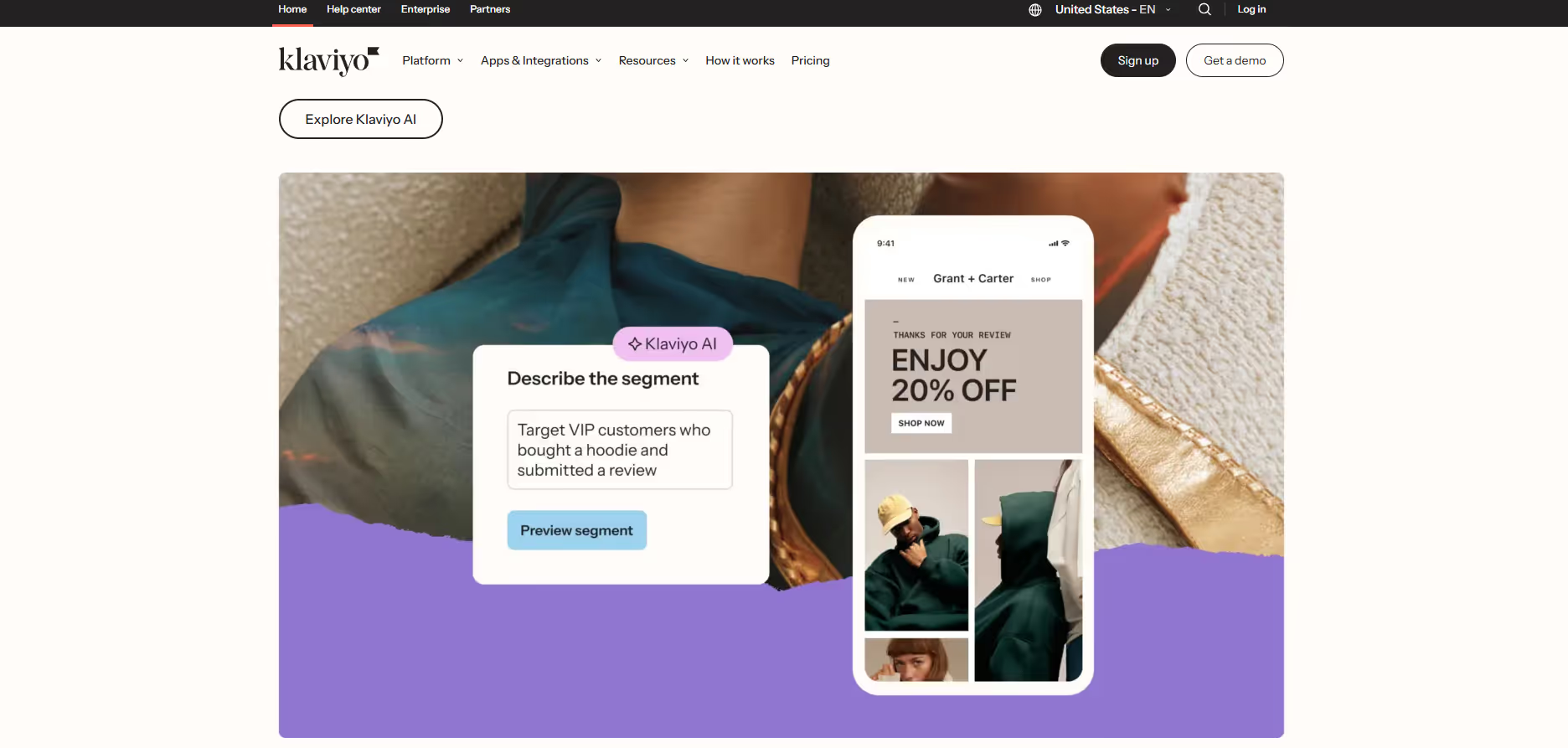
While not a widely adopted corporate color, some brands like Klaviyo have successfully built an identity with similar purple hues. Mauve's infrequent use in branding is an advantage, offering a path to build a unique visual identity that feels fresh and distinct from the sea of tech-industry blues.
To see these ideas in practice, use the tools below. You can explore curated palettes, test color contrast for accessibility, and preview Mauve (#E0B0FF) in real UI components from top brands.
Using Mauve color codes
Working with Mauve, with its hex code #E0B0FF, offers a good deal of flexibility. Its soft yet distinct character allows it to function as either a subtle background or a standout accent, depending on the design's needs.
Every design medium has its own color language. While #E0B0FF is ready for web use, you'll need to translate it for other applications. Digital screens operate on RGB (Red, Green, Blue) values, while print materials require CMYK (Cyan, Magenta, Yellow, Key/Black). Other models like HSL, LAB, LCH, and XYZ offer more intuitive ways to manipulate color attributes for specific design outcomes.
To make things simple, we've converted #E0B0FF into a range of popular formats below. Just copy the code you need and get started.
Analogous
Analogous colors are found next to each other on the color wheel. Paired with Mauve, they produce a calm and cohesive visual effect.
Complementary
Complementary colors sit opposite each other on the color wheel. For Mauve, its complement creates a striking, high-contrast visual pairing.
Split Complementary
Split complementary colors for Mauve include the two hues adjacent to its direct complement, offering a vibrant yet balanced and harmonious color scheme.
Triadic
A triadic color scheme uses three colors evenly spaced on the color wheel. With Mauve as the base, this creates a vibrant and balanced palette.
Tetradic
A tetradic color scheme for Mauve uses two pairs of complementary colors, forming a rectangle on the color wheel for a vibrant palette.
Square
A square color scheme pairs four colors evenly spaced on the color wheel. With Mauve as the base, this creates a lively and balanced high-contrast palette.
Text Color
Background Color
Your Catchy Large Text Goes Here
Shades
Adding black to Mauve creates its shades, giving the color more depth and weight.
Tints
Tints of Mauve are created by adding white, resulting in lighter, softer variations.
Tones
Tones are created by adding gray to Mauve, resulting in softer, less saturated variations.
Hues
Hues are variations of Mauve, differing in intensity or temperature to create distinct moods.

Never run out of inspiration again.
Use Mobbin for free as long as you like or get full access with any of our paid plans.