Mango Tango
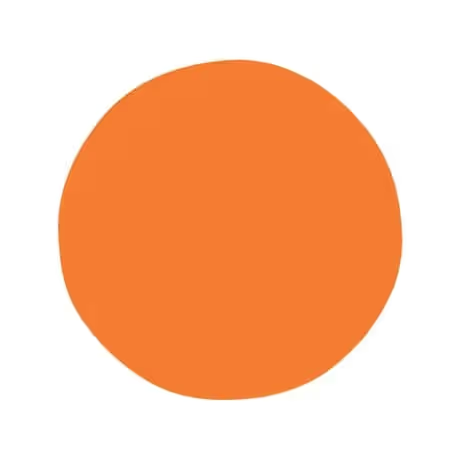
Meet Mango Tango (#FF8243), a saturated orange that commands attention. Its striking intensity sits perfectly between a zesty citrus and a warm, reddish glow, offering a potent burst of color for any design palette that needs a strong focal point.
What color is Mango Tango?
Mango Tango is a vibrant, warm orange with pronounced red undertones, giving it a distinct and energetic character.
It sits somewhere between the color of a ripe tropical fruit and a fiery sunset, radiating a lively and saturated feel.
What is the meaning behind the color Mango Tango (#FF8243)?
The color Mango Tango (#FF8243) radiates warmth and high energy. It suggests confidence, creativity, and a playful spirit, drawing on the passion of red and the optimism of yellow.
Symbolically, it represents a zest for life and social connection, communicating a feeling of tropical exuberance and adventure.
What are some effective ways to use Mango Tango in UI design?
In UI design, Mango Tango (#FF8243) shines as a potent accent. Use it strategically for key elements like buttons, notification badges, or interactive highlights to guide the user's eye. For a balanced composition, pair it with deep navies, charcoal grays, or clean off-whites. Applying the 60-30-10 principle, where Mango Tango serves as the 10% accent, can create a sophisticated yet energetic interface.
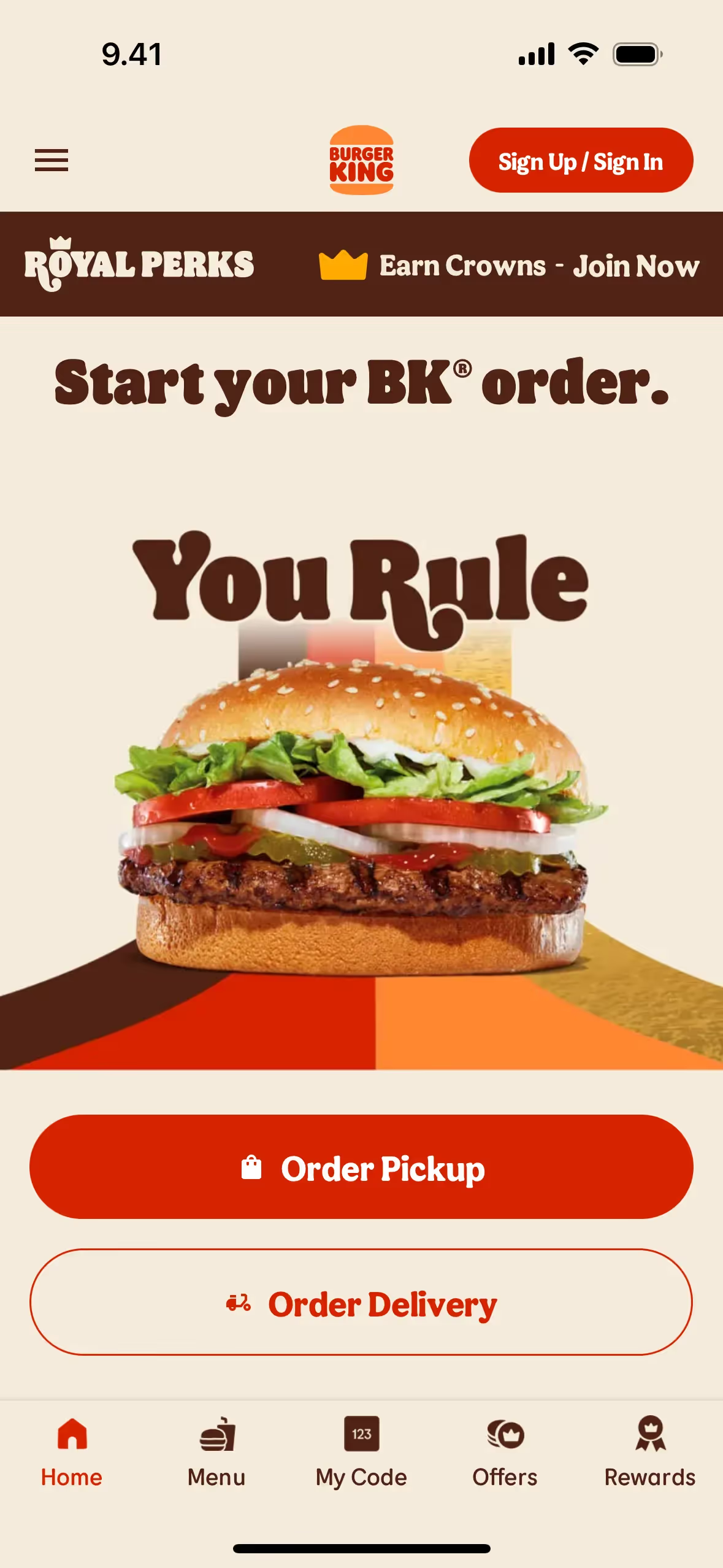
While not a dominant color across the board, shades reminiscent of Mango Tango appear in the branding of companies like Instagram, Figma, and Burger King. Its selective use suggests that brands employ it to inject vibrancy and stand out. Choosing a color like Mango Tango can signal confidence and a modern sensibility, helping a product feel fresh and distinct.
To see it in action, use the tools below. You can explore curated palettes, check color contrast for accessibility compliance, and even preview how Mango Tango looks within the UI components of well-known apps.
How do I use the Mango Tango color codes?
To apply Mango Tango with precision in your digital work, consistently use its hex code: #FF8243. This specific value guarantees that the color appears uniformly across different design software, browsers, and devices, preventing any unintended shifts in shade.
The hex code #FF8243 is a representation of the RGB (Red, Green, Blue) color model, standard for digital screens. For print projects, you'll need the CMYK (Cyan, Magenta, Yellow, Key/Black) equivalent. Other models, including HSL, LAB, LCH, and XYZ, offer different ways to define and adjust color properties based on human perception or specific industrial standards.
To simplify your workflow, we've converted Mango Tango's #FF8243 hex code into a range of popular formats. You can find and copy these values directly below.
Analogous
Analogous colors are neighbors on the color wheel. When paired with Mango Tango, they produce a rich, cohesive palette that feels both calm and composed.
Complementary
Complementary colors are found directly opposite each other on the color wheel. Paired with Mango Tango, they produce a bold, high-contrast visual relationship.
Split Complementary
A split complementary scheme for Mango Tango uses the two colors adjacent to its direct complement, offering a vibrant yet balanced high-contrast palette.
Triadic
Triadic color schemes use three hues equally spaced on the color wheel. With Mango Tango as the base, this creates a vibrant, high-contrast palette.
Tetradic
A tetradic palette for Mango Tango is built from two pairs of complementary colors, creating a balanced yet vibrant four-color harmony for designs.
Square
Based on Mango Tango, a square scheme uses four evenly spaced colors from the color wheel for a palette with strong, balanced visual tension.
Text Color
Background Color
Your Catchy Large Text Goes Here
Shades
Shades are darker versions of Mango Tango, created by adding black for a deeper, weightier feel.
Tints
Tints are created by adding white to Mango Tango, resulting in softer, less saturated variations.
Tones
Tones are Mango Tango mixed with gray, producing softer and less saturated versions.
Hues
Hues are variations of Mango Tango, differing in intensity or temperature to create unique effects.





Never run out of inspiration again.
Use Mobbin for free as long as you like or get full access with any of our paid plans.