Light Rice
Meet Light Rice (#DDD0BF), a warm neutral that offers a quiet sophistication. Its appeal lies in its subtle blend of beige and gray undertones, creating a soft, earthy foundation that feels both organic and refined. This isn't just another off-white; it's a color with inherent texture.
What color is Light Rice?
Light Rice is a soft, warm off-white with a complex character. It carries subtle undertones of yellow and a hint of pink, giving it a creamy, almost sandy appearance that distinguishes it from starker whites.
This gentle warmth makes it feel approachable and organic. It's a sophisticated neutral that sits comfortably between beige and gray, offering a quiet foundation without being cold or plain.
What is the meaning of the color Light Rice (#DDD0BF)?
Light Rice evokes a sense of calm and warmth. Its soft, muted nature creates a tranquil and comforting atmosphere, reminiscent of natural, unbleached materials and quiet sophistication.
Symbolically, the color #DDD0BF represents simplicity, stability, and a connection to the organic world. It provides a clean, dependable foundation that feels both timeless and grounded.
How can I use Light Rice in my UI design?
Light Rice (#DDD0BF) works beautifully as a warm, neutral background that adds a touch of organic sophistication without overwhelming the design. For a strong visual hierarchy, pair it with deep, saturated colors like charcoal gray, forest green, or rich burgundy; this contrast allows key interface elements to stand out. It’s a natural fit for minimalist layouts, wellness apps, and premium e-commerce sites where a calm, clean aesthetic is desired.
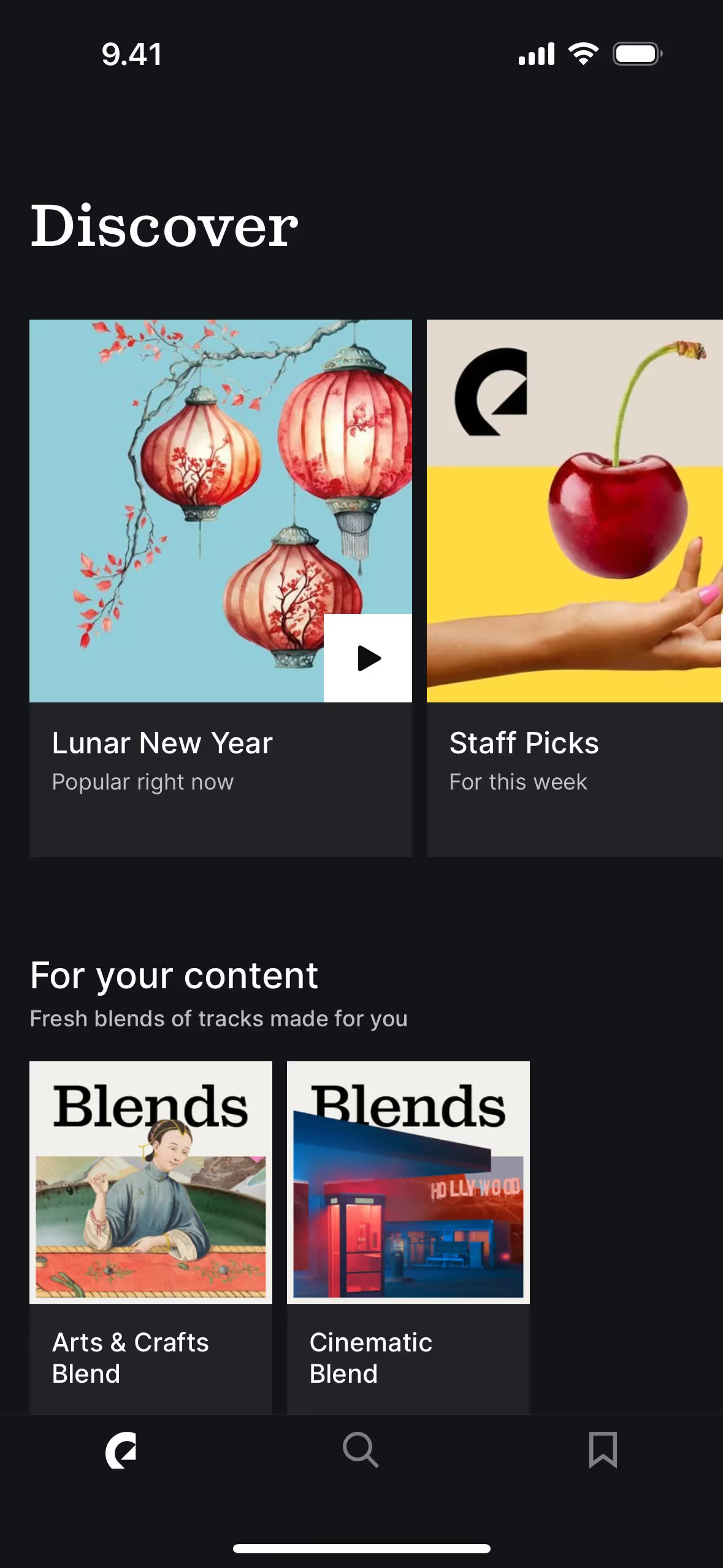
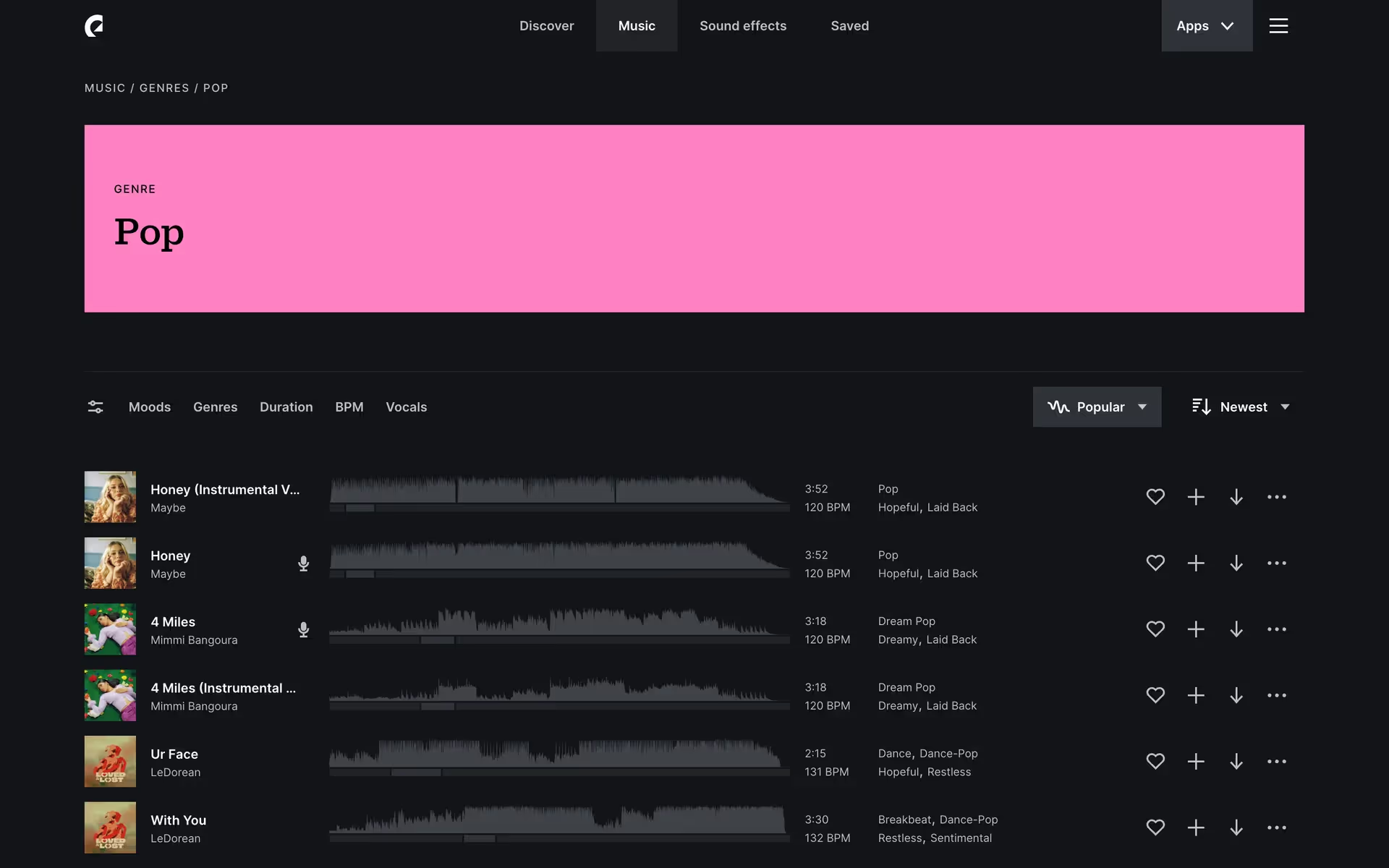
While not a dominant primary color for most major brands, warm neutrals similar to Light Rice appear in the interfaces of companies like Zendesk and Epidemic Sound to foster a welcoming and composed atmosphere. Its relative rarity in branding presents an opportunity for a product to establish a unique, approachable, and elegant visual identity that sets it apart from the competition.
To see how Light Rice works in practice, use the tools below. You can explore curated palettes, test color contrast for accessibility, and preview #DDD0BF applied to real UI components from leading apps.
How do I use the Light Rice color codes?
When working with Light Rice, the hex code #DDD0BF is your go-to for web projects. However, translating this color for different applications, from print to digital displays, requires converting it into other color models.
Each code serves a specific purpose. For instance, RGB values define the mix of red, green, and blue light for on-screen displays, while CMYK dictates the ink combination for printed materials. Other models like HSL (Hue, Saturation, Lightness) offer a more intuitive way to make adjustments in your design software.
To help you get started, we've converted #DDD0BF into a range of popular formats. You can find and copy the exact codes you need for your project below.
Analogous
Analogous colors are found side-by-side on the color wheel. When paired with Light Rice, they produce a cohesive and serene visual experience.
Complementary
Complementary colors are found on opposite ends of the color wheel, creating a vibrant, high-contrast look when paired with Light Rice.
Split Complementary
For a high-contrast palette with more nuance, a split complementary scheme pairs Light Rice with the two colors neighboring its direct opposite.
Triadic
Triadic color schemes use three hues equally spaced on the color wheel. With Light Rice as a starting point, this creates a vibrant, high-contrast palette.
Tetradic
Tetradic palettes for Light Rice use two pairs of complementary colors, forming a rectangle on the color wheel for a vibrant, balanced combination.
Square
A square scheme selects four colors evenly spaced on the color wheel. This approach builds a vibrant, high-contrast palette with Light Rice as the foundation.
Text Color
Background Color
Your Catchy Large Text Goes Here
Shades
Adding black to Light Rice creates shades, which give your palette more depth and weight.
Tints
Tints are lighter versions of Light Rice, created by adding white for a softer feel.
Tones
Tones are muted versions of Light Rice, created by adding gray to soften its saturation.
Hues
Hues are variations of Light Rice, differing in intensity or temperature to create distinct moods.

Never run out of inspiration again.
Use Mobbin for free as long as you like or get full access with any of our paid plans.