Light Pink
Meet Light Pink (#FFB6C1), a delicate hue that balances warmth with a soft, airy quality. Its low saturation and high brightness give it a subtle presence, making it a versatile choice for adding a touch of color without overwhelming a composition.
What color is Light Pink?
Light Pink is a pale tint of red, sitting on the warmer side of the color spectrum. Its softness comes from a significant amount of white mixed with a red base, creating a delicate and gentle appearance.
This shade carries distinct red undertones, which give it a subtle warmth without being overpowering. Depending on the light, it can appear almost neutral, yet it consistently maintains its soft, rosy character.
What is the meaning of the color Light Pink (#FFB6C1)?
The color Light Pink, #FFB6C1, evokes feelings of gentleness, romance, and youthful innocence, often associated with tenderness and affection.
Symbolically, it stands for playfulness and hope. While strongly linked with femininity today, it was historically a fashionable color for both men and women.
What are some effective ways to use Light Pink in UI design?
Light Pink (#FFB6C1) works well as an accent for buttons and highlights or as a gentle background color. For high contrast and readability, pair it with dark grays or deep navy blues. For a softer, more harmonious palette, combine it with other pastels like mint green and soft yellows, or build a monochromatic scheme with deeper pinks and reds.
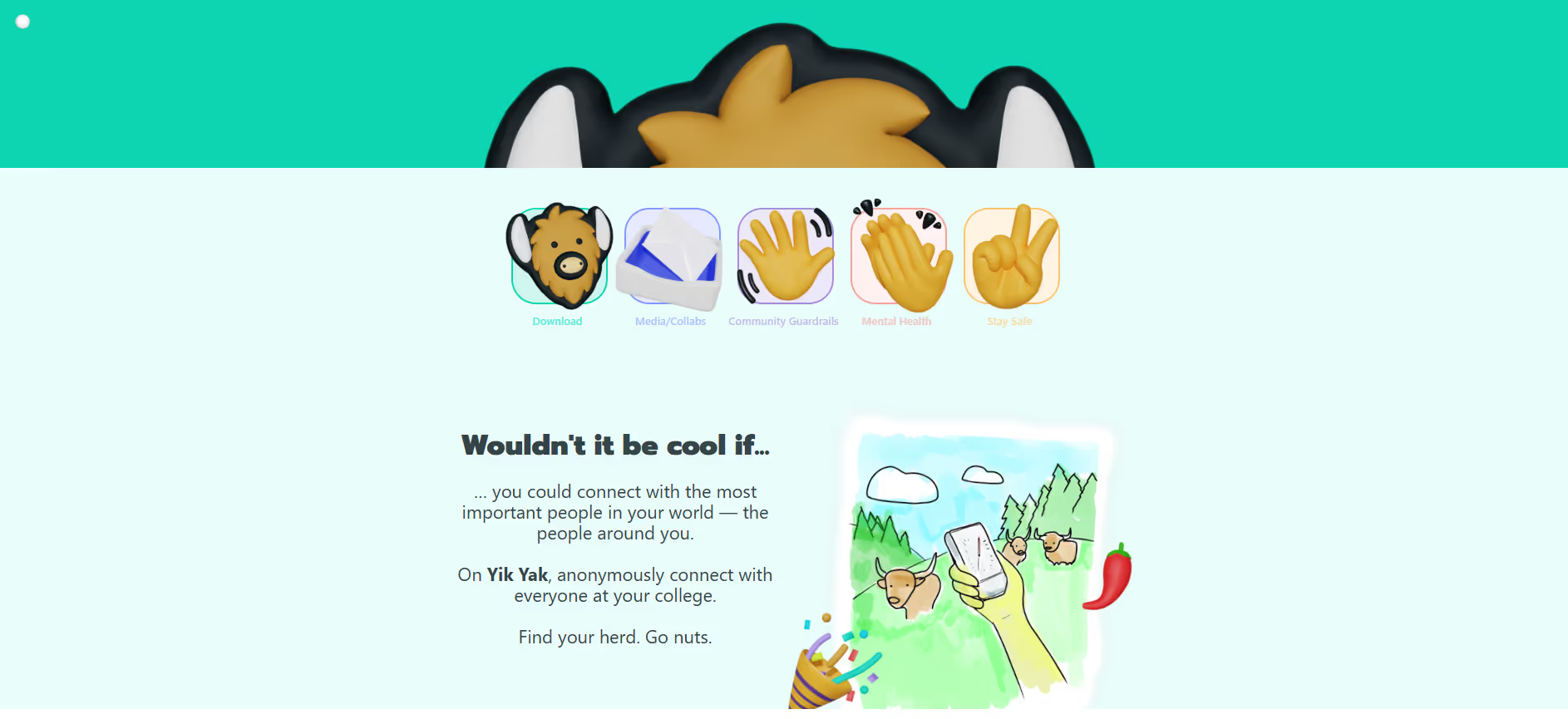
While not a dominant color in the corporate world, its rarity can be an advantage for brands wanting to appear fresh and approachable. The social media app Yik Yak, for instance, uses a similar pink to create a friendly and playful identity, making Light Pink a strategic choice for products aiming to stand out.
To see how it all comes together, use the tools below. You can explore curated palettes, test color contrast for accessibility, and preview Light Pink in real UI components from top brands.
How do I use Light Pink color codes?
The Light Pink hex code, #FFB6C1, offers a gentle and approachable feel. Its softness makes it suitable for backgrounds that don’t compete for attention or for subtle accents that add a touch of warmth to a composition.
To apply Light Pink across different media, you may need to convert its hex code. For digital work, you’ll use its RGB (Red, Green, Blue) values, which define color for screens. For print projects, you’ll need the CMYK (Cyan, Magenta, Yellow, Black) equivalent, which dictates how ink is mixed on paper. Other formats like HSL, LAB, and LCH offer different ways to define and adjust the color for specific needs.
We’ve converted #FFB6C1 into a range of popular formats below. Simply find the code you need and copy it for your project.
Analogous
Colors adjacent to Light Pink on the color wheel form an analogous scheme. They work together to produce a calm and cohesive palette.
Complementary
Complementary colors sit directly opposite each other on the color wheel. For Light Pink, its complement creates a striking, high-contrast visual pairing.
Split Complementary
A split complementary scheme for Light Pink uses the two colors adjacent to its direct complement, offering a vibrant yet balanced palette.
Triadic
Triadic palettes are built from three colors equidistant on the color wheel. With Light Pink, this approach yields a bold and harmonious color trio.
Tetradic
A tetradic scheme uses two pairs of complementary colors. For Light Pink, this creates a four-color palette arranged in a rectangle on the color wheel.
Square
A square color scheme uses four colors evenly spaced on the color wheel, creating a vibrant, high-contrast palette with Light Pink as a base.
Text Color
Background Color
Your Catchy Large Text Goes Here
Shades
By adding black to Light Pink, you create darker shades that add weight and depth.
Tints
Tints are lighter versions of Light Pink, created by adding white for a softer, delicate feel.
Tones
Tones of Light Pink are created by adding gray, resulting in softer, more subdued variations.
Hues
Hues are variations of Light Pink, differing in intensity and temperature to create distinct moods.

Never run out of inspiration again.
Use Mobbin for free as long as you like or get full access with any of our paid plans.