Lavender Purple
Meet Lavender Purple, #967BB6. This hue strikes a delicate balance between the coolness of blue and the warmth of red, creating a soft yet distinct presence. Its muted saturation gives it a sophisticated air, making it a versatile choice for modern digital product design.
What color is Lavender Purple?
Lavender Purple is a cool-toned shade of purple, characterized by its noticeable blue undertones and a soft, muted appearance. It has more substance than a typical pastel, offering a gentle yet distinct presence.
The specific hue of #967BB6 introduces a subtle grayness, which gives it a sophisticated, desaturated quality. This positions it away from the intensity of pure violet, creating a calm and composed color.
What is the meaning of the color Lavender Purple (#967BB6)?
A softer shade of purple, Lavender Purple symbolizes youth, elegance, and tranquility. It carries a touch of royalty's historical prestige but in a more approachable way, often evoking feelings of sweet nostalgia and romance.
Psychologically, the color is tied to healing, relaxation, and spiritual awareness. It represents a gentle, graceful energy, making it a powerful tool for conveying calm and creativity.
How can I effectively use Lavender Purple (#967BB6) in UI design?
Lavender Purple, or #967BB6, works well as both a statement color and a subtle accent. For a clean, modern feel, pair it with soft neutrals like cream, charcoal gray, or a stark white to make it pop. To create a more dynamic interface, consider setting it against a deep teal or a sunny yellow. It's particularly effective for call-to-action buttons, iconography, or as a gentle background wash in illustrations.
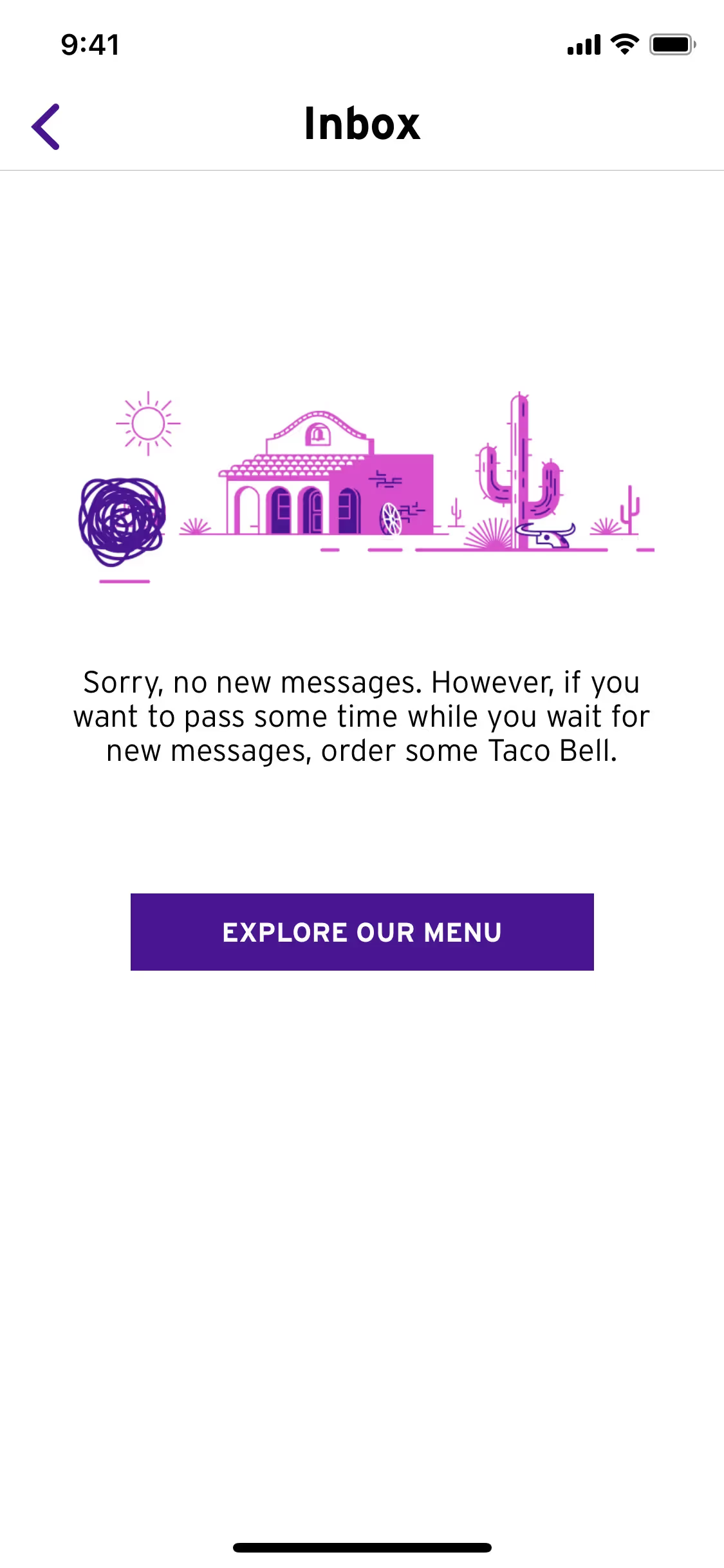
While not a dominant color in the corporate world, some brands have successfully used similar shades. Taco Bell's branding, for instance, has famously incorporated purple to create a playful and instantly recognizable identity. The relative rarity of Lavender Purple in branding presents a clear opportunity for a product to stand out and build a distinctive visual character.
To see how Lavender Purple performs in practice, use the tools below. You can explore curated palettes, check color contrast ratios for accessibility compliance, and preview #967BB6 in real UI components from well-known apps.
Using Lavender Purple color codes
Using Lavender Purple (#967BB6) effectively often means playing to its strengths. Its balanced nature allows it to serve as a gentle primary color or a sophisticated accent, adapting to different creative projects without overwhelming the composition.
To apply this color, you will need its specific code. While #967BB6 is its hexadecimal (HEX) value, you might need other formats for different media. Digital screens use RGB (Red, Green, Blue) values to render color, whereas print materials require CMYK (Cyan, Magenta, Yellow, Key/Black) for accuracy on paper. Other models like HSL, LAB, and LCH offer different ways to define and adjust color based on hue, saturation, lightness, and other perceptual attributes.
We have converted #967BB6 into a range of popular formats below. Simply find the code you need and copy it for your project.
Analogous
Analogous colors are found next to Lavender Purple on the color wheel. This harmonious grouping creates a visually pleasing and serene effect for designs.
Complementary
Complementary colors are opposites on the color wheel. When paired with Lavender Purple, they create a striking, high-contrast visual effect for your designs.
Split Complementary
A split complementary palette for Lavender Purple uses the two colors adjacent to its direct complement, offering high contrast with more nuance.
Triadic
Triadic color schemes use three hues equally spaced on the color wheel. For Lavender Purple, this creates a vibrant, high-contrast, and balanced palette.
Tetradic
Tetradic schemes pair Lavender Purple with three other colors, creating two complementary sets for a rich and balanced four-color palette.
Square
A square scheme pairs four colors from equidistant points on the color wheel. Starting with Lavender Purple, the result is a balanced yet striking palette.
Text Color
Background Color
Your Catchy Large Text Goes Here
Shades
Adding black to Lavender Purple creates darker shades, which introduce depth and weight to designs.
Tints
Tints of Lavender Purple are created by adding white, resulting in softer, airier variations.
Tones
Tones of Lavender Purple are created by adding gray, resulting in softer, more subdued versions.
Hues
Hues are variations of Lavender Purple, differing in intensity or temperature to create distinct moods.

Never run out of inspiration again.
Use Mobbin for free as long as you like or get full access with any of our paid plans.