Ice Cube
Meet Ice Cube (#E3E4E1), a near-white that defies stark minimalism. Its subtle warmth and barely-there gray undertones give it a quiet complexity, making it a sophisticated alternative to pure white for any interface that values nuance and a gentle visual foundation.
What color is Ice Cube?
Ice Cube is a pale, off-white color that sits on the cusp of light gray.
It carries a cool temperature with a faint green undertone, giving it a crisp and clean appearance.
What is the meaning of the color Ice Cube?
Ice Cube (#E3E4E1) is the color of quiet confidence and clarity. It evokes a sense of calm and focus, symbolizing a clean slate full of potential and modern sophistication.
As a departure from stark, clinical whites, this shade offers a softer, more approachable neutrality. It speaks to stillness and composure, providing a stable foundation that doesn’t demand attention.
How can I use the color Ice Cube in my UI design?
In design, Ice Cube (#E3E4E1) serves as a sophisticated alternative to a stark white background. It creates a softer, more approachable negative space that reduces eye strain while still offering excellent contrast for darker text and vibrant accent colors. Consider pairing it with deep charcoals for a timeless, high-contrast interface or with a single, saturated color for calls-to-action.
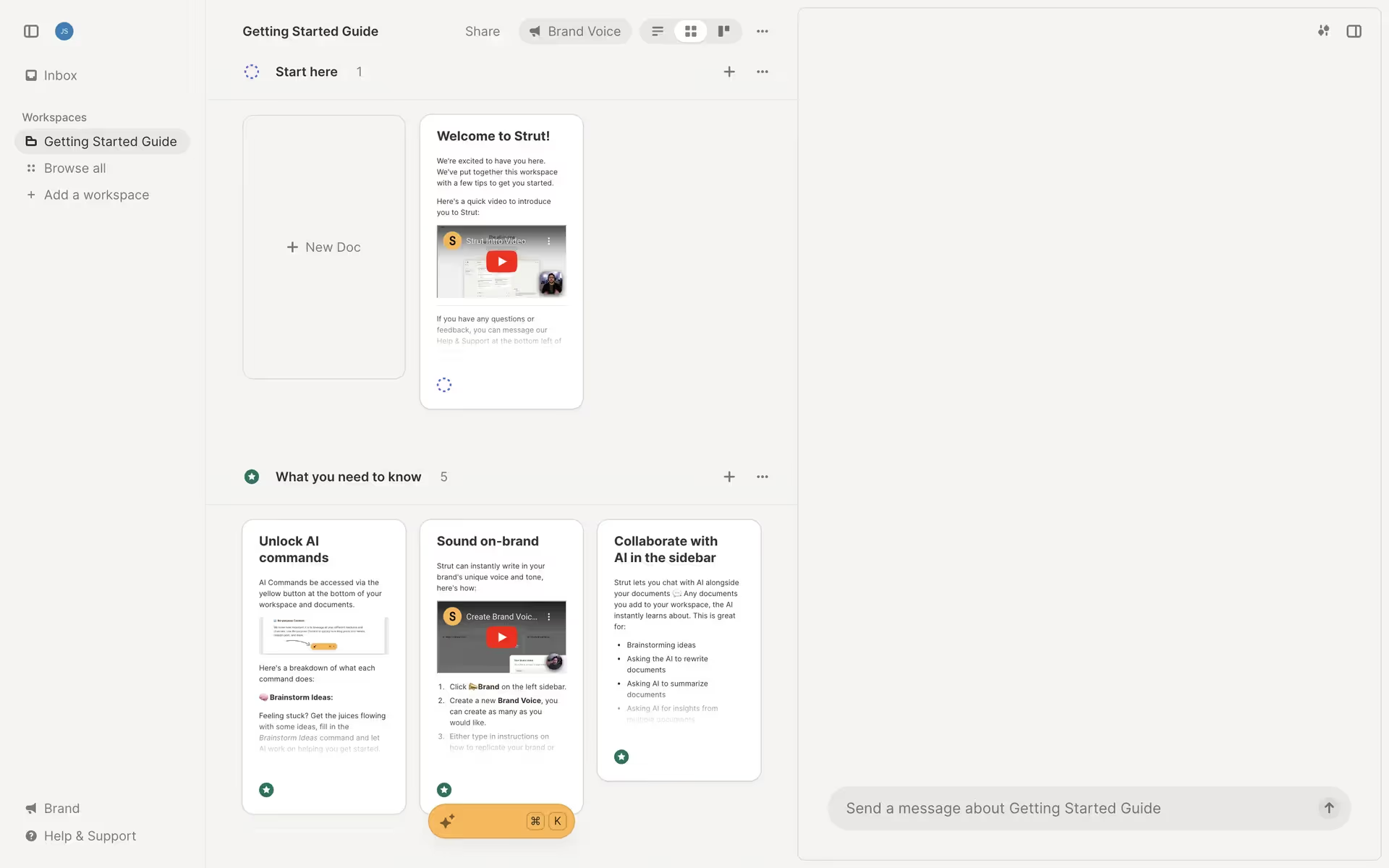
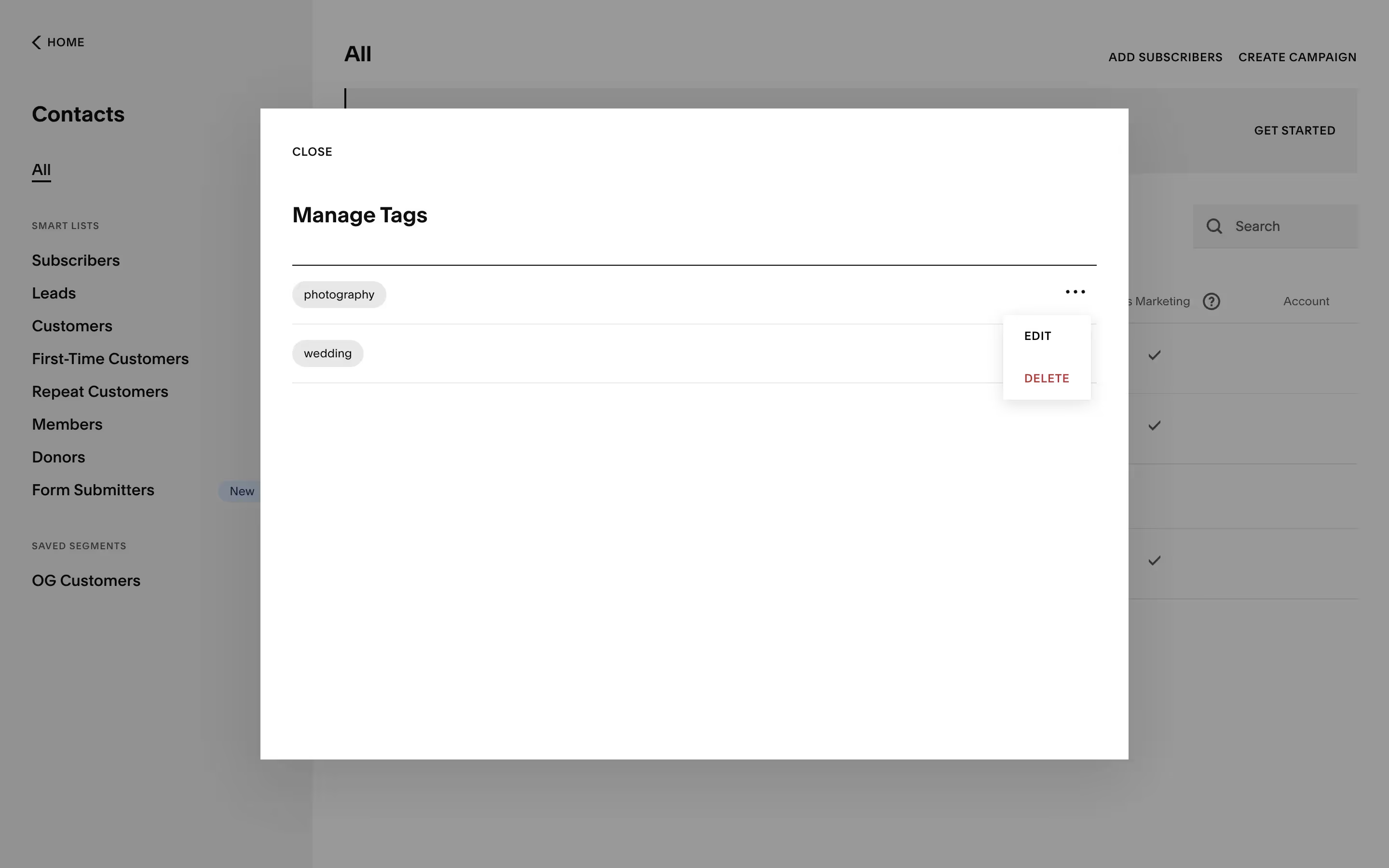
This type of off-white is a staple for brands aiming for a clean, modern aesthetic, such as Squarespace and ASOS. Using a quiet, neutral base like Ice Cube allows product imagery and key brand messages to stand out without visual competition, creating a focused and polished user experience.
Explore curated palettes, test color contrast for accessibility, and preview Ice Cube in real UI components from top brands using the tools below.
How do I use the Ice Cube color codes?
The hex code #E3E4E1 is your starting point for using Ice Cube in digital projects, but different design applications and mediums require specific color formats.
Each color model serves a distinct purpose. RGB (Red, Green, Blue) is standard for digital displays, defining colors by mixing light. For print work, you'll need CMYK (Cyan, Magenta, Yellow, Key/Black), which is based on ink absorption. Other models like HSL (Hue, Saturation, Lightness) offer more intuitive ways to modify color properties.
To make things simple, we've converted #E3E4E1 into a range of popular formats. You can find and copy the exact codes you need for your project below.
Analogous
Analogous colors sit side-by-side on the color wheel. Grouped with Ice Cube, these hues produce a cohesive and tranquil visual effect.
Complementary
Complementary colors are opposites on the color wheel. When paired with Ice Cube, they create a striking, high-contrast visual effect.
Split Complementary
The split complementary palette for Ice Cube uses the two colors adjacent to its complement, offering a vibrant yet balanced contrast.
Triadic
For a vibrant and balanced palette, a triadic scheme combines three colors from equidistant points on the color wheel, starting with Ice Cube.
Tetradic
A tetradic palette for Ice Cube is built from two pairs of complementary colors, offering a bold and versatile combination for dynamic designs.
Square
A square color scheme pairs Ice Cube with three other colors, all evenly spaced on the color wheel for a balanced, high-contrast look.
Text Color
Background Color
Your Catchy Large Text Goes Here
Shades
Shades of Ice Cube are created by adding black, giving the color more depth and weight.
Tints
Tints of Ice Cube are made by mixing in white, resulting in lighter, softer tones.
Tones
Tones of Ice Cube are created by adding gray, resulting in softer, less saturated versions.
Hues
Hues are variations of Ice Cube, sharing its base color but differing in intensity or temperature.








Never run out of inspiration again.
Use Mobbin for free as long as you like or get full access with any of our paid plans.