Hooker's Green
Meet Hooker's Green, #53745F. This deep, muted green strikes a unique balance between warmth and coolness. Its sophisticated, earthy tone possesses a quiet strength, making it a compelling choice for interfaces that require a touch of natural elegance without overwhelming the user's eye.
What color is Hooker's Green?
Hooker's Green is a deep, muted green with a distinct cool, blue undertone, reminiscent of the shadowy parts of a dense forest.
Its low saturation gives it an earthy and sophisticated quality, making #53745F a versatile yet grounded hue.
What is the meaning behind the color Hooker's Green (#53745F)?
Originally created by botanical artist William Hooker to capture the true color of leaves, Hooker's Green is deeply rooted in the natural world.
The color #53745F evokes a sense of stability and sophistication, symbolizing growth, harmony, and a connection to the earth.
How can I use Hooker's Green (#53745F) in UI design?
In UI design, Hooker's Green (#53745F) serves as a strong foundational color when contrasted with warm off-whites, light grays, or muted ochres for a sophisticated palette. Consider applying the 60-30-10 rule, using it as a secondary color for key components like cards or active states to create visual hierarchy and guide attention without being overpowering.
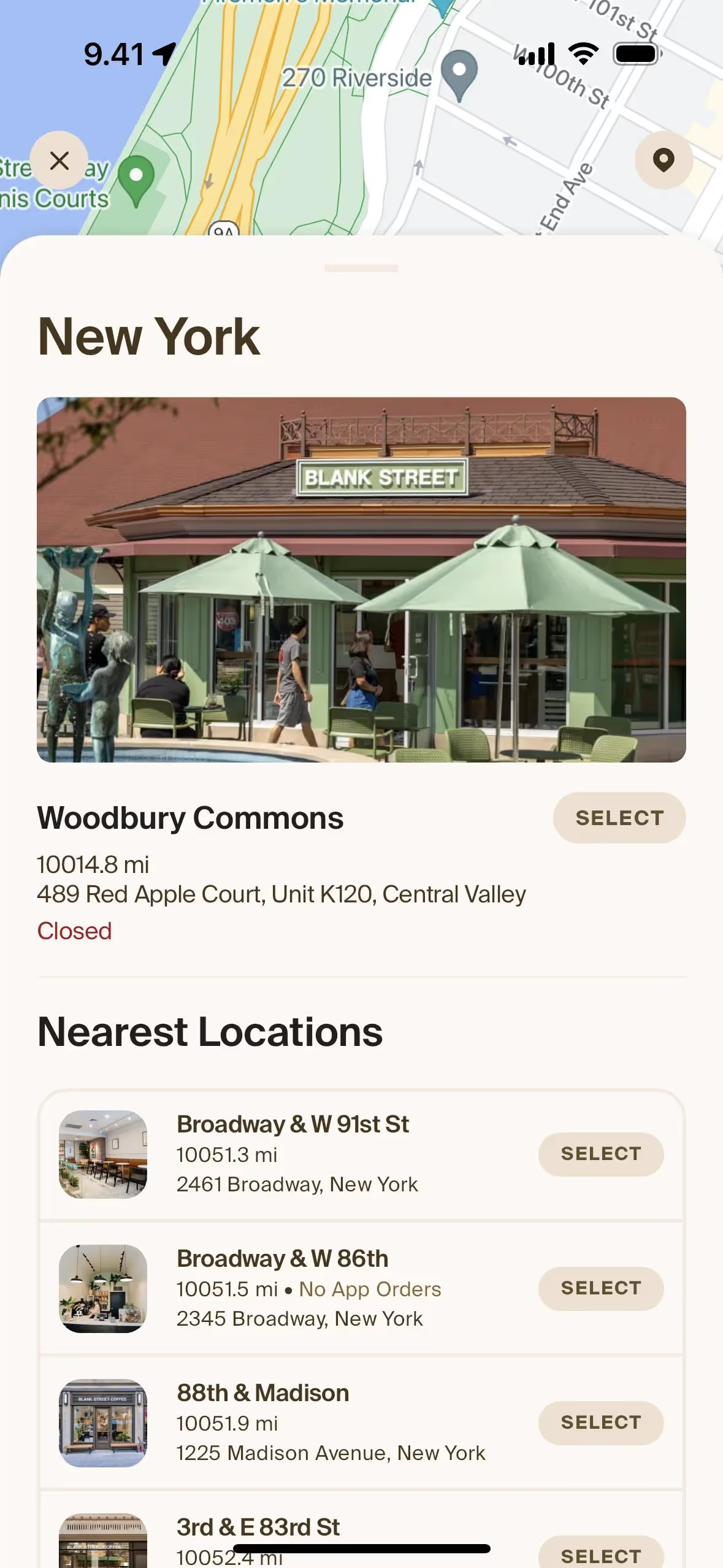
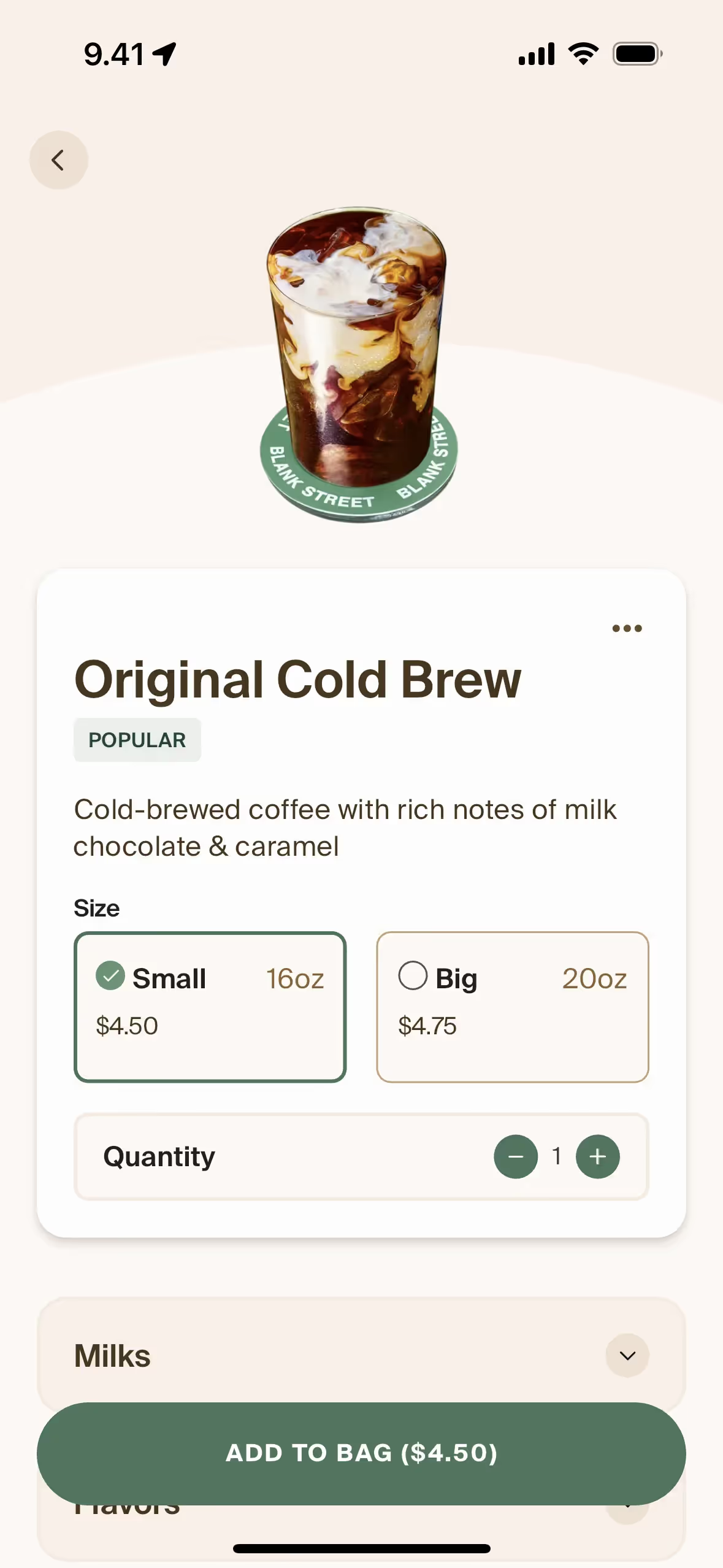
While not a common choice in digital branding, you can spot similar shades in the identity of brands like Blank Street. Its relative scarcity is an advantage, offering a way for a product to look unique and established, setting it apart from the sea of standard blues and charcoals.
Use the tools below to explore curated palettes, test color contrast for accessibility, and preview Hooker's Green in real UI components from top brands.
Using Hooker's Green color codes
To use Hooker's Green in your digital projects, you'll most often start with its hexadecimal code, #53745F. This is the standard for specifying colors in web design and CSS.
Different design applications, however, require different color models. RGB (Red, Green, Blue) values, for example, define colors for digital screens, while CMYK (Cyan, Magenta, Yellow, Key/Black) is essential for print materials. Each model represents the same color, just in a language specific to the medium.
We've converted Hooker's Green (#53745F) into a range of popular formats for you. Find the code you need below and copy it directly into your project.
Analogous
Analogous colors are neighbors on the color wheel. For Hooker's Green, these adjacent hues create a harmonious and naturally cohesive visual experience.
Complementary
Complementary colors sit opposite each other on the color wheel. When paired with Hooker's Green, they create a striking, high-contrast visual effect.
Split Complementary
A split complementary scheme for Hooker's Green uses the two colors on either side of its direct complement, creating a vibrant yet balanced palette.
Triadic
A triadic color scheme for Hooker's Green uses two other colors equally spaced on the color wheel, creating a vibrant and balanced palette.
Tetradic
A tetradic color scheme forms a rich, four-color palette from two complementary pairs, offering bold combinations anchored by Hooker's Green.
Square
A square color scheme pairs four colors equidistant on the color wheel, building a high-contrast, vibrant palette starting with Hooker's Green.
Text Color
Background Color
Your Catchy Large Text Goes Here
Shades
Adding black to Hooker's Green creates its shades, which are darker and add visual weight.
Tints
Tints of Hooker's Green are lighter values created by adding white for a softer feel.
Tones
Tones of Hooker's Green are softer, more muted versions created by adding gray.
Hues
Hues are variations of Hooker's Green, differing in intensity or temperature to create distinct moods.

Never run out of inspiration again.
Use Mobbin for free as long as you like or get full access with any of our paid plans.