Grape Delight
Introducing Grape Delight (#E9E3E0), a color defined by its quiet confidence. At first glance, it appears as a simple off-white, but its true appeal lies in the subtle, warm undertones. This faint blush of color provides a unique depth not found in typical neutrals.
What color is Grape Delight?
Grape Delight is a soft, muted purple with a distinct dusty quality. It balances on the edge of lavender but carries a subtle warmth, giving it a character that's more complex than a simple pastel.
Its grayish undertones temper the vibrancy, creating a sophisticated and gentle appearance. This gives the color a neutral temperature, preventing it from feeling either overtly cool or saccharine sweet.
What is the meaning of the color Grape Delight (#E9E3E0)?
Grape Delight evokes a sense of tranquility and understated elegance. Its soft, neutral character provides a feeling of calm and clarity, often associated with minimalist sophistication.
Symbolically, it represents a clean slate and quiet confidence, offering a grounding foundation for designs that aim for a serene and approachable atmosphere.
How can I effectively use Grape Delight in my UI design?
In UI design, Grape Delight shines as a sophisticated, warm neutral. Apply it as a primary background color to create an airy, clean interface, allowing darker text and vibrant accent colors to stand out with clarity. For a classic pairing, contrast it with deep charcoals or navy blues. To achieve a softer, more monochromatic scheme, combine it with other muted tones and earthy browns. Following the 60-30-10 rule, Grape Delight can serve as your dominant (60%) background, giving your design a stable and elegant foundation.
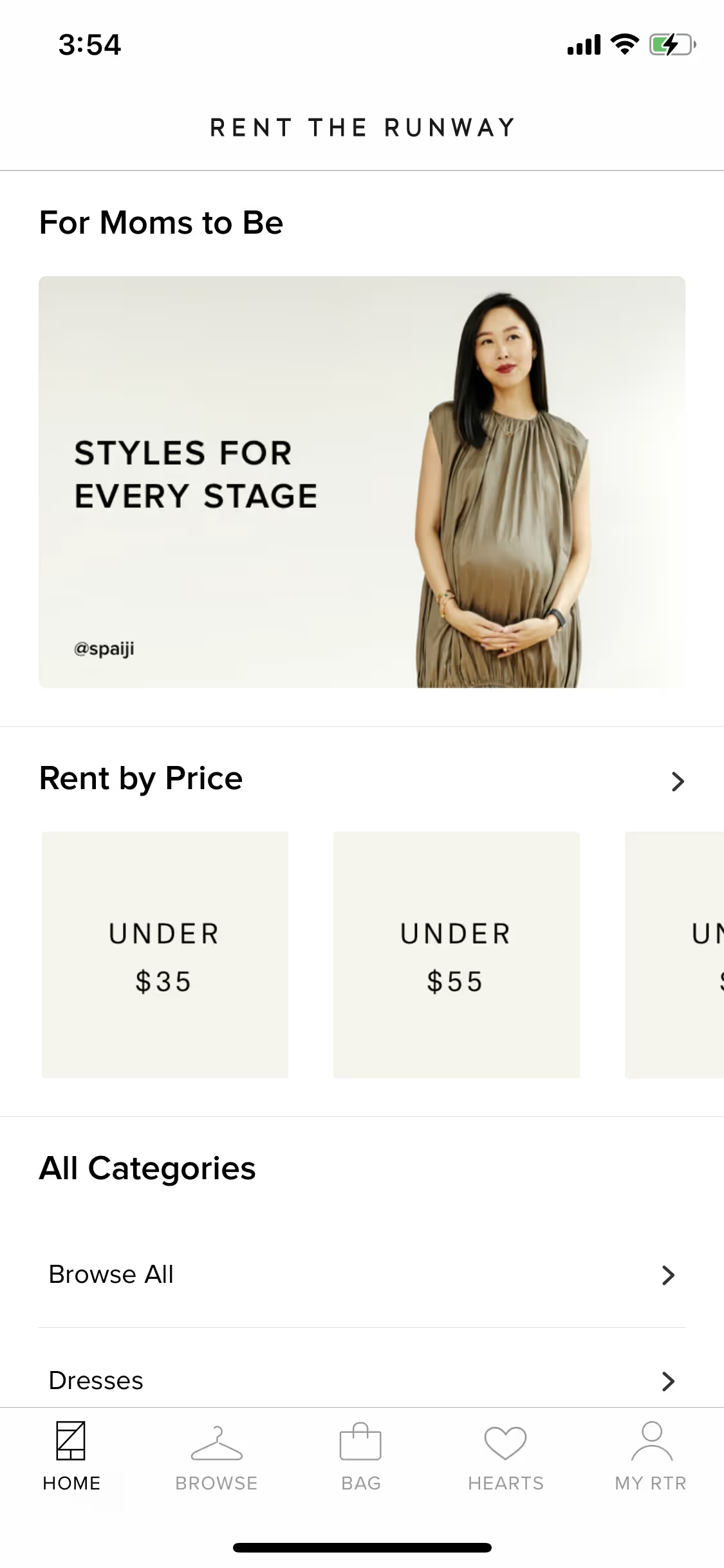
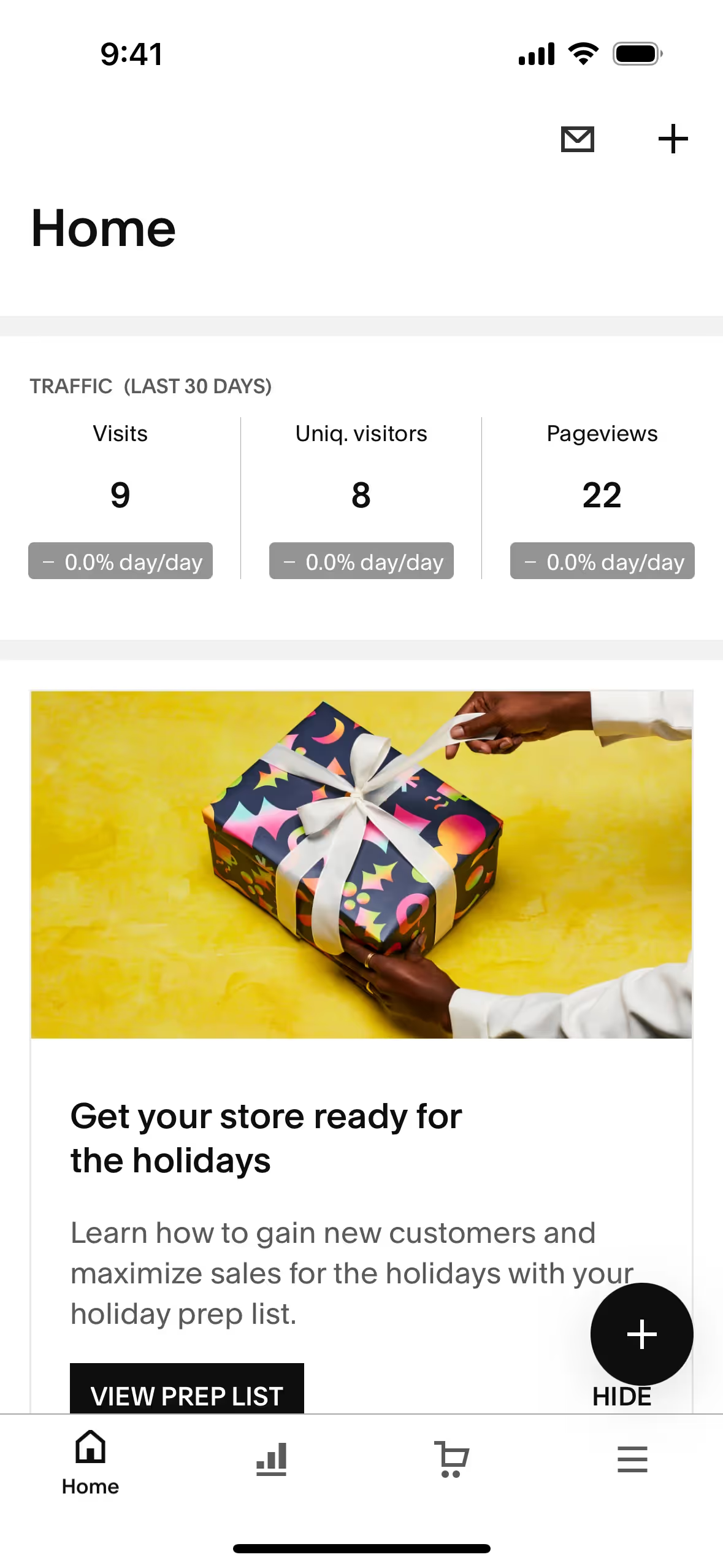
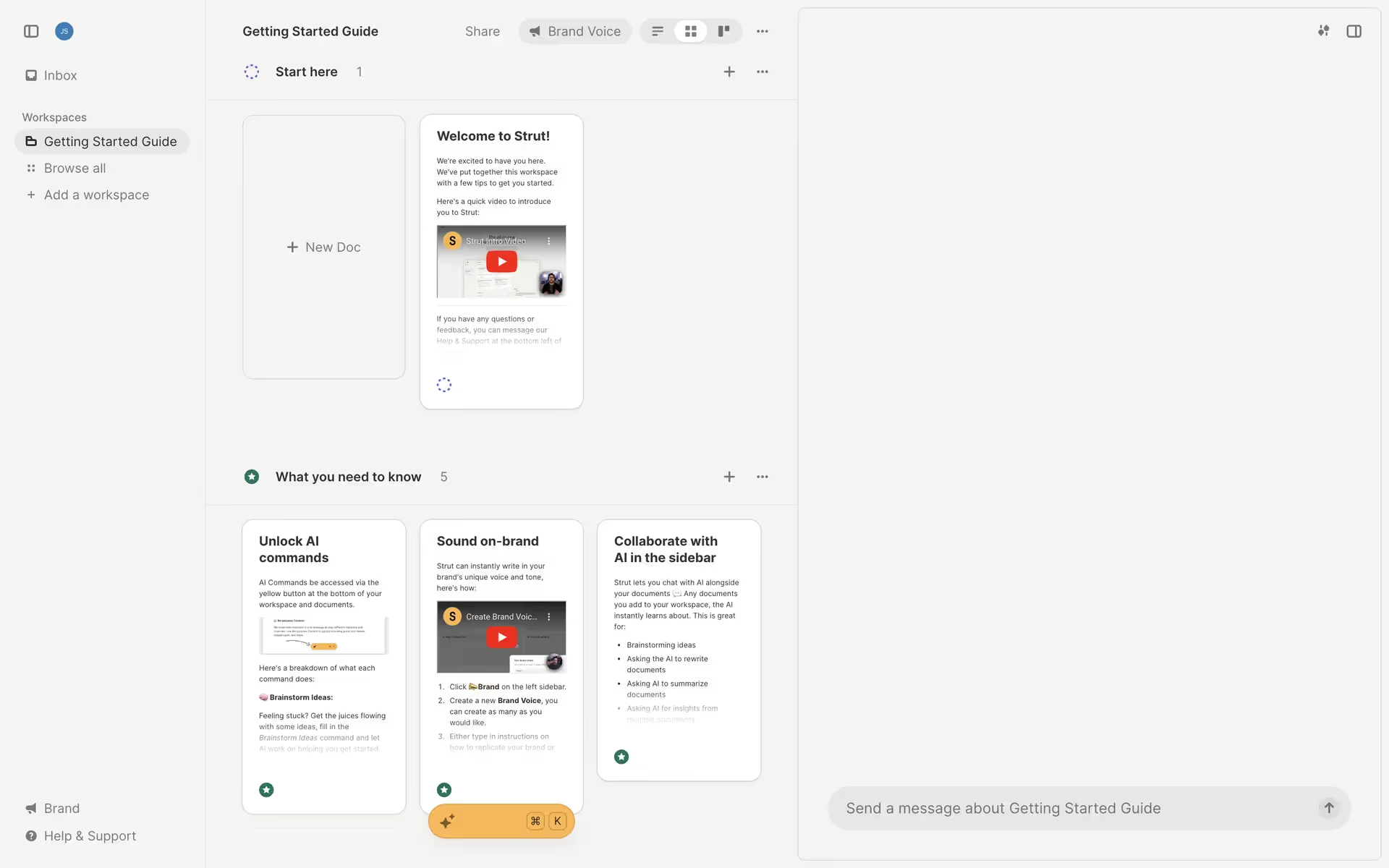
While not overwhelmingly common, this gentle off-white appears in the branding of several notable companies. Brands like Strut, Squarespace, Frame, Rent the Runway, and Insight Timer all incorporate similar hues, often as a canvas that gives their products a polished and modern feel. This demonstrates its effectiveness in creating refined digital experiences across different industries.
To see these principles in action, use the tools below. You can explore curated palettes, test color contrast for accessibility, and preview Grape Delight in real UI components from top brands.
Using Grape Delight color codes
Using Grape Delight in your project starts with its hex code, #E9E3E0, which is the standard for web design. However, depending on whether you're working on a digital interface or a print material, you might need to translate this code into a different format.
Each color model serves a specific purpose. RGB is fundamental for digital displays as it mixes red, green, and blue light to create colors on screen. For print work, you'll need the CMYK values, which correspond to the ink colors used in physical printing. Other models like HSL offer a more intuitive way to adjust color properties such as hue and saturation.
To make your workflow easier, we've converted Grape Delight's #E9E3E0 hex code into its corresponding values across various color models. You can find and copy these codes for your specific needs right below.
Analogous
Analogous colors are neighbors on the color wheel. For Grape Delight, these adjacent hues result in a visually cohesive and tranquil color scheme.
Complementary
To find Grape Delight's complementary partner, look directly across the color wheel. This pairing produces a bold, energetic combination with maximum visual pop.
Split Complementary
A split complementary scheme creates a nuanced palette by pairing Grape Delight with the two colors that sit beside its direct complement.
Triadic
Triadic schemes pair three colors from equidistant points on the color wheel. Starting with Grape Delight, the result is a bold and balanced combination.
Tetradic
Formed by two pairs of complementary colors, a tetradic scheme gives Grape Delight a rich and versatile palette to work with.
Square
A square color scheme features four colors equidistant on the color wheel. This method builds a rich, high-contrast palette starting with Grape Delight.
Text Color
Background Color
Your Catchy Large Text Goes Here
Shades
Adding black to Grape Delight creates shades, which introduce a sense of depth and weight.
Tints
Tints of Grape Delight are lighter variations, made by mixing in white for softness.
Tones
Adding gray to Grape Delight creates tones, which are softer, less saturated versions.
Hues
Hues are variations of Grape Delight, differing in intensity or temperature for subtle visual effects.



Never run out of inspiration again.
Use Mobbin for free as long as you like or get full access with any of our paid plans.