Gainsboro
Meet Gainsboro (#DCDCDC), a whisper-light gray that offers a clean, minimalist foundation for any design palette. Its striking quality lies in its subtle warmth and remarkable versatility, providing a quiet backdrop that allows other design elements to stand out with clarity and purpose.
What color is Gainsboro?
Gainsboro is a pale, neutral gray with a soft and airy appearance, sitting just a shade away from pure white.
It maintains a balanced temperature, free of strong warm or cool undertones, which gives it a clean and objective quality.
What meaning does the color Gainsboro (#DCDCDC) convey in UI design?
Symbolizing balance, professionalism, and quiet confidence, Gainsboro provides a stable and modern foundation in design.
Its name honors the painter Thomas Gainsborough, linking it to a history of artistic subtlety and muted elegance.
How can I effectively use Gainsboro in my UI design?
In UI design, Gainsboro works best as a sophisticated neutral background, allowing content and key interface elements to stand out. For readability, pair it with high-contrast text, like a charcoal or near-black. To add personality, introduce a single, vibrant accent color for buttons and links, following the 60-30-10 principle where Gainsboro serves as the dominant base.
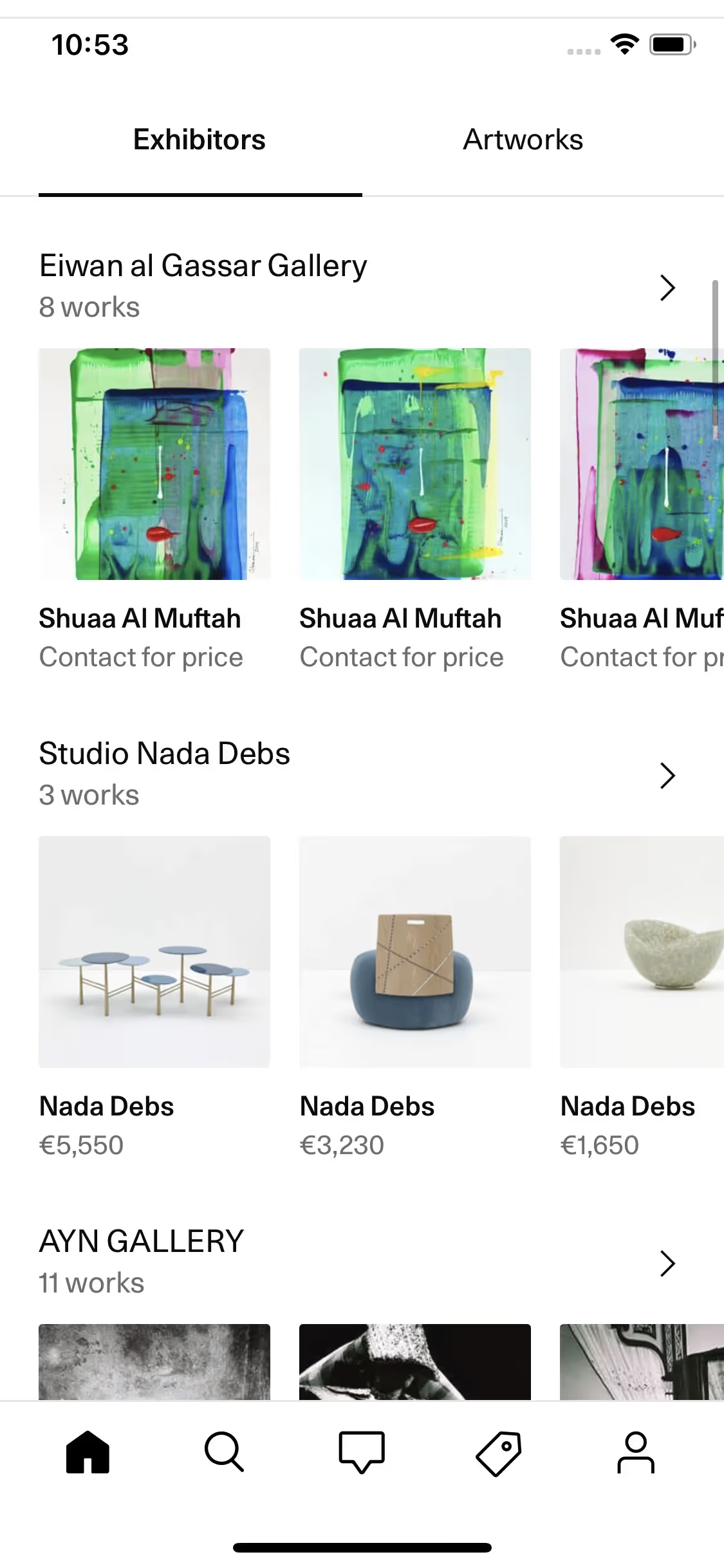
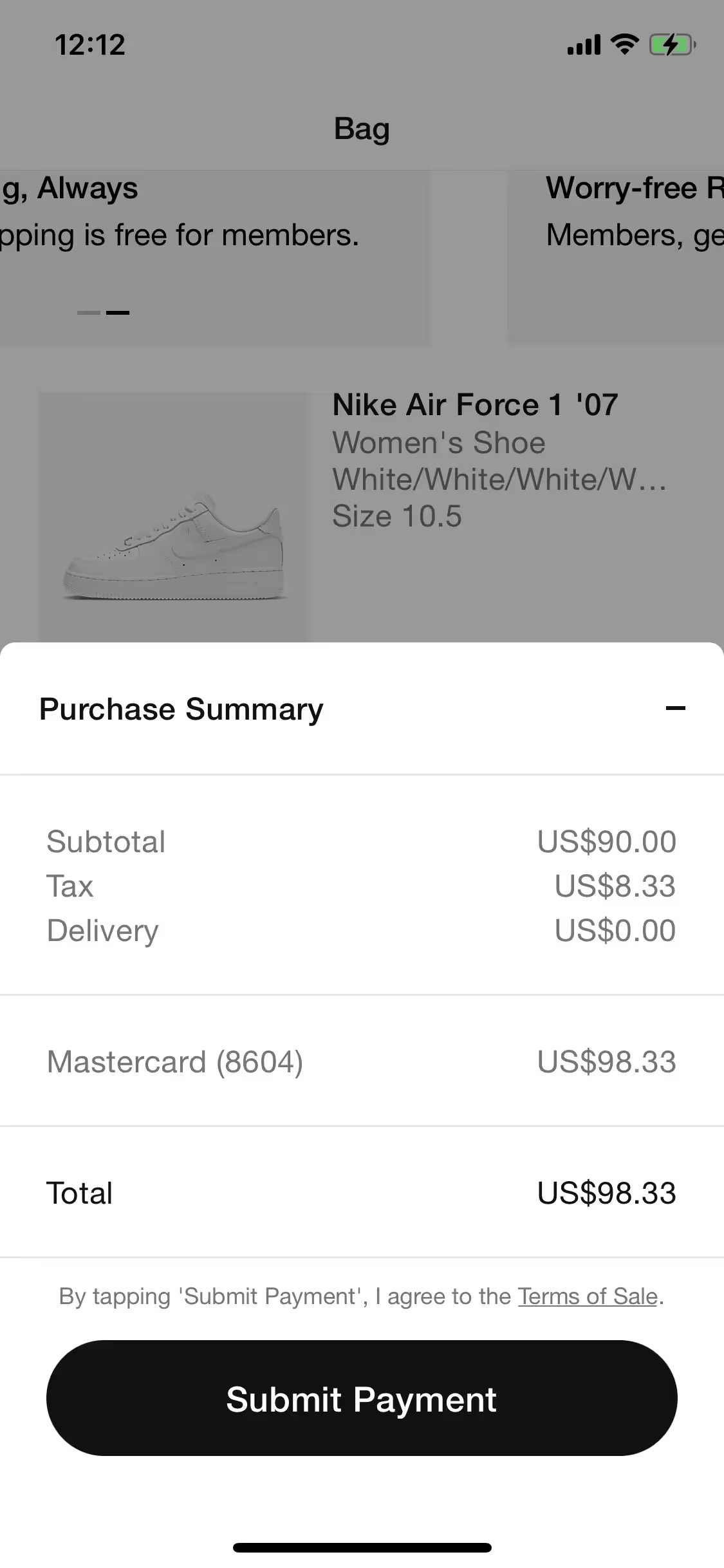
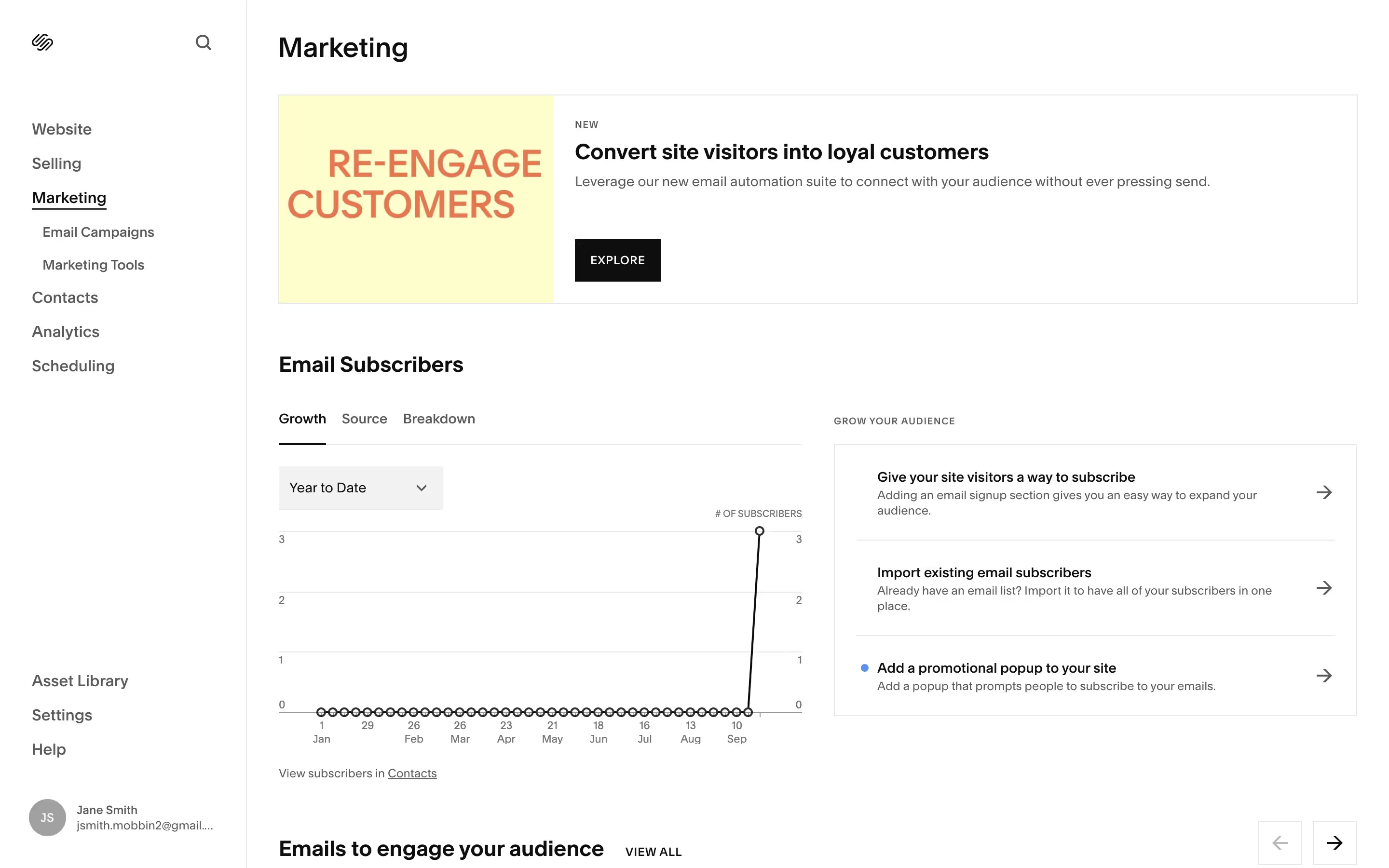
While a precise match for #DCDCDC is specific, many leading brands build their interfaces on similar light grays. Companies like Squarespace and Neo Financial use these tones to create clean, spacious layouts, while others such as Nike and Sonos employ them to project a modern, premium feel. This shows its adaptability across different brand identities, from tech to lifestyle.
To see these principles in action, use the tools below. You can explore curated palettes, check your color pairings for accessibility, and see how Gainsboro looks within actual UI components from top-tier apps.
How do I use Gainsboro color codes?
To apply Gainsboro in your digital work, use its hexadecimal code, #DCDCDC. This code can be entered directly into CSS files, HTML, and most graphic design software to specify the color precisely.
While HEX codes are standard for the web, you may need to convert #DCDCDC for other mediums. The RGB model is essential for anything on a screen, defining color with red, green, and blue light. For print work, the CMYK model is required, as it describes color with ink combinations.
For your convenience, we have converted the #DCDCDC code for Gainsboro into a range of popular formats. Find the exact values you need for your project below and copy them with a click.
Analogous
Analogous colors sit beside Gainsboro on the color wheel. Grouping them together produces a cohesive and calming palette that feels naturally balanced and serene.
Complementary
Complementary colors sit directly opposite each other on the color wheel. Pairing one with Gainsboro creates a striking, high-contrast visual effect.
Split Complementary
For a high-contrast palette with less tension, Gainsboro's split complementary scheme uses the two colors neighboring its opposite on the color wheel.
Triadic
A triadic scheme with Gainsboro uses two other colors equally spaced on the color wheel, creating a vibrant and high-contrast palette.
Tetradic
A tetradic palette pairs Gainsboro with three other hues, formed from two sets of complementary colors, offering a balanced yet vibrant combination.
Square
A square color scheme pairs Gainsboro with three other colors, all equidistant on the color wheel, creating a vibrant and high-contrast palette.
Text Color
Background Color
Your Catchy Large Text Goes Here
Shades
Adding black to Gainsboro creates its shades, which are darker and add visual weight.
Tints
Tints of Gainsboro are created by adding white, resulting in lighter, softer variations.
Tones
Tones of Gainsboro are created by adding gray, which softens the color's overall saturation.
Hues
Hues are Gainsboro variations that adjust in temperature and intensity, creating distinct moods.









Never run out of inspiration again.
Use Mobbin for free as long as you like or get full access with any of our paid plans.