Fawn
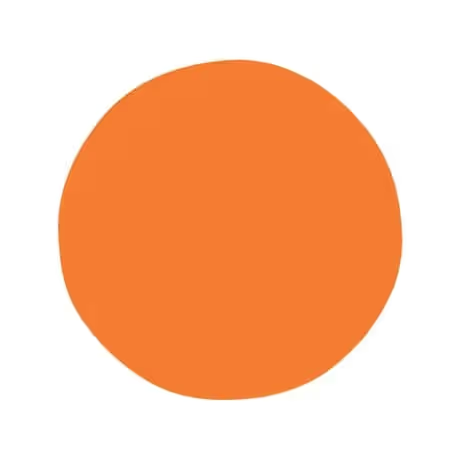
Meet Fawn (#E5AA70), a warm and inviting hue that sits comfortably between soft brown and muted orange. Its gentle, sun-kissed quality gives it a distinctive radiance, making it a compelling choice for projects that require a touch of organic warmth without being overpowering.
What color is Fawn?
Fawn is a light, warm brownish-tan, reminiscent of the soft coat of a young deer.
It's a muted shade with distinct yellow and orange undertones, giving it a gentle warmth that sits between a pale tan and a desaturated orange.
What is the meaning of the color Fawn (#E5AA70)?
The color Fawn, #E5AA70, gets its name from the soft, light brown coat of a young deer, and with it comes a sense of gentleness, warmth, and innocence.
Symbolically, it represents a connection to the natural world, evoking feelings of comfort and authenticity, making it a grounded and approachable choice in design.
How can I use Fawn in my UI design?
In UI and web design, Fawn (#E5AA70) works beautifully as a warm accent or a primary color for an organic feel. For a striking, natural palette, pair it with deep navy blues or rich forest greens. For a more subdued and modern look, combine it with charcoal grays and off-whites. Its mid-tone value means you'll need to be mindful of contrast, but it offers a sophisticated warmth that primary colors often lack.
While not a common choice for corporate branding, shades in the same family as Fawn are used by companies like BuzzFeed to project energy and approachability. The relative rarity of #E5AA70 presents an opportunity for a brand to build a distinct visual identity that feels both earthy and memorable.
You can use the tools below to explore curated palettes, test color contrast for accessibility, and preview Fawn in real UI components of top brands.
How do I use the Fawn color codes?
Working with the color Fawn begins with its hex code, #E5AA70. Its inherent warmth can introduce a soft, organic quality to a composition, making it a versatile choice for designers.
To apply Fawn across different media, you’ll need to convert its hex code into other color models. Each model serves a specific function; for example, RGB (Red, Green, Blue) is standard for digital screens, while CMYK (Cyan, Magenta, Yellow, Key) is built for physical printing.
To get you started, we’ve translated #E5AA70 into a range of popular formats below. Simply copy the code you need for your project.
Analogous
Analogous colors sit next to Fawn on the color wheel. Grouped together, these hues create a visually harmonious and serene aesthetic for any design.
Complementary
Drawn from opposite sides of the color wheel, complementary colors create a vivid, high-contrast effect when paired with the warm tones of Fawn.
Split Complementary
A split complementary palette for Fawn uses the two colors on either side of its direct complement, creating a vibrant yet balanced look.
Triadic
A triadic palette combines three colors from equidistant points on the color wheel. Starting with Fawn results in a high-contrast, yet harmonious, combination.
Tetradic
A tetradic palette is built from two complementary color pairs. Below, Fawn is balanced against three other shades to form a rectangular harmony.
Square
A square color scheme places four colors equidistant on the color wheel. With Fawn as a base, this creates a vibrant, high-contrast palette.
Text Color
Background Color
Your Catchy Large Text Goes Here
Shades
Shades of Fawn are created by adding black, resulting in darker, weightier tones.
Tints
Tints are lighter versions of Fawn, created by adding white for a softer look.
Tones
Tones are created by adding gray to Fawn, resulting in softer, more muted variations.
Hues
Hues are variations of Fawn that differ in intensity or temperature, affecting the overall mood.

Never run out of inspiration again.
Use Mobbin for free as long as you like or get full access with any of our paid plans.