Eton Blue
Meet Eton Blue (#7FD09F), a refreshing hue that sits at the intersection of green and cyan. Its bright, clean quality gives it a distinct presence without being overpowering, making it a noteworthy addition to any designer's palette.
What color is Eton Blue?
Eton Blue is a light, cool-toned green with noticeable blue undertones.
It presents a soft, minty appearance, sitting somewhere between a pale spring green and a soft cyan.
What is the meaning behind the Eton Blue (#7FD09F) color?
Eton Blue gets its name and prestigious air from Eton College, symbolizing a rich history of academic and sporting distinction.
It evokes a sense of calm confidence and sophistication, making it a solid choice for designs that need to communicate trustworthiness and clarity.
How can I use Eton Blue (#7FD09F) in my UI design?
Eton Blue works brilliantly as an accent color for calls-to-action, icons, and interactive elements. To apply it effectively, try the 60-30-10 principle, dedicating it to the smallest, most impactful parts of your design. It pairs cleanly with neutrals like off-whites and charcoals, or creates a striking look alongside a deep navy or a muted coral.
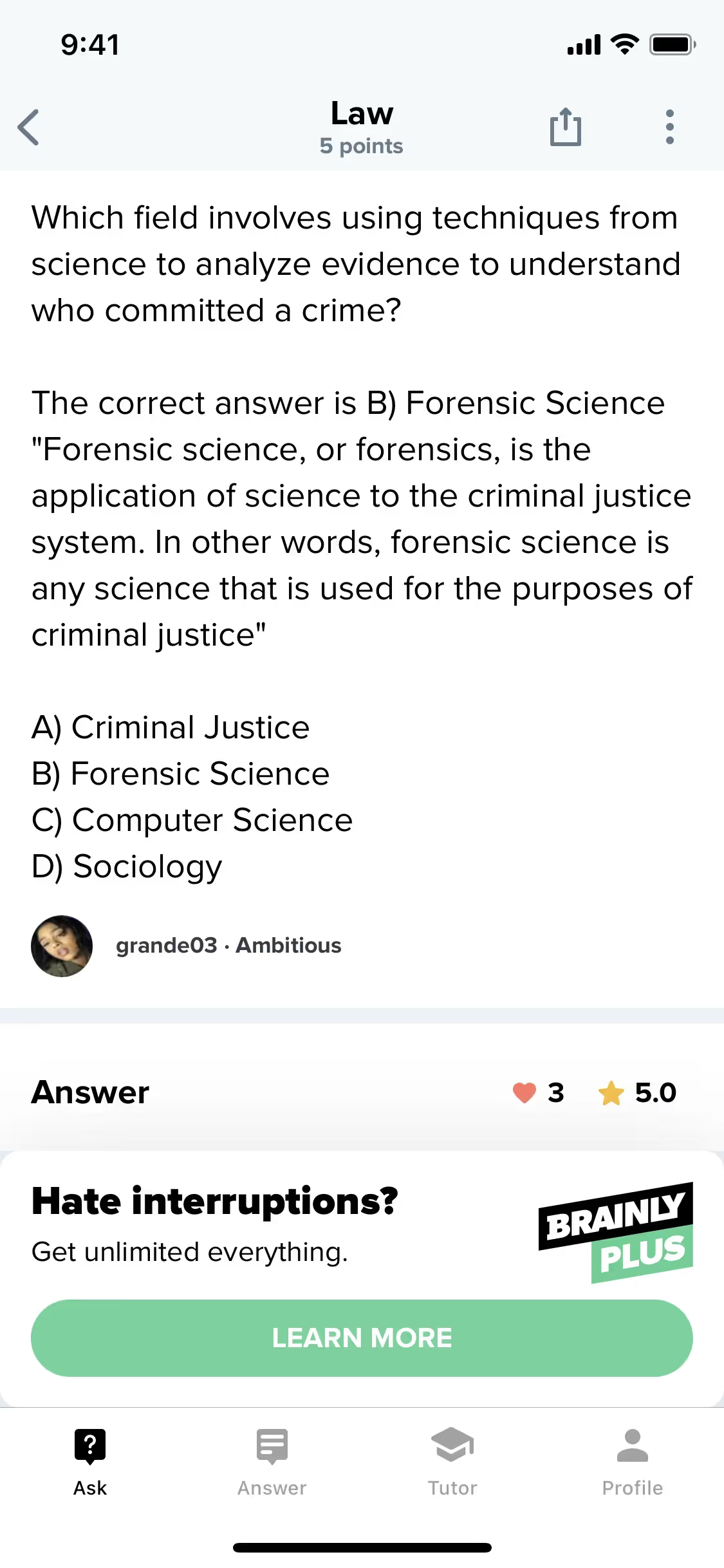
You'll spot colors in the same family as Eton Blue in brands like Brainly, often used for illustrative spots or secondary actions. Its infrequent use as a primary brand color is an advantage, offering a chance for your design to stand out and appear original.
Explore curated palettes, test your color contrast for accessibility, and preview Eton Blue in real UI components from top brands with the tools right below.
Using Eton Blue color codes
The most direct way to apply Eton Blue in your digital projects is by using its hexadecimal code, #7FD09F. This code is the standard for specifying colors in web design, ensuring consistency across different browsers and devices.
Depending on your project's needs, you may have to convert this hex code. For instance, print work uses CMYK values to define ink combinations, while digital displays create color with the RGB model, which mixes red, green, and blue light. Other formats like HSL (Hue, Saturation, Lightness) or LAB provide different ways to define and adjust the color for specific design software or accessibility standards.
To simplify your workflow, we’ve converted Eton Blue’s #7FD09F code into a range of popular formats below, ready for you to copy and paste directly into your work.
Analogous
Sitting beside Eton Blue on the color wheel, analogous colors produce a cohesive and serene palette, perfect for creating a sense of calm.
Complementary
Complementary colors sit directly opposite each other on the color wheel. When paired with Eton Blue, they create a striking, high-contrast visual effect.
Split Complementary
A split complementary scheme for Eton Blue uses the two colors on either side of its direct complement, creating a vibrant yet balanced palette.
Triadic
A triadic scheme pairs Eton Blue with two other colors, equally spaced on the color wheel, for a vibrant and balanced palette.
Tetradic
A tetradic color scheme for Eton Blue uses two pairs of complementary colors, forming a rectangle on the color wheel for a vibrant palette.
Square
A square color scheme uses four colors equidistant on the color wheel. With Eton Blue, this creates a vibrant, high-contrast palette.
Text Color
Background Color
Your Catchy Large Text Goes Here
Shades
Shades of Eton Blue are made by mixing in black, adding visual weight and dimension.
Tints
Tints of Eton Blue are lighter variations created by adding white for a softer appearance.
Tones
Tones are muted versions of Eton Blue, created by adding gray to soften its saturation.
Hues
Hues are variations of Eton Blue, differing in intensity or temperature to create distinct moods.


Never run out of inspiration again.
Use Mobbin for free as long as you like or get full access with any of our paid plans.