Energy
Meet Energy (#63697E), a sophisticated slate blue that commands attention through its quiet confidence. This color’s striking quality lies in its muted, stony character, which provides a solid foundation while its subtle blue undertone adds a hint of cool complexity for any designer's palette.
What color is Energy?
Energy is a complex, cool-toned shade that lives in the space between blue and gray. It possesses deep slate undertones, giving it a muted and substantial quality.
This color has a low saturation and a cool temperature, creating a reserved appearance that subtly shifts depending on the surrounding light.
What is the psychological meaning of the color Energy?
The color Energy, #63697E, represents a steady, focused power rather than overt vibrancy.
It evokes feelings of stability and sophistication, making it a symbol of quiet potential and reliability in design.
What are some effective ways to incorporate the color Energy into a UI design?
In UI design, Energy works best as a sophisticated neutral. Use #63697E for backgrounds or large surfaces to establish a stable foundation, allowing brighter accent colors to guide the user's eye. For pairings, consider high-contrast brights to make interactive elements pop, or analogous muted tones for a subtle, cohesive feel.
This particular shade is not a common choice for brands, which can be an advantage for differentiation. Companies like Plain employ similar understated palettes to project a modern and focused image, setting them apart from competitors using louder colors.
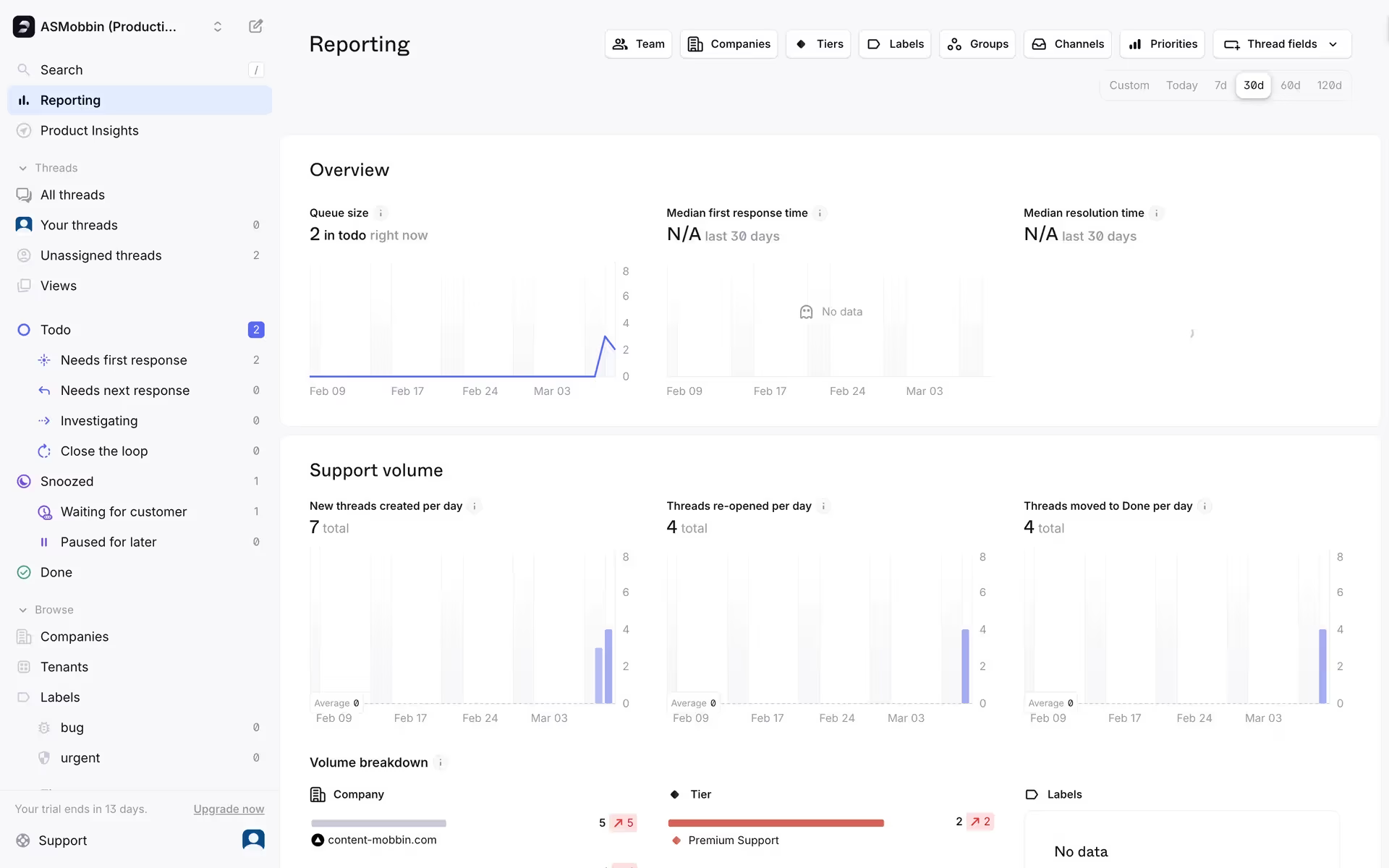
You can use the tools below to explore curated palettes, test color contrast for accessibility, and preview Energy in real UI components from top brands.
Using Energy color codes
The hex code #63697E is your go-to for applying Energy in digital projects, but you may need a different format depending on your medium or tool.
Color codes are different languages for describing the same color. For instance, RGB (Red, Green, Blue) values define colors for digital displays, while CMYK (Cyan, Magenta, Yellow, Key/Black) is the standard for printed materials. Other models like HSL or LAB offer different ways to adjust color properties such as lightness and saturation.
To make things simple, we've converted the hex code for Energy—#63697E—into several popular formats. You can find and copy the exact values you need just below.
Analogous
Analogous colors sit next to each other on the color wheel. Paired with Energy, they produce a serene and cohesive look, resulting in a calm composition.
Complementary
To find Energy's complement, look directly across the color wheel. This pairing produces a vibrant effect with high contrast, ideal for grabbing attention.
Split Complementary
A split complementary scheme pairs Energy with the two colors adjacent to its direct complement, offering a vibrant yet balanced and harmonious visual effect.
Triadic
Forming a triangle on the color wheel, a triadic palette combines Energy with two others for a look that is both bold and harmonious.
Tetradic
A tetradic palette pairs Energy with three other hues, creating two sets of complementary colors in a rectangular formation on the color wheel.
Square
Formed by four colors at equal distances on the color wheel, a square scheme offers a rich palette with bold, striking contrasts between hues.
Text Color
Background Color
Your Catchy Large Text Goes Here
Shades
Shades of Energy are created by adding black, giving the color more depth and weight.
Tints
Tints are lighter versions of Energy, created by adding white to soften the original hue.
Tones
Tones of Energy are created by adding gray, which softens the saturation for a muted effect.
Hues
Hues are variations of Energy, sharing its base color but differing in intensity or temperature.

Never run out of inspiration again.
Use Mobbin for free as long as you like or get full access with any of our paid plans.