Dark Midnight Blue
Meet Dark Midnight Blue (#003366), a color that offers the depth of black with a sophisticated hint of blue. Its striking quality lies in its ability to appear almost black in some lighting, revealing its rich, cool undertones only upon closer inspection, adding a layer of quiet complexity.
What color is Dark Midnight Blue?
Dark Midnight Blue is a profoundly deep shade, sitting on the cusp of black yet distinctly retaining its blue identity. It possesses a cool temperature, characterized by its subtle, almost imperceptible, undertones.
This hue is achieved by saturating a pure blue with black, which mutes its vibrancy and pulls it into the shadows, creating a color that offers depth without being a true neutral.
What is the meaning of the color Dark Midnight Blue (#003366)?
Dark Midnight Blue often symbolizes authority, trust, and intelligence. It carries a sense of seriousness and professionalism, making it a popular choice for corporate identities that want to project stability and integrity.
Psychologically, this deep hue evokes feelings of calm, introspection, and elegance. Its association with the vast night sky lends it an air of mystery and sophistication, suggesting depth and substance.
How do I use Dark Midnight Blue (#003366) in UI design?
Dark Midnight Blue works beautifully as a foundational color for creating depth and focus. For a clean, professional look, pair #003366 with crisp whites or soft grays to make sure text is legible and interfaces feel spacious. For a more striking effect, introduce a vibrant accent—think a pop of coral or a sharp citrus yellow—to guide the user's eye to key actions. This approach fits well within the classic 60-30-10 design rule, where Dark Midnight Blue can serve as the dominant or secondary color.
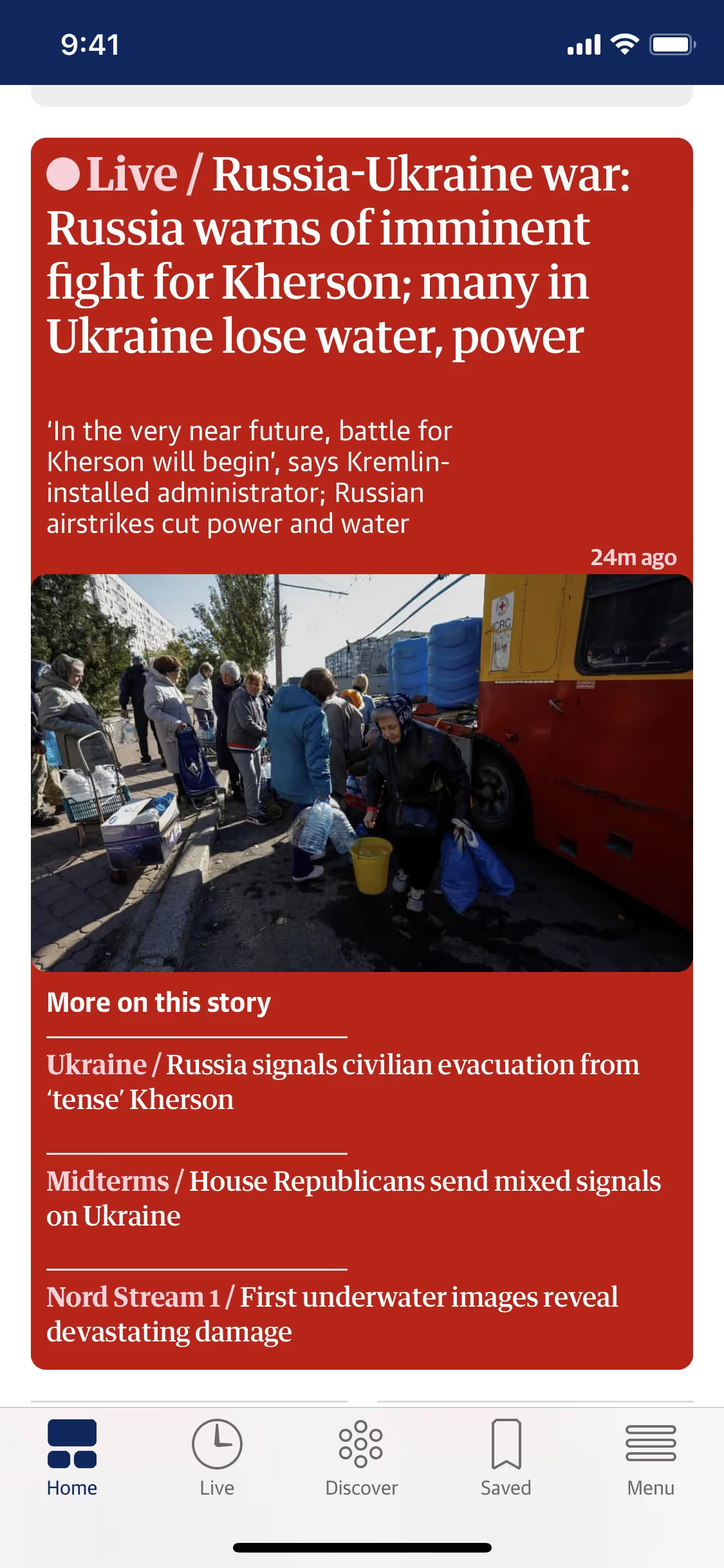
While not overwhelmingly common, this shade of deep blue is favored by brands aiming for a sophisticated and trustworthy image. Companies like Angi, The Guardian, LARQ, Warby Parker, and Sprout Social use similar tones to build a sense of stability and authority in their digital products.
To see how Dark Midnight Blue performs in practice, use the tools below. You can explore curated palettes, test color contrast for accessibility, and even preview #003366 in UI components from well-known applications.
How do I use Dark Midnight Blue color codes?
Applying Dark Midnight Blue in your work starts with its hex code, #003366, which is standard for web design. However, different projects require different color models. For instance, print jobs depend on CMYK values, while digital screens render colors using RGB.
Each code represents a unique way of building color. RGB mixes red, green, and blue light, ideal for displays. CMYK subtracts from white light using cyan, magenta, yellow, and black inks, which is fundamental for printing. Other models like HSL (Hue, Saturation, Lightness) give designers more intuitive control over color properties.
To make your workflow easier, we have translated the #003366 hex code for Dark Midnight Blue into a variety of popular formats. You can find these values below, ready to copy for your specific application.
Analogous
Analogous colors are neighbors to Dark Midnight Blue on the color wheel, creating a harmonious and serene palette for your design projects.
Complementary
Complementary colors sit opposite Dark Midnight Blue on the color wheel. Pairing them creates a striking, high-contrast visual effect that makes both colors pop.
Split Complementary
Split complementary colors for Dark Midnight Blue use the two colors adjacent to its direct complement, creating a vibrant yet balanced and harmonious palette.
Triadic
A triadic combination for Dark Midnight Blue involves two other colors, forming an equilateral triangle on the color wheel for a bold, balanced palette.
Tetradic
Tetradic palettes pair Dark Midnight Blue with three other hues, creating a rich, four-color harmony from two sets of complementary colors.
Square
A square color scheme pairs four evenly spaced colors on the wheel. Built around Dark Midnight Blue, it creates a vibrant palette with strong contrast.
Text Color
Background Color
Your Catchy Large Text Goes Here
Shades
Adding black to Dark Midnight Blue creates darker shades, which introduce depth and gravity.
Tints
Tints of Dark Midnight Blue are created by adding white, resulting in softer, lighter shades.
Tones
Tones are created by mixing Dark Midnight Blue with gray for a subtler, desaturated effect.
Hues
Hues are variations of Dark Midnight Blue that differ in temperature, subtly shifting its mood.







Never run out of inspiration again.
Use Mobbin for free as long as you like or get full access with any of our paid plans.