Cotton Candy
Meet Cotton Candy, #FFBCD9, a soft pink that packs a surprising punch. Its high value and saturation create a clean, luminous quality, offering a playful yet sophisticated option for digital palettes. This hue stands out without overwhelming the eye.
What color is Cotton Candy?
Cotton Candy is a pale, warm pink, a delicate tint that sits at the lighter end of the red spectrum. It has a soft, airy quality reminiscent of the spun sugar treat it's named after.
With subtle yellow undertones, the hue avoids being overly saccharine, instead presenting a gentle warmth that feels both comforting and modern.
What is the meaning behind the color Cotton Candy (#FFBCD9)?
The Cotton Candy color, #FFBCD9, taps into a sense of playful nostalgia and gentle sweetness. It often symbolizes the simple joys of youth, evoking feelings of innocence and carefree fun.
This light pink hue carries a whimsical and dreamy quality, representing fleeting moments of delight and the tender side of happiness.
How can I effectively use Cotton Candy in my UI design?
To make Cotton Candy work in your design, think contrast. Its light, airy nature pops against deep charcoals or navy blues, making it a solid choice for accent buttons, highlights, or notification badges. For a softer palette, pair it with muted greens or creamy off-whites. Applying the 60-30-10 principle, you could use a neutral as your dominant color, a secondary color for support, and #FFBCD9 as the 10% accent that draws the eye.
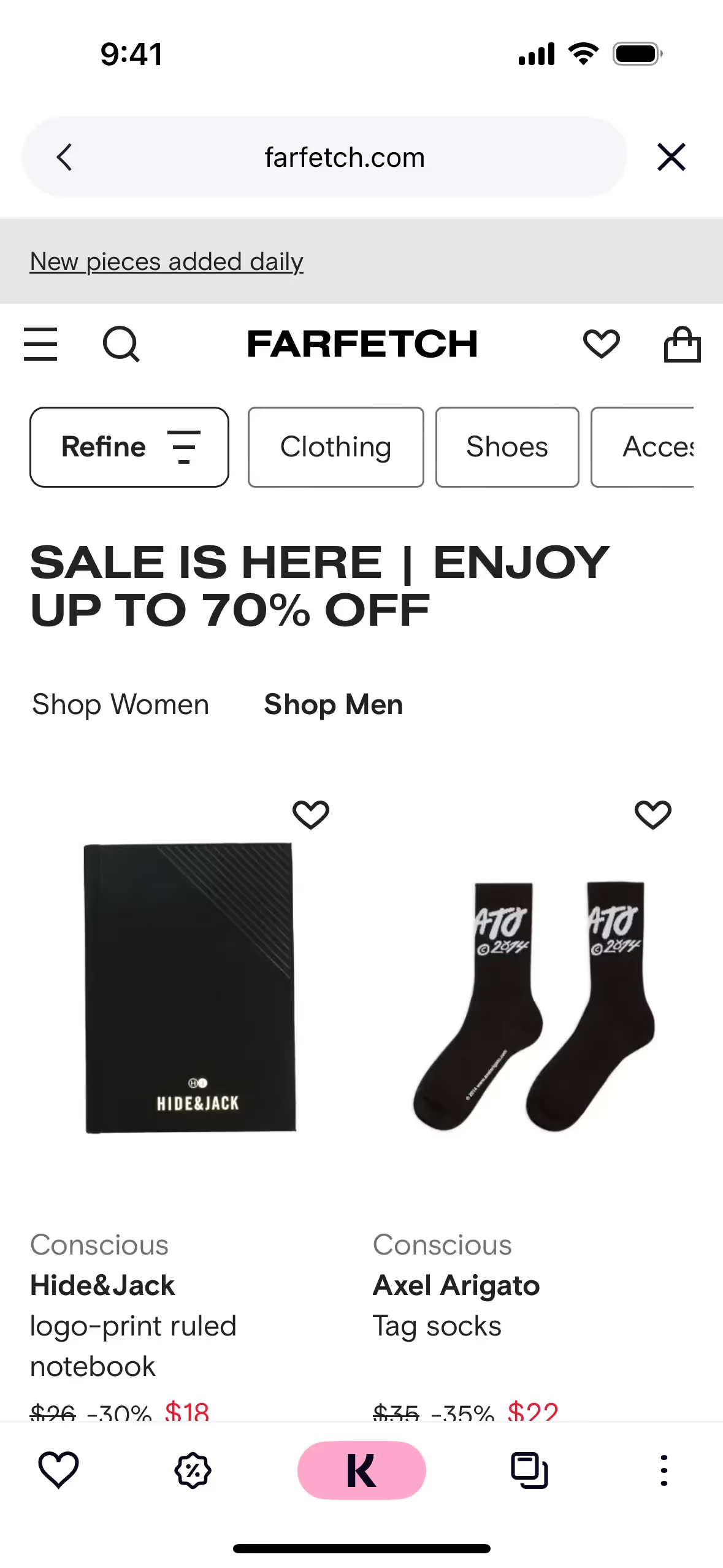
While not a staple in corporate branding, you'll find hues reminiscent of Cotton Candy in apps like Yik Yak, Fetch, and Klarna, where it adds a touch of softness and personality. Its infrequent use in primary branding means employing #FFBCD9 can give a product a unique and memorable identity.
Use the tools below to explore curated palettes, check your color combinations for accessibility, and see how Cotton Candy looks in UI components from well-known apps.
Using Cotton Candy color codes
Using the Cotton Candy color, with its hex code #FFBCD9, is straightforward for web-based projects. However, designers often work across different media, from digital screens to print materials, which requires translating this code into other formats.
Each color model serves a specific purpose. RGB (Red, Green, Blue) is an additive model for digital displays, defining colors by mixing light. In contrast, CMYK (Cyan, Magenta, Yellow, Key/Black) is a subtractive model used for printing. Other models like HSL (Hue, Saturation, Lightness) offer a more intuitive way to adjust color properties in software.
To help you apply Cotton Candy across your work, we've converted #FFBCD9 into a variety of popular color codes. You can find and copy these values below for your specific needs.
Analogous
Analogous colors are neighbors on the color wheel. Pairing them with Cotton Candy results in a gentle, harmonious palette that feels naturally cohesive.
Complementary
Complementary colors are opposites on the color wheel. When paired with Cotton Candy, its complement creates a striking, high-contrast visual effect.
Split Complementary
A split complementary scheme for Cotton Candy pairs it with the two colors adjacent to its direct opposite, offering a vibrant yet balanced palette.
Triadic
A triadic palette offers a balanced yet dynamic combination, created by selecting two other colors equidistant from Cotton Candy on the color wheel.
Tetradic
A tetradic scheme for Cotton Candy uses two pairs of complementary colors, forming a rectangle on the color wheel for a vibrant combination.
Square
A square scheme pairs Cotton Candy with three other equidistant colors on the wheel, creating a vibrant, high-contrast, and balanced palette.
Text Color
Background Color
Your Catchy Large Text Goes Here
Shades
Adding black to Cotton Candy creates shades, giving the color more depth and gravity.
Tints
Tints are lighter variations of Cotton Candy, created by adding white for a softer feel.
Tones
Tones are created by mixing Cotton Candy with gray, producing softer, more subdued versions.
Hues
Hues vary Cotton Candy's intensity and temperature, subtly altering the design's overall atmosphere.



Never run out of inspiration again.
Use Mobbin for free as long as you like or get full access with any of our paid plans.